
Introduction
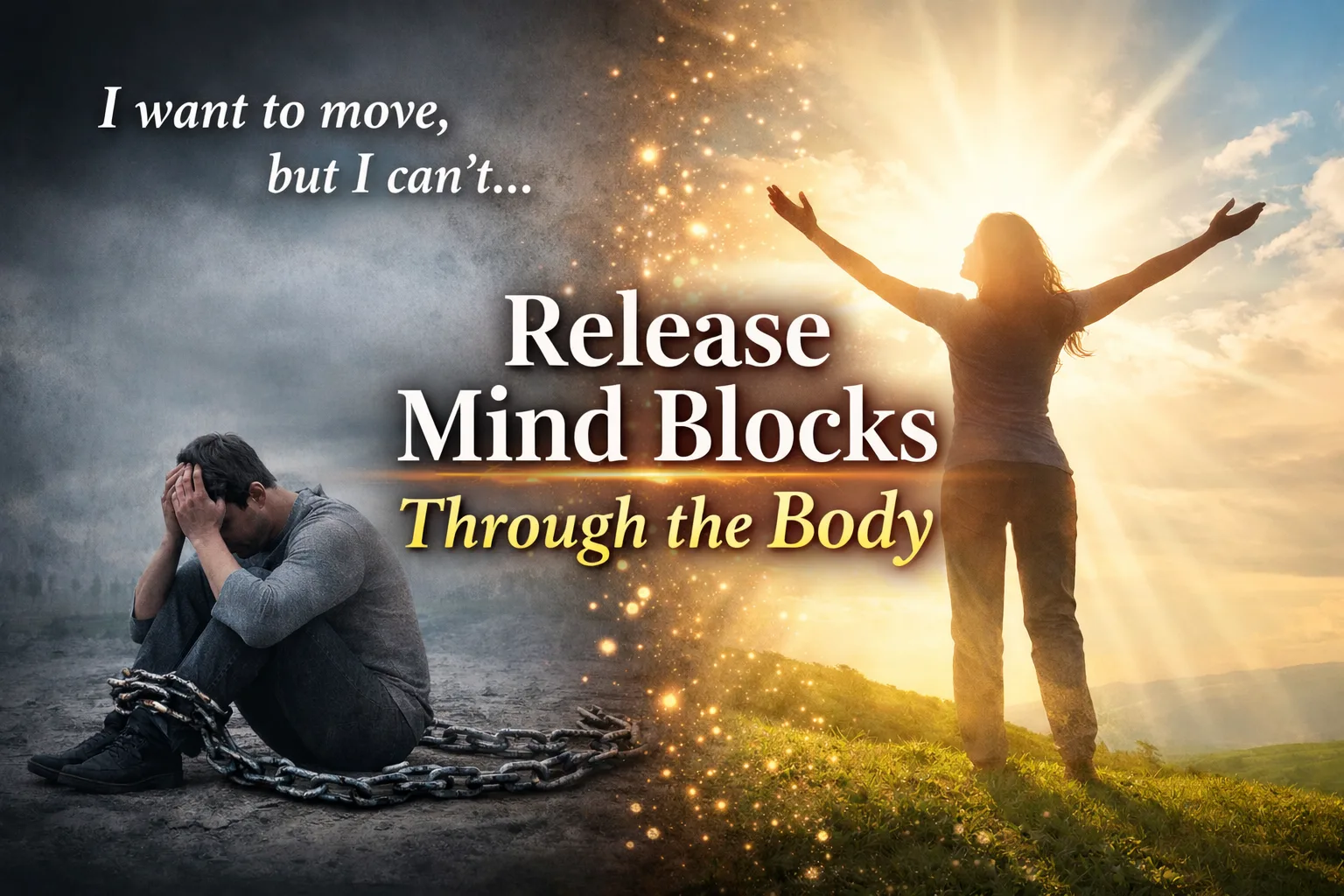
You know what you should do.
In fact, you may feel that you have to do it.
And yet, you don’t move.
In these moments, we tend to think:
“Maybe I have a mental block.”
“Something inside me is holding me back.”
So we try to remove that block through thinking—
analyzing, reframing, motivating ourselves.
But more often than not, it doesn’t work.
Because the block is not located in thought.
It is formed and held within the body.
Experience Is Stored as Bodily Response
We move through countless experiences in our lives.
Some go well.
Some don’t.
Some feel safe.
Others bring tension or pressure.
These experiences are not stored as abstract memories alone.
They are encoded as bodily responses.
- The breath stops
- The body tightens
- The chest or abdomen contracts
These reactions do not simply disappear.
They remain as patterns within the body.
And when we encounter similar situations again,
the amygdala references those patterns
and triggers the same response.
In other words:
Our present inability to act is often a reactivation of past bodily responses.
What We Call a “Mental Block”
We tend to interpret this as a cognitive issue.
“I lack confidence.”
“I feel anxious.”
But the sequence is actually reversed.
The body reacts first.
Then thought arises to explain that state.
- The body contracts → we feel anxiety
- The body stops → we create reasons why we can’t act
So what we call a “mental block” is not primarily mental.
It is a pattern of response expressed through the body.
The Body Is Designed to Stop Us
The autonomic nervous system is always working to protect us.
When it detects uncertainty or potential risk, it shifts the body into a defensive mode:
- Muscles tighten
- Breathing becomes shallow
- Movement is restricted
From this perspective, not acting is not a failure.
It is the body doing exactly what it is designed to do.
What Needs to Change
If the block exists as a bodily response,
then thinking alone cannot fundamentally resolve it.
What is required is not a change in thought, but
a rewriting of the body’s patterns.
And here, one key element becomes essential:
our relationship with gravity.
When the Body Organizes Along Gravity
In Rolfing sessions, a distinct shift often occurs.
The body begins to organize itself in alignment with gravity.
Not through effort or correction,
but through a natural reorganization of structure.
The pelvis rises into a more balanced position.
Support comes from below rather than being held artificially.
From experience, once the pelvis becomes organized in this way,
the body becomes far more available for change.
Repatterning happens with greater ease.
Movement Emerging from Within
As the pelvis stabilizes and the center aligns,
the core softens.
Space opens within the body.
Then something begins to move:
- The breath deepens and expands
- The organs begin to move more freely
- Circulation and internal flow return
What was previously held or frozen begins to move again.
This is not merely muscular change.
It is a shift in the state of the nervous system.
Balance Is Not Achieved — It Emerges
As the body regains movement,
another important shift occurs.
Balance no longer needs to be “held” or controlled.
Instead, it emerges naturally from the integration of the whole system.
And the same applies to action.
You no longer force yourself to move.
Movement becomes the natural expression of your state.
Mental Blocks Begin to Dissolve
What happens to the “block” at this point?
It fades.
Not because it was removed through effort,
but because the underlying state has changed.
The body has learned a different response.
And when the body changes,
the patterns that once held you back lose their function.
The Role of Rolfing
Rolfing works directly with this process.
Through the organization of fascia, structure, and gravity,
it supports a reconfiguration of the body.
As a result:
- The nervous system shifts
- Perception changes
- Action becomes available
Change is not imposed from the outside.
It arises from within the body itself.
Conclusion
When you cannot act,
it is not a failure of will.
It is a reflection of your current state.
And state does not change through thought alone.
It changes through the body.
When the body aligns with gravity,
when internal movement is restored,
you may find that you are no longer trying to change—
you are already moving.