Introduction
My name is Hidefumi Otsuka, and I offer Rolfing® sessions based in Shibuya, Tokyo.
One question I am often asked is:
“What is the difference between physiotherapy and Rolfing?”
Both approaches work with the body, so they are sometimes assumed to be similar.
However, in reality, their purpose, assumptions, and methods are quite different.
More importantly, behind these differences lies something deeper: a fundamental difference in how the body is understood in Western and Eastern perspectives.
In this article, I will clarify the differences between physiotherapy and Rolfing, and help you understand when each approach is most appropriate.
What Does a Physiotherapist Do? (A Western Approach)
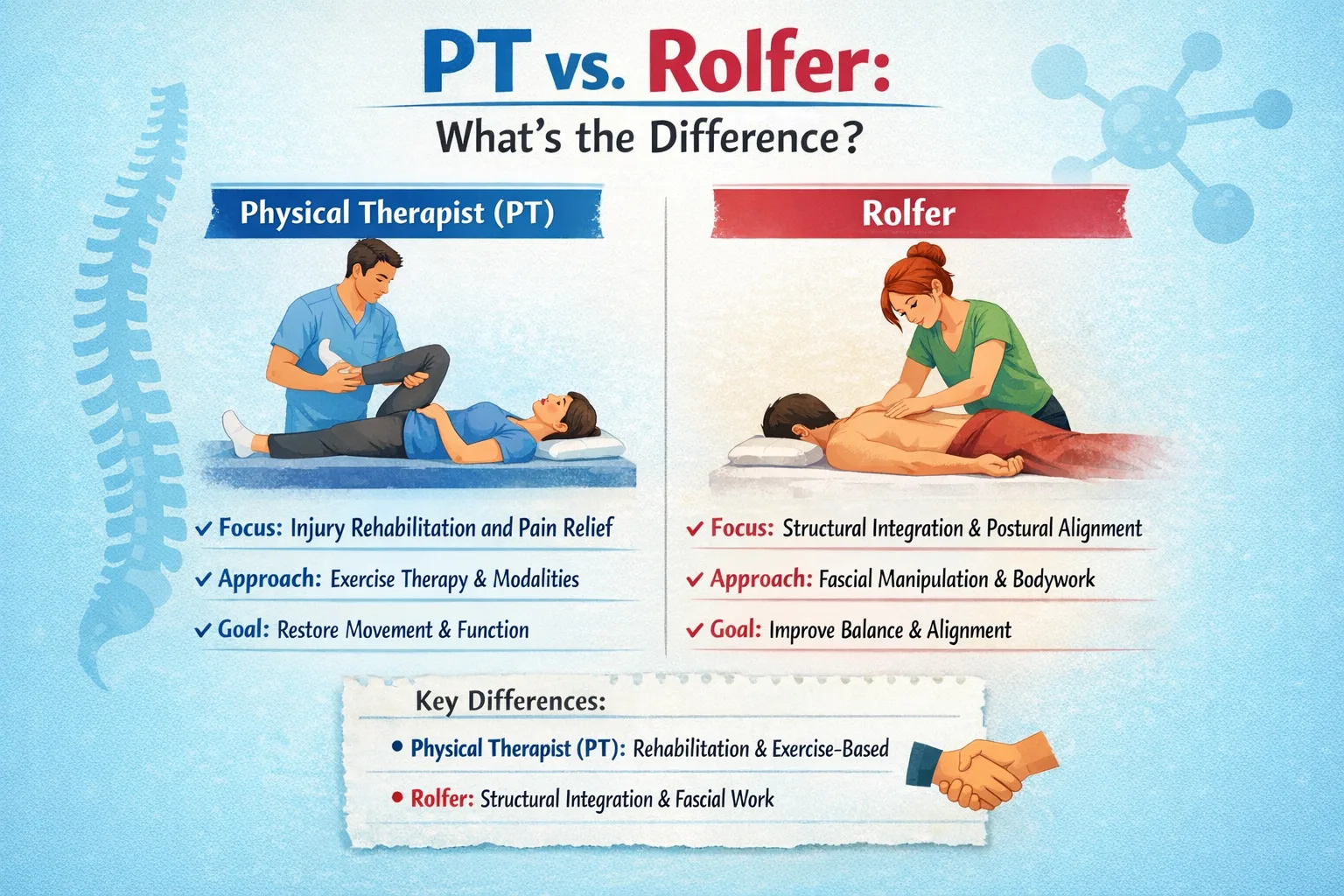
A physiotherapist (physical therapist) is a healthcare professional who focuses on restoring physical function, primarily in a medical context.
For example:
- rehabilitation after injury or surgery
- pain reduction
- improving joint mobility
- restoring muscle strength
The goal is clear:
to restore function.
Underlying this approach are clear distinctions:
- normal vs abnormal
- functional vs dysfunctional
This reflects a Western view of the body:
👉 The body is something to analyze and fix
This model has been extremely powerful, leading to major advances in medicine and rehabilitation.
What Does a Rolfer Do? (An Approach Closer to Eastern Perspectives)
A Rolfer, on the other hand, works with the body’s structure in relation to gravity.
Rolfing focuses on:
- posture
- movement patterns
- fascial balance
with the aim of achieving:
integration of the whole body.
The key point is:
Rolfing is not simply about fixing problems.
Instead, it works with:
- relationships within the body
- balance
- perception
This reflects a view closer to Eastern traditions:
👉 The body is something that changes within relationships
Although Rolfing was developed in the West, its approach naturally aligns with a more integrated, relational view of the body.
The Core Difference: Purpose and View of the Body
The biggest difference lies in both purpose and underlying assumptions.
Physiotherapy (Western body model)
- From minus to zero (recovery)
- The body is something to fix
Rolfing (Closer to Eastern body model)
- From zero to plus (integration and transformation)
- The body is something that organizes itself within relationships
This is not just a technical difference.
It is a difference in how the body is fundamentally understood.
Differences in Approach
Physiotherapy
- Local (focused on specific pain or dysfunction)
- Function-oriented
- Clear measurable outcomes
Rolfing
- Global (whole-body organization)
- Relationship with gravity
- Changes in perception and awareness
The Body–Mind Relationship
Here lies an even deeper difference.
In physiotherapy, the body and mind are generally treated separately.
In Rolfing:
body, emotion, and perception are seen as one continuous process.
In sessions, it is common to observe:
- emotions arising as physical tension releases
- changes in breathing influencing thought patterns
This reflects a more integrated perspective:
👉 The body and mind cannot truly be separated
What This Means for Clients
So how does this difference affect your choice?
When Physiotherapy Is Appropriate
- recovery after injury or surgery
- clear physical pain or dysfunction
- need for medical support
When Rolfing Is Appropriate
- chronic discomfort without a clear medical cause
- desire to improve posture and movement
- wanting to reconnect with bodily awareness
- feeling “stuck” despite knowing what to do
What Actually Changes
In Rolfing sessions, people often experience:
- improved posture
- deeper breathing
- a more stable sense of physical support
But beyond that, something else happens:
- decision-making shifts
- relationships change
- actions become more natural
This is because:
👉 The state of the body influences perception and behavior
Which One Is Better?
The answer is simple:
Neither is “better.”
They serve different purposes.
- Physiotherapy: a Western medical approach for recovery
- Rolfing: an approach closer to Eastern integration and transformation
The key is:
👉 Understanding which one you need right now
Conclusion
The difference between physiotherapy and Rolfing is not just about techniques.
It is about:
- how we understand the body
- where change begins
If you are trying to recover from injury, physiotherapy may be the right approach.
If you are seeking a deeper change— in how you move, feel, and make decisions—Rolfing may offer something different.
Rolfing works through the bodyto transform the quality of your entire experience.
If this resonates with you, it may be worth experiencing it for yourself.