Introduction
Five and a half years into offering Rolfing sessions, I still go and receive other kinds of bodywork now and then, to learn from them.
On Friday, February 19, 2021, I went for Ito Thermie, a Japanese bodywork I had been curious about for some time. The practitioner was Yumiko Miura, who works out of Daiku no Miura Ryojutsusho in Nishiogi.
How We Met
Miura had been a client of mine in my early years of practice, and after finishing her ten-series she kept coming for maintenance sessions.
The room I visited was a flat she had designed the interior of herself. She spent years in the construction industry, and the furnishing was genuinely simple, an easy room to be in. Over the visit she told me about that period of her life, which I had never really heard about before.
The work had been punishing. In her twenties her shoulders were tight enough to make her nauseous; in her late thirties she developed a frozen shoulder and could not reach the handrail on a train. Looking after herself led her, through one connection and then another, to thermal work with Eriko Nakamura of Le salon de Figue, alongside Rolfing with me, and she gradually got her health back.
That was where Ito Thermie came in. Staying in construction until retirement was not going to work physically, and she wanted work she could keep doing for a long time. She qualified as a practitioner and had recently opened her own practice.
Word of the opening reached me through Instagram, and I booked a session on the spot.

The Session
The session began with a blanket wrapped over my underclothes. The instrument comes through the Ito Thermie association: a Thermie stick, made with plant material, is fitted into the cooling tube and lit.
The tube stays in contact with the skin throughout and is kept moving.
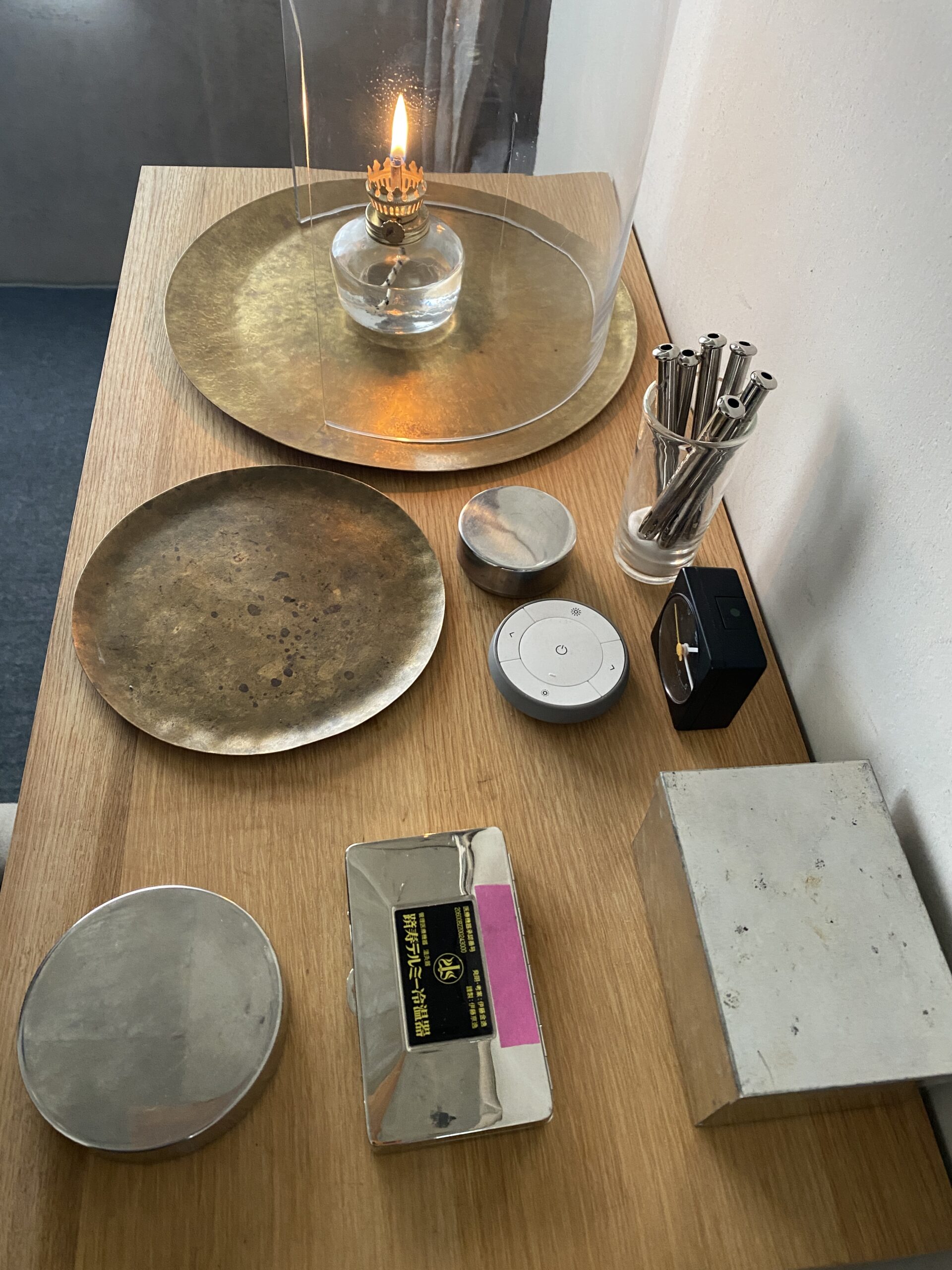
The session I had ran ninety minutes. The mugwort smelled like incense, and the table was warm, so at some point I fell asleep. Afterward my whole body felt warm and my spine felt loose. It was good. What interested me most was that I felt what in Rolfing we would call getting the feet on the ground.
Warmth usually brings on itching for me. That day it did not. That was how that day went, and no more than that.
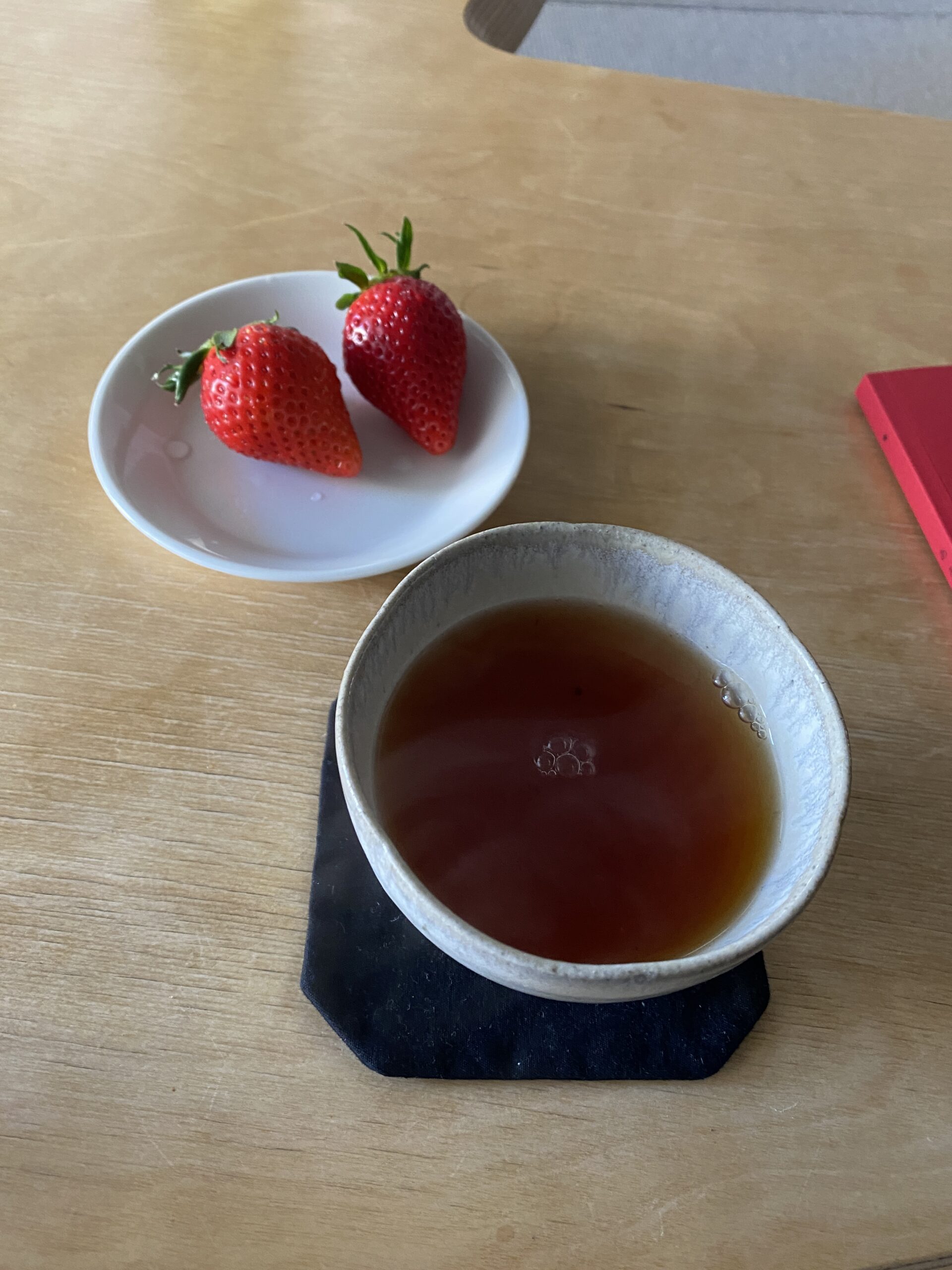
Afterward we had strawberries and hojicha. I ate near Ogikubo station and then went on to a gallery in Nihonbashi, walking lightly, feeling settled.
Miura says that Ito Thermie looks as though it works on the body but reaches the mind. That was my experience of it — a quietness afterward that I had not expected.
What Ito Thermie Is
Ito Thermie is a folk therapy invented in 1929 by Dr. Kin’itsu Ito. “Ito” comes from his surname; “Thermie” derives from Greek and refers to heat.
Ito was born in 1883 in Ichinomiya, Aichi, into a family of physicians. He graduated in 1906 from what is now Kyoto Prefectural University of Medicine, and the following year took up research in psychosomatic medicine at what is now the University of Tokyo Faculty of Medicine. He opened a clinic in Ichinomiya in 1908 and, from 1910, began looking for a treatment that would raise the body’s own capacity to heal. Nineteen years of that work led to Ito Thermie in 1929.
Conclusion
The following Sunday, February 22, I hosted a tarot gathering, and Miura came to that as well. She would go on to rent the treatment room at my studio.
If Ito Thermie interests you, it is worth looking into.
Note, September 2026
Something that was not visible when I wrote this has taken shape over five years.
Miura was a client in my early years of practice. She kept coming for maintenance after her ten-series ended. This article is the record of going to receive a session from her once she had qualified in Ito Thermie and opened her own practice.
The closing lines say she would be renting my treatment room. That period passed, and she now has a room of her own.
From receiving to practicing. From borrowing someone else’s room to holding one’s own. That is how far five years went.
I have been down the same road. While I was working at a pharmaceutical company, I received Rolfing from Akinori Ito in December 2013. From there I went to Germany for the basic training, and started practicing in Shibuya in 2015. Miura spent years in construction, received thermal work and Rolfing, and became a practitioner. The entrances differ, and so do the methods, but the shape is the same — moving from the side that receives a body to the side that offers something to one.
One more thing, about the sensation described above. After the Ito Thermie session I felt what Rolfing would call getting the feet on the ground. Heat, an entrance entirely unlike Rolfing, produced the same sensation. It was one session, so nothing can be concluded from it. But bodies do seem to head for the same place by different routes.