
Rethinking Embodiment and Skill Acquisition Through Artificial Intelligence — Part 3 of 3
Introduction
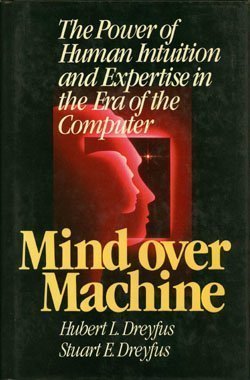
This series looks at Mind over Machine (1986) by Hubert Dreyfus and Stuart Dreyfus.
Part 1 set out the five stages through which a person acquires a skill. Part 2 laid them over my own eleven years of learning Rolfing.
What has been at issue so far is that improving is not simply a matter of accumulating knowledge and technique: it is also a change in the way the situation in front of you appears.
But this is, after all, a book about artificial intelligence. Why should it begin with human skill acquisition? In this final part I will look back at how the book came about, and consider artificial intelligence, phenomenology, and the question of perception — which matters for thinking about embodiment.
Why a Philosopher Came to Doubt Artificial Intelligence
In the early 1960s, Hubert Dreyfus began teaching philosophy at the Massachusetts Institute of Technology. When he explained how philosophers from Plato to Kant had thought about human knowledge and perception, his students gave him an unexpected response. Problems of that sort, they suggested, were already being solved, now that there were computers.
What the students had in mind was the artificial intelligence research then developing rapidly. Give a computer rules, and it can reason and solve problems as a person does. With further research, it might even reproduce human intelligence itself. That was the prospect they were counting on.
For Dreyfus this was not something he could dismiss. The artificial intelligence research of the time shared an assumption with the western philosophy he was teaching in his own courses. The assumption was that human intelligence might be explained as the processing of information according to rules.
Take seeing a dog and knowing that it is a dog. Why do we know? It has four legs, it barks, it wags its tail. Combine such features as rules and perhaps you can identify a dog. But some dogs do not bark, and some do not wag their tails. So finer rules are needed: the shape of the ears, the features of the muzzle, the size of the body, the way it moves. Rules beneath rules, arranged in a hierarchy.
Dreyfus saw this way of thinking in the history of western philosophy. Immanuel Kant held that concepts and rules of judgment play an essential part in how a person understands the world. And Edmund Husserl, the founder of phenomenology, set out to analyze in detail the mechanism by which we take things as meaningful. Dreyfus regarded Husserl as a forerunner of the information-processing model of the mind.
Neither Kant nor Husserl, of course, was thinking about computer programs. But in attempting to explain intelligence through rules and structures, they have something in common with the artificial intelligence research of the time. Researchers were trying to reproduce human intelligence by having a computer execute those rules.
It was precisely this assumption that Dreyfus doubted. Do human beings really understand the world by using rules?
What Phenomenology Reopened
The thinkers Dreyfus valued in his courses were Martin Heidegger, Maurice Merleau-Ponty and Ludwig Wittgenstein.
Their thought differs in each case, but Dreyfus saw in all three a shared concern: that rules alone cannot explain human intelligence.
Heidegger, for instance, attended to how we ordinarily act within a world. An experienced carpenter does not drive a nail while considering, one step at a time, how to grip and swing the hammer. He is absorbed in the task, and the hammer is simply in use. If the hammer breaks or the nail bends, he stops and considers. But ordinarily the tool is already being handled well, before any analysis of it.
Merleau-Ponty gave the body a still larger part. Passing through a narrow corridor, we do not calculate the width of our shoulders against the width of the passage each time. We tilt a little, turn a little, and get through. Climbing stairs, we do not measure the height of each step before lifting a foot. Through experience, the body has acquired ways of moving that answer to its surroundings.
Wittgenstein, too, reopened the question of what it is to follow a rule. Suppose a child lines up the numbers 2, 4, 6, 8 and can then answer that 10 comes next. Is the child holding the rule “add two” in mind throughout? Or has repeated practice, and learning to use numbers as the people around her do, made the continuation simply available?
What the three have in common is that they do not try to understand human intelligence solely as the manipulation of rules in the head. We have bodies, we use tools, and we live among others. Through that experience we learn what matters in a world.
Taking this phenomenological view as his guide, Dreyfus set out to reopen the assumptions of artificial intelligence research. Could a computer — with no body, no childhood, and no experience of growing up among people — understand a world as a person does?
To find out, in the summer of 1964 he went to the RAND Corporation, where he was to evaluate its artificial intelligence research.
What Dreyfus meant to ask was not about the processing speed of computers. It was: what is this “human intelligence” that a computer is trying to reproduce?
What the Book Is Arguing Against
The preface of Mind over Machine opens by presenting the military expectations of the day. If artificial intelligence and computer science advanced, it might become possible to field land, sea and air vehicles carrying out reconnaissance and attack autonomously. Such prospects were being described.
Why the hurry? The Dreyfus brothers explain that nuclear war lay behind it. Against a nuclear attack, the time available for human judgment is only seven or eight minutes. In such circumstances a computer — faster than a person, never tired, never shaken — looks like an attractive solution.
From the March 1985 issue of Time they also quote a description of the American Strategic Defense Initiative, known as Star Wars. Human beings decide the conditions for interception in advance and turn them into a program. But once an attack begins, the final judgment will be the computer’s. It may act before any human commander knows that a battle has started.
What the brothers took issue with was that expectations were swelling without sufficient examination of what computers can actually do. By then artificial intelligence research had been under way for some twenty-five years. Only a small part of its original promises had been realized. And yet the expectation that computers would eventually catch up with human intelligence was repeated again and again.
Before debating what computers should do, the brothers held, we need to be clear about what they can do.
Their particular target was knowledge engineering. Ask an expert how she judges. Organize the rules of thumb that come back, and turn them into a program. Then a computer should be able to judge as the expert does. This is the thinking behind expert systems.
Suppose a physician sees a condition the moment she looks at an X-ray. Ask her why, and she may be able to describe several features. But that description does not necessarily represent the whole of what happened in her recognition. Long experience may have made the image as a whole meaningful to her.
I think again of the exchange between Socrates and Euthyphro, which I described in Part 1. An expert can judge what is appropriate. But she cannot necessarily state that judgment as a general rule. Socrates assumed that there must be knowledge there to be stated. The brothers saw the same assumption at work in artificial intelligence research.
The expert simply cannot state them; the rules must nonetheless be in her head. Extract those rules and intelligence can be reproduced. But what if expert judgment does not arise by applying rules in the first place?
The rules to be extracted may never have existed in that form at all.
Here we return to the five-stage model of Part 1. The novice acts by following rules, but with experience comes an intuitive grasp of the whole situation. In familiar circumstances, an expert acts appropriately without consciously calculating what to do.
The brothers held that artificial intelligence research had understood human intelligence too much on the model of a novice applying rules. Which is why a book about artificial intelligence began with human skill acquisition.
Drucker’s “Critique of Pure Perception”
Let me bring in one more figure here: the management thinker Peter Drucker.
Drucker was in fact involved in how Hubert Dreyfus’s work came to be written. In the 1960s Dreyfus wrote a report on artificial intelligence research for the RAND Corporation. Its publication became a matter of dispute, and it later appeared as the paper “Alchemy and Artificial Intelligence.” It was Drucker who urged him to expand that paper into a book. The result, published in 1972, was What Computers Can’t Do.

And in the final chapter of The New Realities (1989), Drucker writes something that interests me.
In the seventeenth century, in the time of René Descartes and Galileo Galilei, a science developed that understood nature as a mechanism. Kant then published the Critique of Pure Reason in 1781, reopening philosophically the question of how knowledge comes about. According to Drucker, Kant’s philosophy shaped western philosophy for a long time afterward. Even Friedrich Nietzsche, who opposed Kant, and even Wittgenstein in the first half of the twentieth century, were not free of the questions Kant had posed.
Contemporary philosophers, however, no longer think only about Kant’s concerns. What Drucker noted was their attention to signs, symbols, patterns, myth and language. None of these can be understood by breaking the world into individual elements. What matters is the relation among elements, and what they mean as a whole.
And Drucker held that the shift from a mechanical to a biological universe would eventually require a new philosophy. Kant, he writes, might have called it Einsicht — insight — or a Critique of Pure Perception.
That phrase has a particular resonance for Japanese readers of this book, and it is worth a short explanation here.
When Mind over Machine was published in Japanese in 1987, it was given an entirely different title: Junsui Jinkō Chinō Hihan — literally, Critique of Pure Artificial Intelligence. The Japanese title deliberately echoes Kant’s Critique of Pure Reason, which in Japanese is Junsui Risei Hihan.
So in Japanese, three titles stand in a row: Kant’s Critique of Pure Reason (1781), the Japanese edition of this book (1987), and the Critique of Pure Perception that Drucker imagined (1989). The echo exists only in Japanese; in English the book is simply Mind over Machine.
And the order matters. The Japanese title was given in 1987; The New Realities appeared in 1989. So Drucker’s phrase cannot have influenced the Japanese title. Nor is there any material to suggest that Drucker had the Japanese title in mind. Nothing more can be claimed here than that the two phrases overlap.
Even so, I think the direction the two are facing has something in common. It is this: to reopen not only our capacity to analyze the world, but the question of how the world appears to us.
What the Dreyfus brothers described in the proficient and the expert was coming to know what matters as a whole, without breaking the situation into fine elements. Looking at a chessboard. Looking at a patient’s X-ray. Driving a car. Observing a person’s body. With experience, features that were unavailable before become available on their own.
The patterns and configurations that Drucker noted also concern a meaning of the whole, which examining the parts one by one will not yield. Drucker and Dreyfus were not, of course, making the same argument. But in attending to what mechanical analysis cannot capture, the two have a point of contact.
And my own experience of learning Rolfing overlaps with that. Analyzing a body in detail is important. But examining muscles and bones one at a time is sometimes not enough to understand how the person in front of you stands, walks, and relates to gravity.
Knowing the parts and seeing the whole are not the same thing.
The Limits of the Book, and the Questions That Remain
So far I have presented the Dreyfus brothers’ argument. But it should not be forgotten that this book was published in 1986. Artificial intelligence has developed enormously since. Does their argument still hold as it stands?
First, their prediction about chess was wrong. They held that artificial intelligence based on calculation would find it hard to match human expertise at chess. But in 1997 IBM’s Deep Blue defeated the world champion Garry Kasparov. Today chess programs are far above the best human level.
That said, a computer playing chess better than a person is not necessarily the same as a computer understanding the board as a person does. Arriving at the same result does not mean the process was the same.
The grounds for the five-stage model also call for caution. The book presents stages shared across pilots, chess, driving and second-language learning. But it does not explain in much detail how the observation was carried out, or on what basis the stages were divided. It is hard to take the model as a scientific law covering all skill acquisition.
Laid over my own experience of Rolfing, I cannot assert that I passed through the five stages in order. In one area something is effortless; in another I still have to think it through deliberately. Even within one person, the degree of expertise differs by skill.
A larger problem is how intuition arises in the first place. The brothers explain the expert’s intuition as the recognition of holistic similarity with situations experienced before. But how thousands of experiences turn into an instantaneous judgment — that mechanism is not sufficiently explained.
With experience in Rolfing, for instance, you come to notice different things when you look at a body. But to explain how that change takes place in the brain and the body, phenomenology is not enough. Research in neuroscience and cognitive science will also be needed.
The difference from today’s artificial intelligence matters as well. What the brothers mainly criticized was the idea of expressing human knowledge as explicit rules and having a computer execute them. Today’s generative AI, by contrast, learns complex patterns in language and images from large quantities of data. The artificial intelligence of the 1980s and the artificial intelligence of today cannot be treated as the same thing.
Even so, the problem Dreyfus raised has not gone away. A computer solving the same task as a person is one thing; a computer experiencing the world as a person does is another.
In thinking about human intelligence, how far do we need to take into consideration the experience of relating to a world through a body? That question, I think, is still worth asking now that artificial intelligence has advanced so far.
Conclusion
Across three parts I have been reading Mind over Machine.
Part 1 set out the five stages through which a person acquires a skill. Part 2 laid that idea over eleven years of learning Rolfing. And in this part I have looked back at why the Dreyfus brothers chose to criticize artificial intelligence by way of human skill acquisition.
What stayed with me most in reading the book is that improving is not simply a matter of accumulating knowledge and technique. With experience, the way the situation in front of you appears changes.
When I began learning Rolfing, I assumed that learning anatomy and technique would let me understand a body. That knowledge was indeed necessary. But looking back over eleven years, the largest change was not in the quantity of knowledge. It was that the body in front of me had come to look different than before.
What, then, is the work of teaching?
Teaching rules is necessary. But having someone follow rules indefinitely is not the aim. Training wheels are needed at first; unless they come off, a child never learns to balance. And when to take them off cannot be settled in advance by a rule. You have to look at the person in front of you — at what they are sensing, and at what they have become able to do.
At the end of my page on phenomenology for bodyworkers, I wrote that saying it alone changes nothing. I have come back to the same place here. Explaining that one can act without relying on rules, and actually doing so, are different. So are speaking about embodiment and experiencing the world through a body.
Analysis is necessary. But there is something analysis alone does not reach.
That, I think, is what the Dreyfus brothers were asking.
Related Articles
※入稿時に、3本の英題(リンク文言)を入れてください。URLは `/en/phenomenology/`、`/en/perception/`、そして「ロルフィング10回シリーズとは何か?」の英語版です。英題が記録になく、こちらで作らずに空けています。
- Where Does Your “Being” Come From? — Phenomenology for Bodyworkers
- Perception as a Way of Seeing — What Is Rolfing Actually Looking At?
- The Rolfing 10-Series
Articles in This Series
This is Part 3 of Rethinking Embodiment and Skill Acquisition Through Artificial Intelligence — Reading Dreyfus’s Mind over Machine, a three-part series.
- Part 1: Why You Get Worse the Moment You Think About It — Dreyfus’s Five Stages of Skill Acquisition
- Part 2: I Was Never Taught a Procedure — Eleven Years of Training, Read Through the Body
- Part 3: Perception, Not Analysis — Why a Philosopher Was Hired to Evaluate Artificial Intelligence (this article)