
Introduction
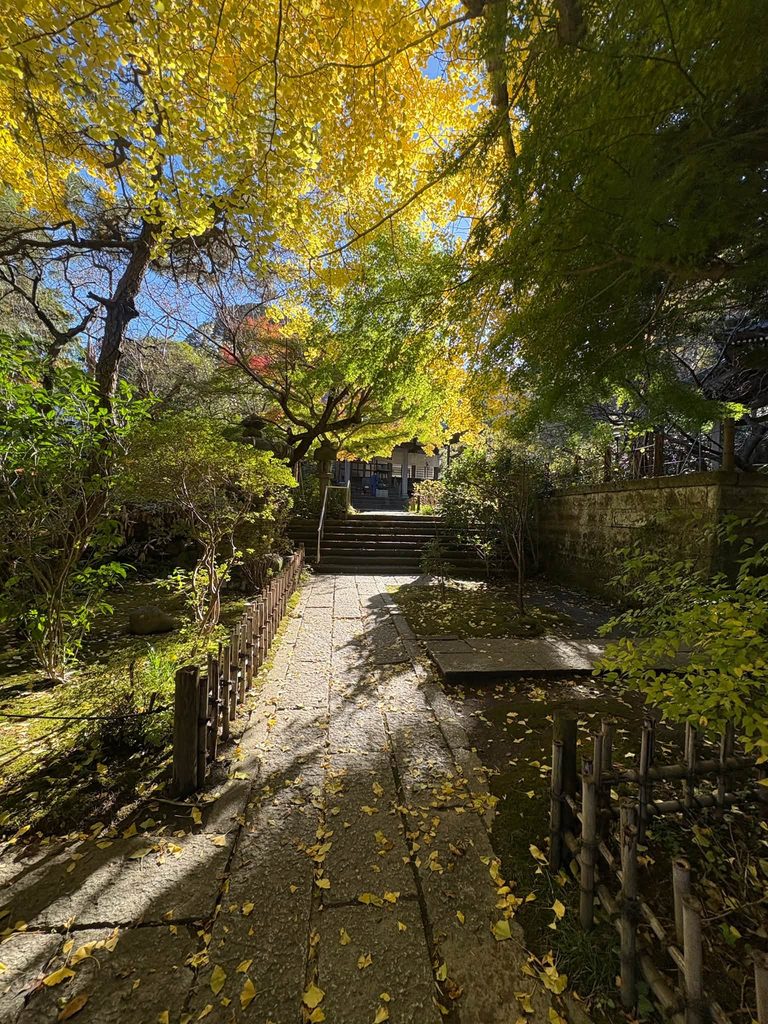
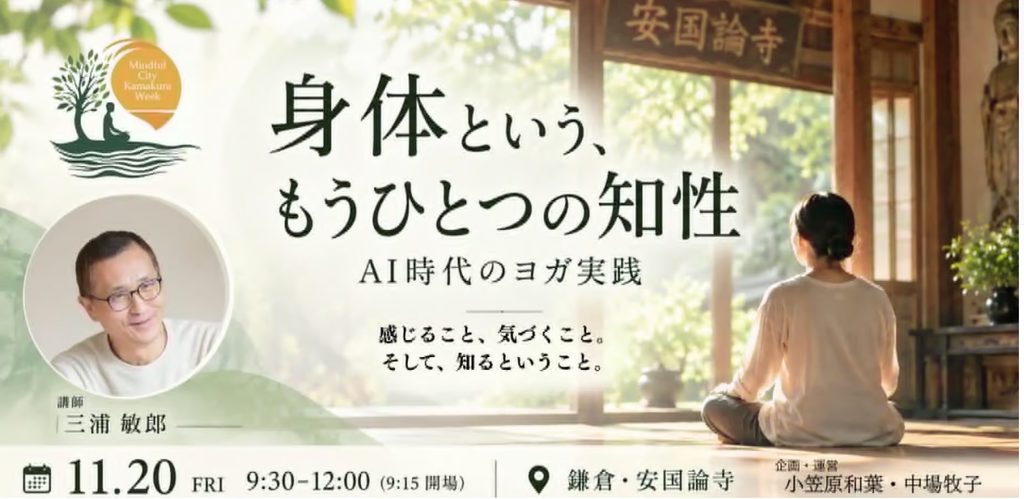
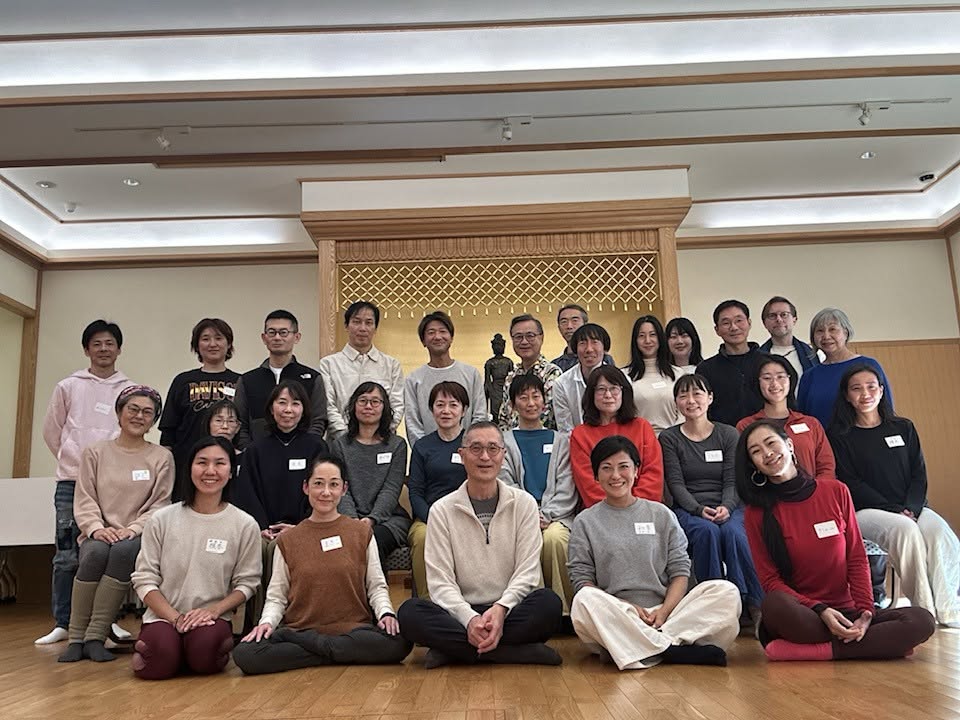
On November 20, 2026, I took part in “The Body, Another Kind of Intelligence: Yoga Practice in the Age of AI,” held in the Kannon Hall of Ankokuron-ji, a temple in Kamakura.
It was one of the programs of Zen2.0 Mindful City Kamakura Week, and it was led by Toshiro Miura, known to his students as “Toshi-san.”
The workshop was organized by Makiko Nakaba (Teachers) and Kazuha Ogasawara (Body Sanctuary).
What Is Zen2.0?
Zen2.0 is an international conference on Zen and mindfulness that began in 2017. Its main venue has been Kenchō-ji in Kita-Kamakura, one of Kamakura’s leading Zen temples and an important place in the history of Zen in Japan.
This year (2026) marked its tenth anniversary. The program opened on November 14 at the Kamakura Noh Stage, ran sixty events at venues across the city, and closes on its final day at Kenchō-ji. This workshop was one of those events.
Two days earlier, on November 18, I also attended a special tenth-anniversary lecture by Nanrei Yokota, Chief Abbot of the Engaku-ji branch of Rinzai Zen, on the world of the poet Shinmin Sakamura.
My Third Class with Toshi-san
This was the third time I had joined one of Toshi-san’s classes in person: first on August 16, 2026, then on November 3, and now this one. This year gave me the chance to attend his workshops one after another.
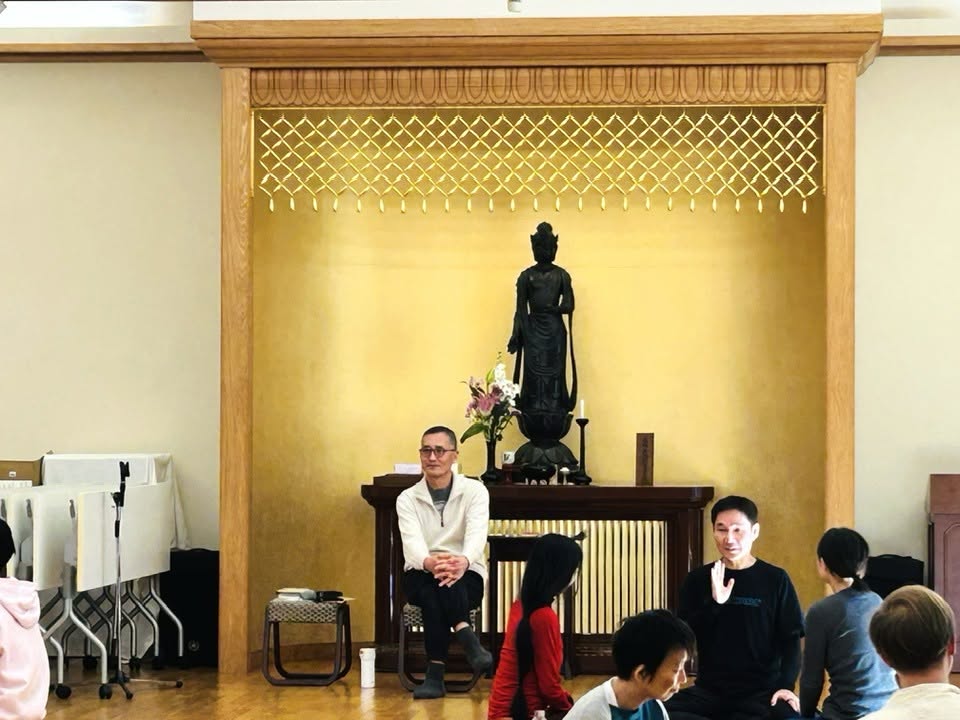
I wrote about the August workshop in terms of awareness and the “field” that a group creates, and about the November 3 workshop in terms of yoga philosophy and direct experience.
👉Related Articles
- Beyond the Practice of Yoga — The Process of “Awareness” Deepened by Two Approaches | Part 1: Meeting Toshiro Miura, Kripalu Yoga Teacher
- Beyond the Practice of Yoga — The Process of “Awareness” Deepened by Two Approaches | Part 2: How Is the “Field” Created?
- Is Direct Experience Being Left Out? — A Day at the Workshop “Yoga Philosophy Felt in the Body”
Eleven Years Away from Yoga Workshops
I began yoga in 2007 with Ashtanga Vinyasa Yoga, and over time I also explored other styles, including Iyengar and Sivananda.
Around 2011, I took a Kripalu Yoga course in Phoenix Rising Yoga Therapy, and in January 2013 I earned my RYT200 certification at Under the Light Yoga School in Tokyo.
From August 2014 onward, I spent eleven years studying bodywork, from Rolfing certification to continuing education. From around 2015, I stopped attending yoga workshops, though I kept up my own yoga practice.
👉Related Articles
Around the time I had finished that long stretch of study, I saw a Facebook post by Kazuha Ogasawara announcing an in-person class with Toshi-san on August 16, and I signed up. I also hoped to find ideas for the weekly yoga class I teach.
What Makes Kripalu Yoga Different
Ashtanga is relatively dynamic, and each pose is held only briefly. The sequence is fixed, and whether you move on to the next pose is up to the teacher. As a result, practitioners tend to look at poses in terms of whether they are being done correctly or incorrectly.
My teacher, the American Tarik Thami, encouraged us to enjoy the practice and was never strict about right and wrong. Even so, I remember being surprised to learn how many people got injured, including very flexible practitioners and yoga instructors themselves.
When the wish to “do it well” grows strong, attention shifts away from experiencing what is actually happening in the body and toward the act of completing the pose. Over time, that began to feel wrong to me.
After receiving Rolfing and feeling my poses deepen, I began to work within what my own body could do, and to see poses as a way of getting to know the body, and of meeting reality as it is happening. I believe this now shapes the yoga classes I teach.
Kripalu Yoga is not about being good or bad at poses. Its focus is on how to feel the body. Because it values sensing what is happening here and now, it seems to me close to meditation and mindfulness. I was fortunate to attend three of Toshi-san’s classes in person this year.
Twenty-Six People in the Kannon Hall
Twenty-six people took part, with two staff members. Most came from Kanagawa Prefecture, and some traveled from Shizuoka and Yamanashi. Five had never done yoga before. Some came through Makiko’s or Kazuha’s networks, some found the workshop on their own, and others came by way of Zen2.0.
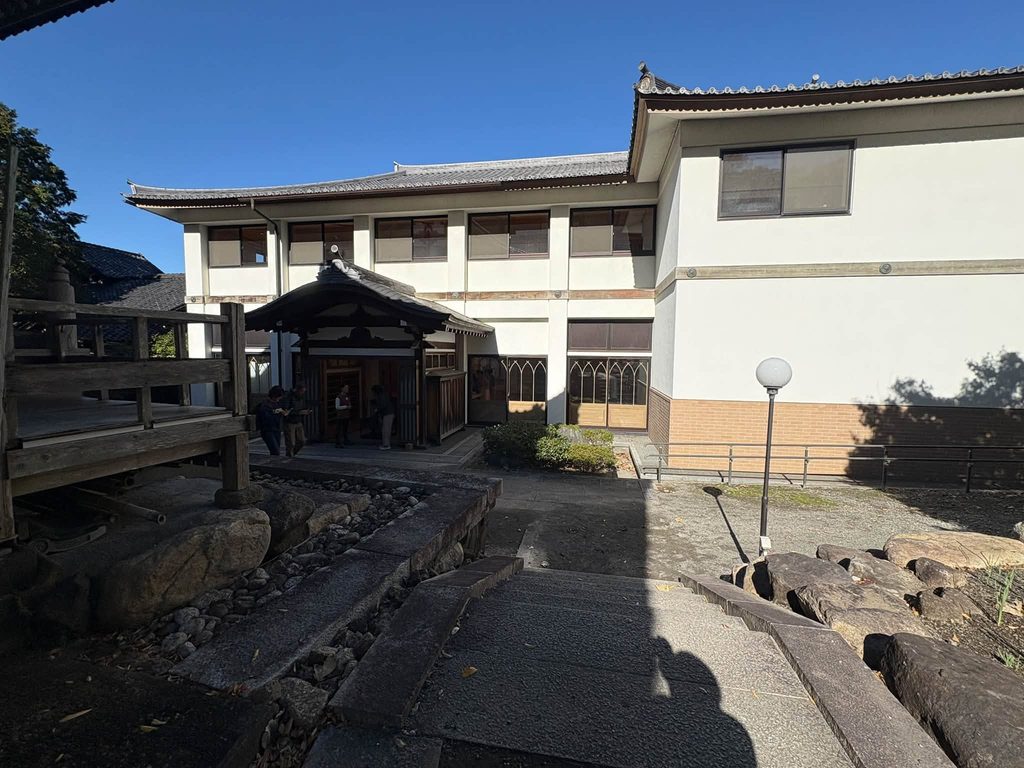
Participants were welcome to bring a towel instead of a yoga mat. Perhaps thanks to efforts like this to make the workshop easy to join, eight of the participants were men. I could feel the organizers’ energy and commitment.
The class moved from “noticing” to “simply feeling,” and then to sensing the inside of the body and letting tension go. It began with stretches using a chair, movements of the pelvis, and loosely shaking the hands while standing.
What stood out to me was an attitude of not jumping to conclusions. Everyone’s reasons for coming were different, and any reason was fine. Rather than correcting what someone said or steering them toward a right answer, Toshi-san valued whatever each person put into words. That was how he led the class.
Because the group was large, we worked in groups of three, introduced ourselves, and took time to share our experiences at natural pauses.
The Body Runs on Autopilot
Toshi-san often uses analogies in his classes.
For example, in everyday life the body runs on something like autopilot. But once we start thinking things through in our heads, we drift away from that natural functioning and can end up confused. At that point, the sensations of the body, which are what matter, become harder to notice.
Even when we try to attend to what is happening inside the body, thinking tends to take over. We wonder, “How do I get this to relax?” and try to control the body with the mind. Somewhere along the way, we forget to feel at all.
So we deliberately turned our attention to a body that was already moving. Using the breath, which is especially easy to notice, as our anchor, we observed what happened. Not trying to make anything happen, but letting things happen as they would, became one of the themes of the day.
Turning Inward with Closed Eyes: A Standing Body Scan
One way to become aware of the body was to close the eyes during simple movements. With the eyes closed, it becomes easier to focus on the inside of the body. Toshi-san guided the class while deliberately avoiding anatomical terms.
What stayed with me was his point that each of us could take his guidance in our own way. Instead of fixing a single meaning for his words, we let them serve as cues for feeling the body. Here, too, I saw the same refusal to jump to conclusions.
After moving, we did a seven-minute standing body scan, bringing attention in turn to the soles of the feet, the ankles, knees, pelvis, spine, ribs, belly, chest, neck, and face.
For those of us who practice yoga, a body scan is usually done lying on the back, often as Yoga Nidra. This time, we stood, and with guidance we carefully sensed the body from the soles of the feet to the head, simply observing.
As attention moved through each part of the body, I came to know what sensations were arising there. It is precisely because we try to observe objectively that subjective insights surface. It was a fascinating experience.
When I tried it, I noticed a difference between left and right. From the pelvis to the trunk, the connection was harder to feel on the right and easier on the left. From the rib cage to the shoulders, the connection through the right collarbone in particular was weak.
I realized that this was why my head tilted to the left. As I kept my attention on those connections, my body as a whole seemed to come together more.
When we shared our experiences, a wide range of impressions came up. Toshi-san consistently made it clear that it was fine for each person’s experience to be different. I think that is why participants felt safe putting their experiences into words.
Not Right or Wrong, but What Is Happening
Toshi-san told us that in this class we did not need to aim at doing things “correctly.” Rather than judging what is right and what is wrong, we attend to what is happening now. Even if we cannot tell what is happening, we stay with it. Sometimes we keep moving, and sometimes we stop.
Like sitting in zazen, we simply stay there. I understood that this way of being is itself the practice.
Before we moved on to poses on the mat, Toshi-san spoke about being receptive, just as in the body scan. The key, he said, is to be receptive rather than active.
When the urge to “do” something is strong, we can miss sensations that are already there. What I took from this is that feeling means first letting in what is arising within the body. There is no need to search for reasons right away, or to decide what to do about it.
Observing Objectively Brings the Subjective into View
Toshi-san also spoke about why the body scan matters. A body scan is not necessarily for relaxing. If there is tension, we observe it as tension; if we feel unsettled, we observe that unsettledness as it is.
What matters in yoga, I think, is not to rush in and try to change something, but first to see the facts, the reality of this moment.
What comes into view is not only muscular sensation or the breath. We also begin to see the movements of the mind, discomfort, and small reactions such as resistance or expectation. While we think we are observing the body, we start to notice our own subjectivity as well.
Noticing “I am thinking right now” becomes part of the observation, too. What I find interesting is keeping that awareness not only while sitting still, but also while walking and moving the body.
On the other hand, when the feeling that “I have to do this properly” takes hold, attention turns away from our own experience and toward getting the task done well. Then it becomes harder to observe ourselves as we are. What matters, I felt, is not matching a right answer someone else expects, but staying with our own sensations.
Toshi-san also asked us: what do you really want?
Carrying the Body Scan into the Poses
After the standing body scan, we spent forty minutes in poses, keeping that same quality of attention.
I had never deliberately practiced entering yoga poses while holding on to the sensations from a body scan. Observing the state of the body first, then moving without letting go of that sense: it was a first experiment for me, and it felt very fresh.
Even in the poses, I felt the difference between left and right. In a pose where I pushed the pelvis out to the left and raised the left arm, and in its mirror image to the right, the left side felt much easier. In a forward bend with bent knees, letting the upper body hang and placing the hands down, I had the sense that the left side was lengthening more.
It took a while for the tension in my shoulders to release. At the same time, I discovered that my lower body could move far more than I had expected.
We ended the poses by placing both hands over the heart and thanking the body.
When we try to observe the body objectively, we also become aware of our own subjectivity as it appears. And by putting that awareness into words, what we experienced gradually becomes clearer. This time, I felt the power of the body scan anew. For me, the essence of yoga may lie in the body scan. That was the feeling this session left me with.
In the closing share, many different voices came up. At the very end, Toshi-san said something like this: What do you want to do? You can find out by turning toward the body. Rather than looking to the future or the past, explore what is happening inside you now. That, he said, is where the real richness of yoga lies.
AI and Embodiment: The Symbol Grounding Problem
The title of this workshop included the phrase “Yoga Practice in the Age of AI.”
AI has surpassed top human players in Go, shogi, and chess, and it now writes, translates, and generates images. Yet in what sense, and about what, AI can be said to “understand” is not a question with an easy answer.
Humans come to know words by touching the world through the body and building up experience. AI learns patterns from vast amounts of data. These two kinds of learning differ, at least in some respects.
This is where the “symbol grounding problem” becomes interesting. I first encountered it in Gengo no Honshitsu (The Nature of Language: How Words Arose and Evolved), a book by cognitive scientist Mutsumi Imai and linguist Kimi Akita, available only in Japanese. Starting from onomatopoeia and sound symbolism, words whose sounds evoke what they describe, the authors explore how language is connected to the body, how children learn words, and how human language may have evolved. The symbol grounding problem is one of the central questions of the book.

The symbol grounding problem was originally posed as a problem for artificial intelligence by the cognitive scientist Stevan Harnad.
Take the word umeboshi, a Japanese pickled plum. If we link it only to other words such as “sour,” “red,” and “food,” can we say we know what umeboshi is? If symbols are explained only by other symbols, with no connection to the actual thing, where does meaning take root? That is the question Harnad raised.
We do not just see an umeboshi. We can touch it, put it in our mouths, taste its sourness, and connect it with times we have eaten one before. Knowing something includes not only sight but also touch, taste, the body’s reactions, and the ways we relate to that thing.
Mount a camera on a robot and it can capture images, but that alone does not mean it experiences an object the way a human does. What interested me while reading the book was how the meaning of words is tied to bodily experience.
The body scan we did in this workshop seems connected to this question.
Bodily sensations are already arising within us before we explain them in words. We turn our attention to them, live them as experience, and only then put them into words. Through Toshi-san’s class, I was able to think again about what it means to experience things through the body in the age of AI.
Conclusion
After starting with Ashtanga and spending eleven years studying bodywork, I attended three of Toshi-san’s classes in a row in 2026.
What I took from those three classes is that Kripalu Yoga is close to meditation and mindfulness: it is not about being good or bad at poses, but about how to feel the body.
When we try to observe the body objectively, we also become aware of our own subjectivity as it appears. And by putting that awareness into words, what we experienced gradually becomes clearer. This time, I felt the power of the body scan anew. For me, the essence of yoga may lie in the body scan.
Noticing what is already happening in the body, rather than trying to become able to do something. When that perspective shifts, the same pose becomes a different experience. I want to bring what I learned here into my own practice and into my yoga classes.
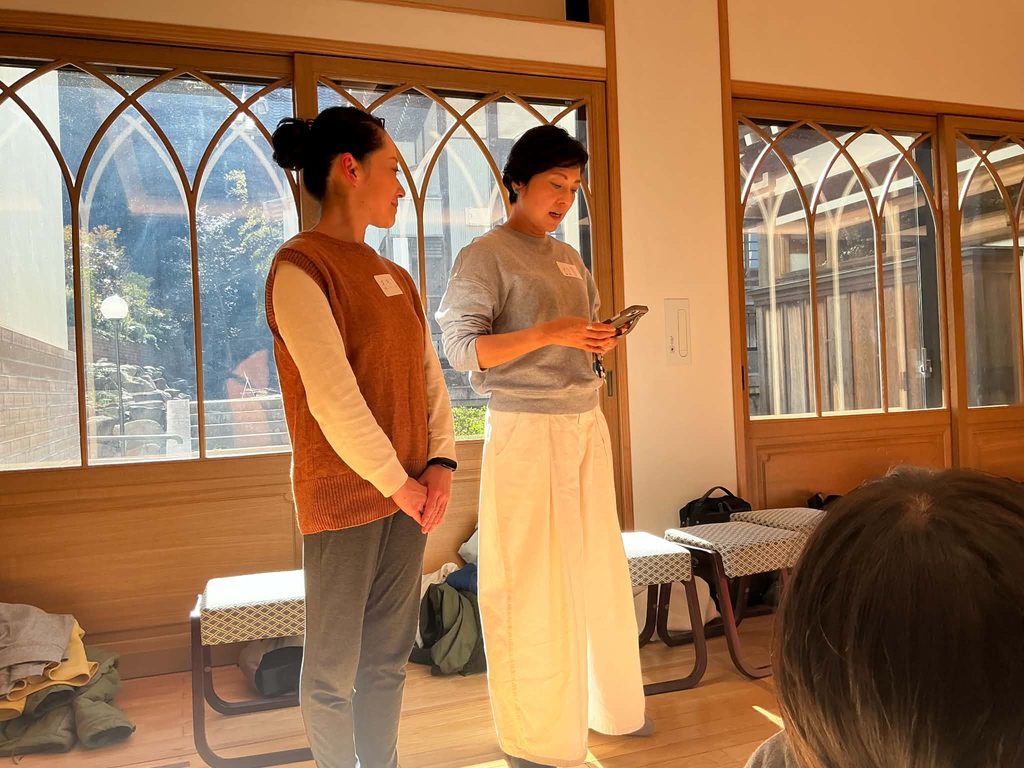
My thanks to Toshi-san for his careful guidance, to Makiko Nakaba and Kazuha Ogasawara for creating this space, and to everyone who shared their experiences.
👉Related Articles
- Beyond the Practice of Yoga — The Process of “Awareness” Deepened by Two Approaches | Part 1: Meeting Toshiro Miura, Kripalu Yoga Teacher
- Beyond the Practice of Yoga — The Process of “Awareness” Deepened by Two Approaches | Part 2: How Is the “Field” Created?
- Is Direct Experience Being Left Out? — A Day at the Workshop “Yoga Philosophy Felt in the Body”
- Yoga — Nearly Twenty Years of Practice, and a Summary of Forty-Five Days of Training