
Introduction
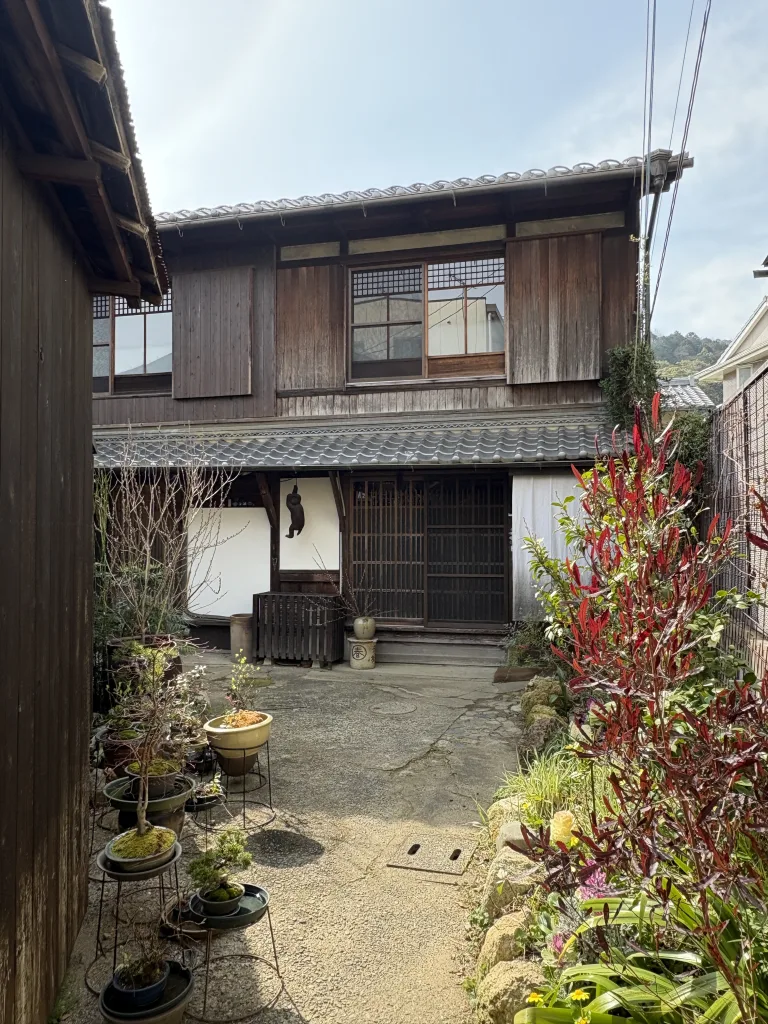
Recently, I had the opportunity to attend a Shugendō lecture by Toshihiko Fuke at “Yohaku,” a modern-day terakoyalocated near Miidera.
What was discussed there was a worldview that does not aim to “understand nature,” but rather to “enter into nature.” As I listened, one experience strongly resurfaced in my mind—my time in Kumano.
The Distance Between Humans and Nature in Kumano
What struck me most in Kumano was how the Japanese relate to nature.
The Kii Peninsula is a place of powerful natural forces:
- frequent flooding
- dense forests
- countless rivers and waterfalls
Within such an environment, the Japanese did not attempt to control nature.
Instead, it seems they have continually asked:
How do we revere nature?
How do we live in relationship with it?
By visiting the shrines of Kumano, I felt I was being given a chance to re-examine, through my body, what it means to: entrust oneself to nature live in harmony with it
Entering Nature as It Is
The shrines I visited in Kumano carried a strong sense that
nature remains as it is, without excessive human intervention.
These are not overly structured or artificially maintained spaces.
Instead, what comes directly into the body is: the humidity of the forest, the weight of the air, and the sound of water.
And when you enter such a space, it begins to feel as if
you can “hear” the voice of nature.
This is not something heard as sound.
And yet, unmistakably, the body responds, the breath changes and perception opens. This process unfolds naturally.
The Feeling of “Being Kept Alive”
From this experience, what arose was a deep sense that
“I am being kept alive.”
In everyday life, we tend to believe, that we are controlling things and that we are directing our own lives.
But in the natural environment of Kumano, this sense gradually dissolves.
In its place emerges a different awareness:
- that we exist within nature
- that we are supported by it
And from that awareness, a feeling of gratitude naturally arises.
“Entering” in Rolfing
This experience is deeply similar to what happens in a Rolfing session.
Many people who come to Rolfing feel that:
- they understand things intellectually, but cannot act
- no matter what they try, nothing changes
One client, for example, struggled with:
- lack of direction in their organization
- difficulties in relationships
- uncertainty about their own axis
Change That Begins in the Body
What occurred through Rolfing was not “understanding,” but change beginning in the body.
- the body’s axis became organized
- posture changed
- breathing changed
As a result:
- relationships shifted
- the organization’s direction became clear
- a sense of personal direction emerged
What is particularly interesting is that:
when one changes, others appear to change as well.
This suggests that what has shifted is not just the individual, but the relationship itself.
Nature and the Body Share the Same Structure
What Kumano and Rolfing have in common is this:
entering into relationship
Both nature and the body are:
- not fixed entities
- but constantly changing within relationships
And when we “enter” into that relationship:
- separation softens
- perception opens
- structure transforms
Conclusion
Many people who come to Rolfing feel that:
- they are afraid to face themselves
- yet they still want to change
But there is no need to force oneself to “face” anything.
Just as when entering the natural environment of Kumano,
one can simply enter through the body.
Then:
- perception opens
- relationships shift
- change naturally occurs
This is because:
we do not change through understanding, but through entering into relationship.