Introduction
When someone goes through the ten sessions of Rolfing, something happens that goes beyond a change in how the body is used. The way the person lives begins to change. I have been giving sessions in Shibuya, Tokyo, and I have watched this happen many times.
The problem was how to put it into words. Saying that the body changes and so the mind changes explains nothing. What in the body changes, and in what way, so that the way a person lives changes with it? I went on working without being able to say it.
Looking for the words, I came across Jeffrey Maitland’s Spacious Body: Explorations in Somatic Ontology (1995). Maitland was a Rolfer, a tenured professor of philosophy, and a practitioner of Zen.
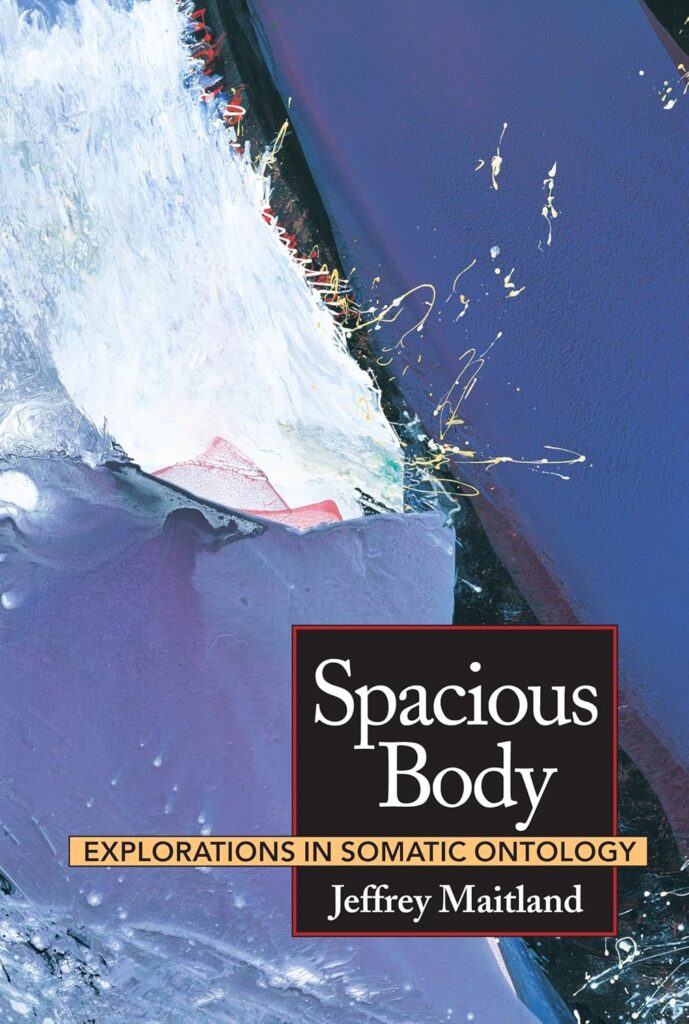
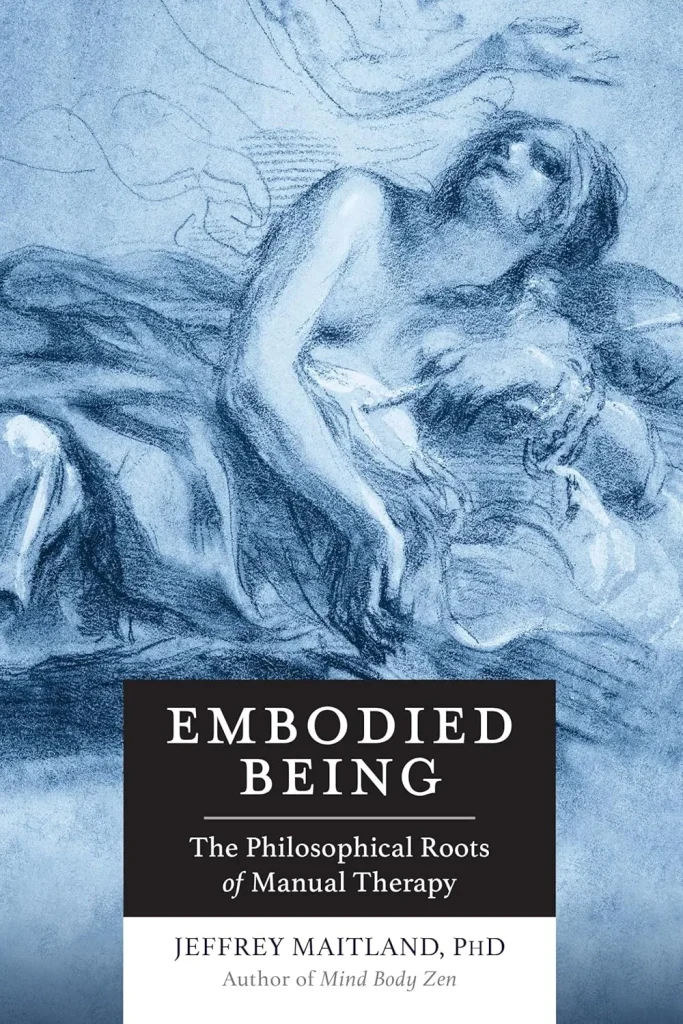
Together with Embodied Being: The Philosophical Roots of Manual Therapy (2016), written twenty-one years later, these two books are what I will be working from here.
This page lays out the whole of it. It is also the entrance to the four articles that follow.
Change and transformation are not the same
The first distinction Maitland sets up is between change and transformation.
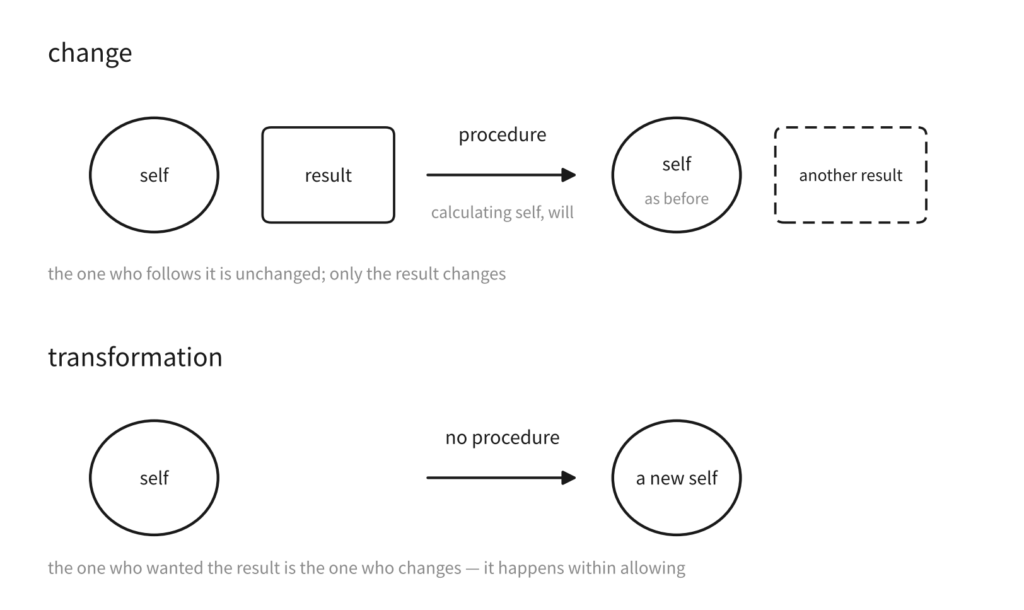
Change requires a procedure. The order is fixed — do this to that and this will follow — and if you follow the order, you get the result. What is at work here is the calculating self and the will. And a procedure produces its result without altering the one who follows it. You can cook a dish exactly by the recipe and be the same person before and after.
Transformation does not work that way. It asks that the calculating self and the will die, and that a new self and a new will be born. It is not the result that changes. It is the one who wanted the result.
This is why Maitland writes that the phrase “technology of transformation” is a contradiction in terms. If there is a procedure, what you have is change. Transformation has no procedure.
In the world of bodywork, transformation is often spoken of as a technique. Once you have this distinction, that way of speaking no longer holds together. At the same time a question arises: then what is the ten-session series, which is a procedure?
That question is taken up in Part 4 — what gets left out when you work by a fixed procedure, and what, instead, decides when the work is finished.
“Trans” means across, not change
If you read transformation as changing a form, you will misread it. The word divides into trans and formation. Trans means across, beyond — it does not mean to alter. So transformation is not a matter of changing the form, but of taking up a different relationship to it.
Maitland gives the example of a transatlantic flight. The positions of the continents cannot be changed. So you take up a new relationship to them: you fly across. Nothing about the continents has moved, and yet the relationship to them is different.
In Rolfing, gravity is what this comes to. Gravity cannot be changed. What Ida Rolf did was not to reduce gravity but to change the relationship to it — from carrying it as a burden to using it as support. Gravity itself is exactly as it was.
And this is not only about gravity. A person’s skeleton, the history they grew up in, the habits they have built — none of these can be changed. What can change is the relationship to them.
Going back to the root of a word
What we have just done is to take a word apart and return it to its original sense. This is a method Maitland uses throughout both books, and it is one of the pleasures of reading them. Return an everyday word to its earlier form and what the word was pointing at comes back into view.
Understanding, for instance, is literally to stand under. The condition we describe as being all in one’s head, he restates like this: there is nothing standing under that person’s thinking. To understand is for something to be standing under the thought.
Responsibility is the ability to respond. Not something laid on you, but something you can answer with. Crisis is a turning point. The sense of something bad is not in the original word.
Emotion divides into e and motion — a moving outward. Expression is a pressing out. Both say that feeling is not something stored inside but a movement toward the outside. This is taken up in Part 2.
The body is stretched between earth and sky
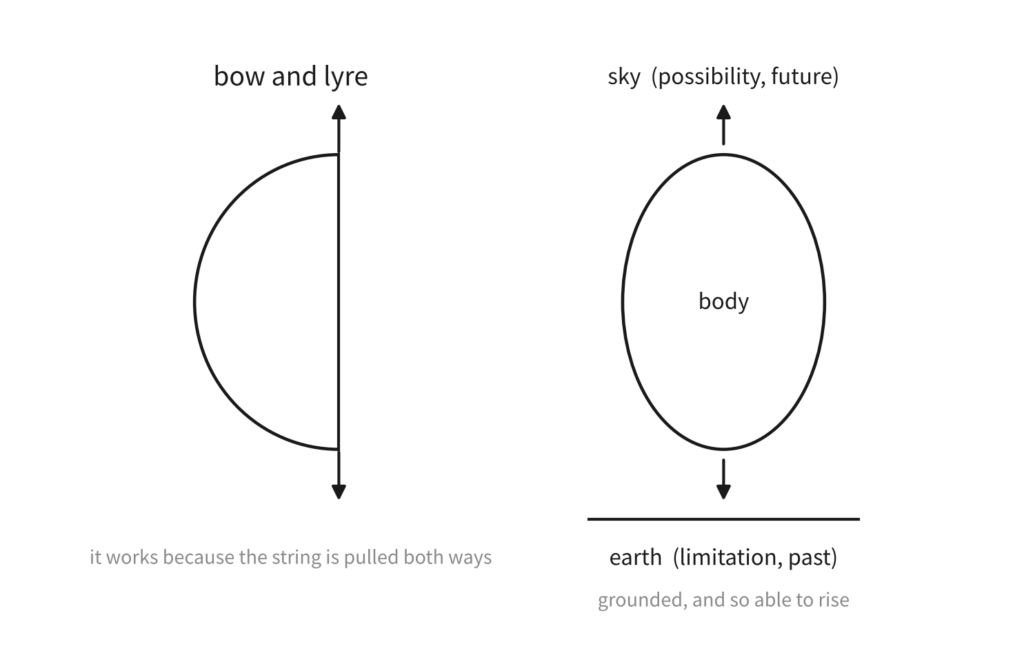
One word found by this method is worth looking at in full: palintonos, which is often used in the Rolfing world. Ida Rolf was fond of the German word Spannung for the tension of the body — tension, stretch, span, a heightened pitch. No single English word carries all of that. Looking for a replacement, Maitland came upon a line from Heraclitus, the philosopher of around 500 BCE: a harmony stretched back and forth, like that of the bow and the lyre. The Greek for “stretched back and forth” is palintonos.
Tonos is the root of the English word tone — musical tone, muscle tone, emotional tone. It does not mean stretched in general but stretched to pitch, the way a tuned string is. Palin means back and forth, the palin of palindrome. A bow and a lyre work because the string is pulled in two directions at once. Take the tension away and neither one works. That is why palintonos is rendered as a unity of opposition.
Then why does the tension of the body matter so much? Because a human being is not an animal that lives with its spine parallel to the ground. We stand with our feet on the earth and our heads lifted. Being grounded and rising upward are not two separate events. They are the two sides of one stretch, and neither holds without the other. It is because you are grounded that you can rise. An integrated body is a body in which that stretch is working.
Maitland also writes about this stretch as the one between limitation and possibility. Earth and the past are on the side of limitation; sky and the future, on the side of possibility. Limitation that does not confine you; possibility that does not lift your feet off the ground. To live between them is freedom. The limitation and possibility of Part 4 connect here.
Not becoming someone else, but becoming more yourself
Read this way, it becomes clear what transformation is not. It is not deciding on an ideal figure and bringing yourself into line with it.
Maitland writes about a person who was receiving Rolfing. At first she thought it was a matter of being remade into someone else. As the work continued she understood that it was not. She was being allowed to be who she was.
Someone who finished the ten sessions wrote the same thing.
Having received Rolfing, I feel that my life changed, and there is also a sense that I was able to return, from a path I had been proceeding along off-course, to my original path.
Keisuke Sekita, ten-session testimonial
The phrase that catches the eye is “return to my original path.” He did not move onto a new road. He came back toward the one that was already his. That “my life changed” and “I returned to my original path” can stand in the same sentence without contradiction is because transformation has that shape.
Then which self is it that one returns to?
Which self is “more yourself”
Maitland divides the self in two here.
Core and surface, the subject of Part 2, turn out to be a matter of the self. The surface is the ego-self: the will, and the orientation toward the world. The core is the true self: allowing, and the place from which one orients toward the world.
The word ego is usually used for something to be got rid of. His use is different. The self grows as both core and surface from the beginning — as both the true self and the ego-self, he writes. Neither of the two is unnecessary.
The trouble lies in the two not being differentiated. From a conflicted state it is next to impossible to tell core from surface, true self from ego-self, in experience. And that differentiation in experience, he writes, is precisely what is required for a self to be completed.
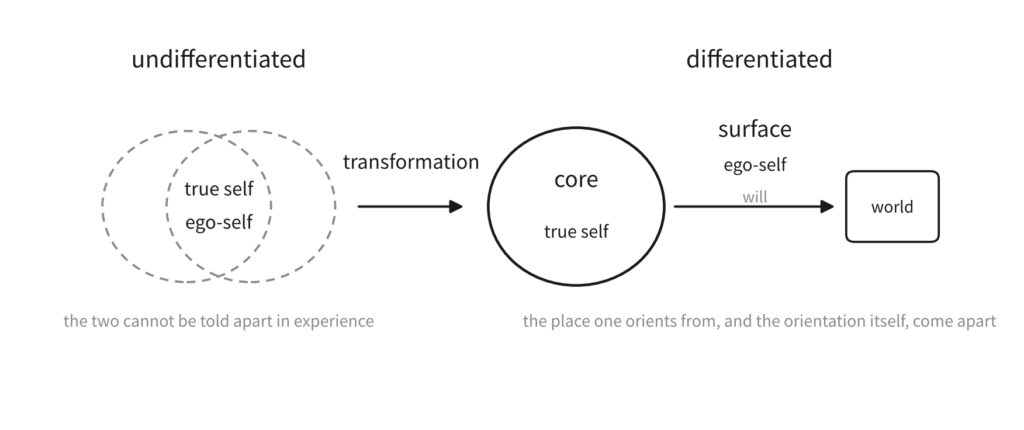
So becoming more yourself takes the form of the completion of self. You do not become another self. What had grown as two comes apart in experience. When it does, a person’s being who they are shows itself without conflict.
Maitland describes this path as three stages. The first is the creation of a separate self. The second is the completion of selfhood — the realization of the true self. The third is what Buddhism calls no-self, and what he calls the spacious body. The title of the book comes from there.
This series goes as far as the second.
Transformation happens where there is a way of being
If there is no procedure, then how does it happen at all?
Maitland’s answer is that it happens within allowing. He states plainly that he is using the word in a sense other than its everyday one, and that it is not passive. Active and passive are both forms of the will, he writes. Going into action is will; staying still is also will. Allowing is neither. It is not a way of doing but a way of being.
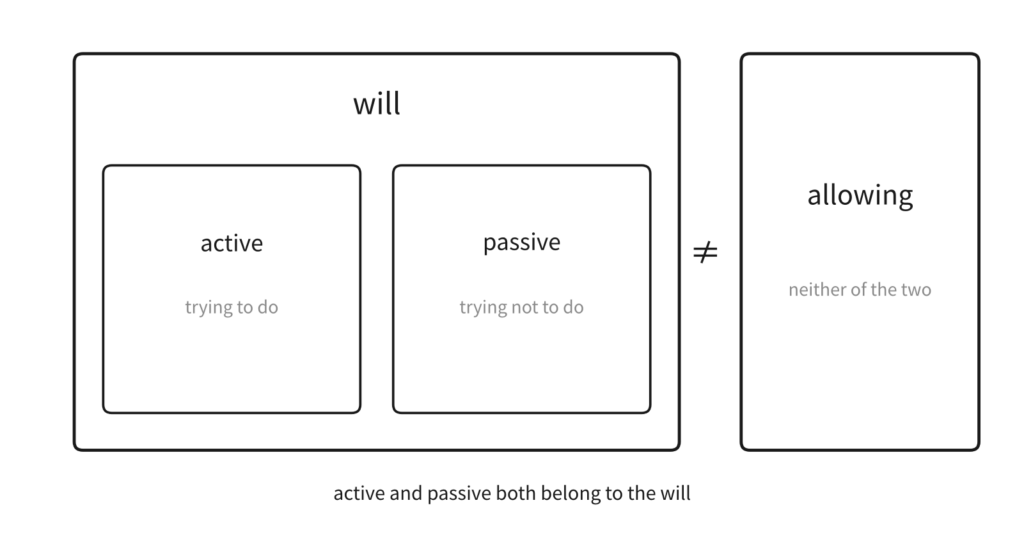
What is worth noticing is that he does not write that allowing causes transformation. He writes that transformation happens within allowing. Not a cause, but the ground it happens on. Where allowing holds, transformation can occur.
Seen from the practitioner’s side, this becomes a question of one’s way of being. What decides what happens is less what you do than the way of being you are in while you do it. That side of it is gathered on another page.
What the title of the book points to
Here it is worth returning to the title: Spacious Body.
Start with spacious. It means having space. But Maitland states that the space he means here is not the measurable space of science, nor a Cartesian coordinate system. It is lived-space, which Part 2 takes up.
When a person is afraid, their space contracts. When they are glad, it expands. Measure the room and it is the same room, but the space the person is living is stretching and shrinking. A spacious body is a body whose space is not contracted.
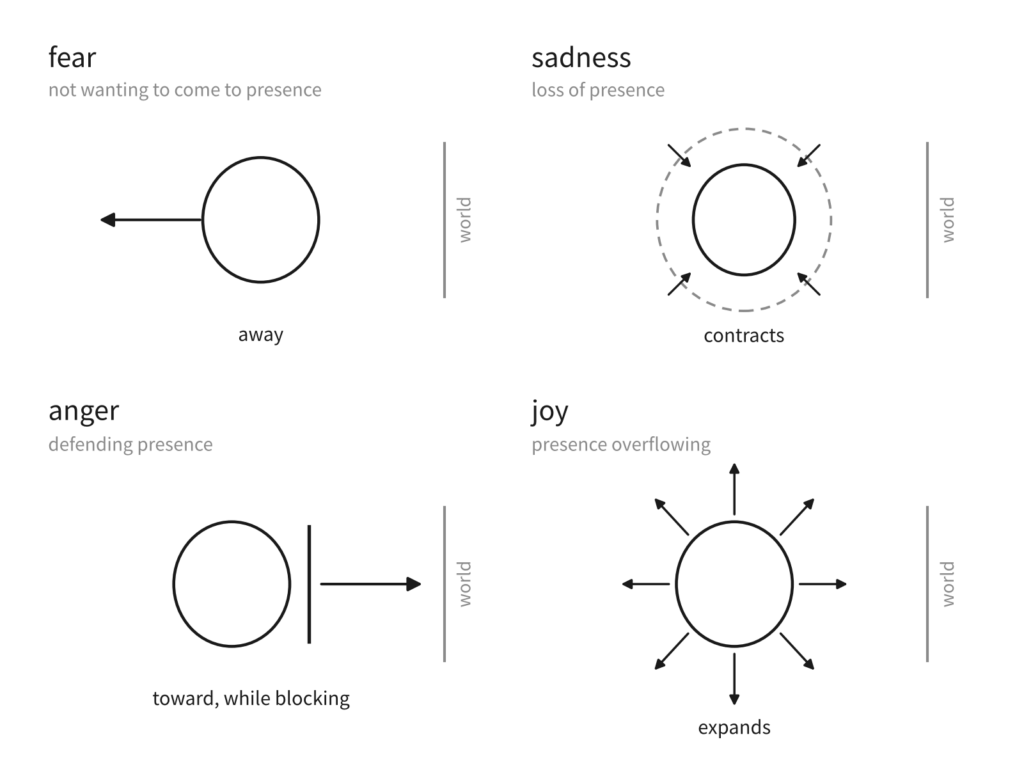
The word appears at the end of his account of transformation, and there he takes trans one step further. The particular relationship to form that trans points at — that relationship, he says, is allowing. So transformation can be restated as allowing-formation, or as allowing-presence.
Said in full: transformation is allowing the way, style, or manner in which a person is or becomes who they are to come forth completely, freely, and without conflict. It is not bringing yourself into line with a moral, bodily, or spiritual ideal.
And when one is freed from conflict and fixation, what stands there is the spacious body. It is this spacious presence, standing here, upright in itself, awake and at ease in the limitations of form and the fullness of time.
So the title does not name an ideal body to aim at. It names the person themselves, as they appear once the conflict is gone.
The book also uses the term in a second sense — the third of the three stages above, what Buddhism calls no-self, which lies beyond the completion of self. That is not covered in this series.
Which is why four words are needed
There is a sentence in Spacious Body saying that transformation begins with the experience of distinguishing core from surface. And distinguishing core from surface, it also says, is the same thing as distinguishing allowing from will.
So transformation is the very process in which what these four words point at comes apart in experience. It is not that you learn the words and then transformation happens. The coming apart is the transformation.
So we will take the four one at a time.
Part 1 is prereflective — what lies before thinking. It starts from the question of why a posture you have corrected goes back to what it was.
Part 2 is core and surface — the place one orients from, and what one orients toward. Emotion, and the distance we keep from other people, both appear as the shape of the space these two make.
Part 3 is allowing and will — the question of why you cannot let go of tension just by deciding to.
Part 4 is limitation and possibility — the relation in which possibility exists because limitation does. Freedom is the creative appropriation of limitation: that is Maitland’s definition, and the whole book comes back to that one sentence. To appropriate is to make something your own. Not to remove the limitation, but to take it up as yours.
- Why Good Posture Never Lasts — What “Prereflective” Means
- Why the Same Room Feels Wide One Day and Narrow the Next — What “Core” and “Surface” Mean
- Why You Cannot Relax Just by Deciding To — What “Allowing” Means
- Why Aiming at an Ideal Self Does Not Work — What “Limitation” and “Possibility” Mean
The limits of this view
Four things are worth saying.
The first is that putting the word transformation on the sign collides with Maitland’s own position. Transformation has no procedure, he writes. If you are going to offer it as something people can come and receive, the most you can say is that you prepare the conditions in which transformation can occur. You cannot say that you will bring it about.
The second is what happens when it does not occur. An explanation that rests on a way of being rather than a procedure makes it possible to put the failure on the person who came — they were not able to be in allowing. That explains nothing, and it loads the burden onto the one who received the work.
The third is that this kind of distinction is not the kind you demonstrate by measuring. The distinction between change and transformation, and the one between core and surface, are proposals about where to cut experience. So they can only be tested by what they let you see. When a situation comes up that the distinction cannot account for, you have to be able to doubt the distinction.
The fourth is that the division into true self and ego-self is carried over from several traditions at once — Zen, alchemy, Indian philosophy. Maitland sets them side by side as different names for the same thing. That identification is not itself argued for in the book. Here it is being read as a proposal for distinguishing experience.
Summary
Change and transformation are not the same. Change has a procedure, and produces its result without altering the one who follows it. Transformation is the one who wanted the result being the one who changes, and it has no procedure.
Trans means across. Not changing the form, but taking up a different relationship to it. Gravity, the skeleton, the history one has lived — none of these can be changed. What can change is the relationship to them.
So transformation is not becoming someone else. It is becoming more yourself. And becoming more yourself means that core and surface, true self and ego-self, come apart in experience.
The four articles that follow take that apart one piece at a time.
References
Jeffrey Maitland, Spacious Body: Explorations in Somatic Ontology, North Atlantic Books, 1995
Jeffrey Maitland, Embodied Being: The Philosophical Roots of Manual Therapy, North Atlantic Books, 2016
Related pages
- Where Does Your “Being” Come From? — Phenomenology for Bodyworkers
- How Healing Comes About — Jeffrey Maitland’s Four Approaches
- What Is Rolfing’s Ten-Series? — Three Phases in Which the Body Changes, and the Flow of Each Session
- Testimonials of Those Who Received Rolfing — Classified by Symptom and Purpose