Looking at the history of Rolfing, it overlaps with the history of the rise and fall of alternative therapy.
According to Rolfing and Physical Reality, written by Ida Rolf, Ida Rolf (1896–1979) was born in New York in 1896 and grew up in the Bronx.
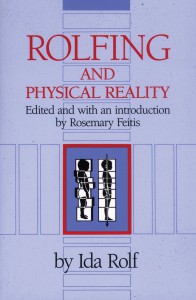
he graduated from Barnard College in 1916. It was the time of the First World War (1914–1918), and because young men were being taken for military service, she was hired as the first woman research fellow at the Rockefeller Institute (now Rockefeller University).
In fact, that anatomy and physiology come at the very start of Rolfing training conveys a respect for the thinking of Western medicine (see Preparing for the Training).

Eventually, she obtained a Ph.D. at the College of Physicians and Surgeons of Columbia University. Her specialty was biochemistry, the foundation of Western medicine. My own PhD was in immunology, with molecular biology as the method.
Curiously, that put me on ground continuous with biochemistry. She continued working as a research fellow at the Rockefeller Institute and published many papers on lipids. Eventually, she came to obtain the position of Associate.

In her time as a research fellow, she absorbed knowledge in various fields, not staying within Western medicine. She had opportunities to study mathematics, physics, homeopathy, osteopathy, and the like, and reportedly visited Switzerland, Germany, and France.
Homeopathy holds that:
“Disease is the symptom itself, and disease can be treated by administering, in as small a dose as possible, a drug that causes the same symptom in a healthy person.”
It considers that the factors of symptoms arise in combination, and ultimately, by tracing the past medical history, it searches out the ultimate factor of the symptom.
In the United States at that time, homeopathy was widely established as one of the alternative practices. Ida Rolf, who lived in that period, reportedly read voraciously a homeopathic academic journal called Materia Medica in Geneva, Switzerland.

Osteopathy has points in common with seitai and chiropractic, but rather than adjusting the skeleton alone, it performs treatment based on medical knowledge, including the musculoskeletal system, the circulatory system such as the arteries and lymph, and the cerebrospinal fluid of the brain and nervous system. In the U.S., just as there is a graduate program in medicine (a four-year course), there is a graduate program in osteopathy (a four-year course), and deep knowledge of the human body is essential.
From osteopathy, Ida Rolf learned that:
“The structure of the body determines the working of the body.”
And from homeopathy, she learned to:
“Approach the root of the symptom.”
In terms of Rolfing’s five principles, this corresponds to Wholism. Those five principles, however, were not laid down by Ida Rolf; they were put in order after the 1989 split, chiefly by Jeff Maitland and Jan Sultan (see The Five Principles).
What gave the hint for the characteristic of Rolfing — paying attention to the fascia — was Alfred Korzybski’s General Semantics.
Korzybski stated:
“The map is not the territory.”
Even if there is a symptom (a place), it should be viewed from the whole body (the map) rather than from the place of the symptom, and he noted that at that time the fascia is the key.
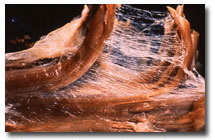
All the fascia overlap and connect, forming one great network. To compare the fascia to a single taut sheet of cloth, when a wrinkle forms at the end of the cloth, it affects the tension of the whole.
From this comes the idea of:
“Not treating the symptom, but adjusting the balance as seen from the whole.”
On yoga, which I have written about before (see The Relation to Yoga: Which Part of Yoga Has Rolfing Taken In?), Ida Rolf said:
“The main purpose of yoga asana (poses) is to widen the space between bone and bone (this space is the joint). That is, yoga requires the body to lengthen, and this is achieved by the two sides of the body pulling against each other, or by rotating.”

There, the working of a muscle is brought to its fullest only by giving it two directionalities. To compare a muscle to a rubber band, it may be easy to understand by saying that when force is given in the two directions of left and right, the space between the muscles widens.

In terms of Rolfing’s five principles, this corresponds to two-directionality (Palintonicity).
Ida Rolf retired from the university in the 1920s for family reasons, and began the bodywork called Rolfing around 1940. In the 1950s, she began to teach. At first, she conducted training in one-week units for osteopaths and chiropractors.
Before long, unable to agree with the technique-focused thinking of osteopathy and chiropractic, in order to spread the thinking that emphasizes philosophy over technique, she designed the ten-session series herself and came to teach at the Esalen Institute and in Boulder (on Esalen, see The Esalen Institute (1): Psychology and Bodywork and The Esalen Institute (2): The Popularization of Psychology and the Atmosphere).
Very briefly, I have considered the history of Rolfing from the history of alternative medicine. I would like to keep thinking about this theme in the future as well.
Note, September 2026
In this piece I connected what Ida Rolf learned from osteopathy and homeopathy to Wholism and Palintonicity, two of the five principles of Rolfing.
The five principles were not laid down by Ida Rolf. They were put in order after the Rolf Institute split in two in 1989, chiefly by Jeff Maitland and Jan Sultan. She had died in 1979, ten years earlier. When I wrote this piece I did not know that.
I found out ten years after being taught the five principles in Phase III in February 2015, during the Advanced Training in 2025. In the basic training, the five principles are taught as somewhere to return to — if you get lost, come back here. In the Advanced Training they had become somewhere to start from. The same thing had moved from behind to in front.
A framework put in order after the split was being taught, in a European classroom with no direct connection to that split, as a foundation nobody questioned. I noticed that eleven years after writing this.
None of which means that what Ida Rolf learned has nothing to do with the five principles. But the order has to be read the other way around: what she learned at the time acquired its name in a later framework. This piece had the order reversed.
The piece also quotes Alfred Korzybski’s General Semantics. The map is not the territory. The context was that you should look from the body as a whole rather than from the site of the symptom.
I would use the same figure ten years later, about something else entirely.
Writing about the Taxonomy — the five categories — that I took in during the Advanced Training in 2025, I settled on this: a taxonomy is not a blueprint but a map. Not something you fill in across five domains in advance, but a tool for laying out afterward what you have actually studied, and seeing where it is thin. It became the fourth of the criteria I wrote about for choosing continuing education.
In 2015 it was about how to see a body; in 2025, about how I had gone about learning. The object differs, but the operation — separating the map from the territory — is the same.
Finally, there is a single line about how close her field was to my own: that I felt some strange affinity in it.
That one line became a page of its own eleven years later. Ida Rolf, the Scientist — Why a Rockefeller Institute Biochemist Reached for the Body. A page about why someone trained to break things down into their elements turned toward the structure of the whole.
There was enough in that one line, it turned out, to write about later.