
Introduction
I am currently participating in the Advanced Rolfing Training (Phase 2) held in Ichigaya, Tokyo, led by instructors Ray McCall and Hiroyoshi Tahata. As the second week comes to a close (as of July 4, 2025), I’ve been reflecting on what I’ve learned so far.
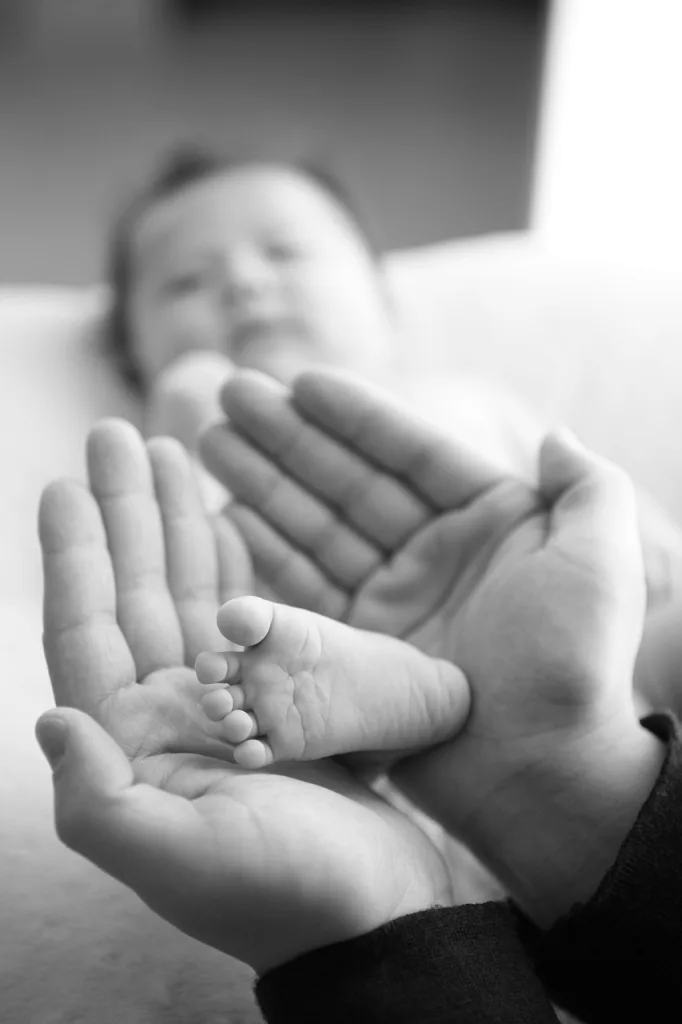
The “Eye of the Foot” exercise, which Ray reportedly introduces in every training, offered a fascinating new perspective on how we perceive our bodies and our relationship to space. Though just one of the sensory exercises conducted on Friday, July 4, 2025, it directly connected to the essence of Rolfing — harmony with gravity, integration, and the restoration of relational awareness.
This entry centers on that specific practice.
Eye of the Foot — Sensing with an Imaginary “Eye” on the Soles
In this exercise, we begin by imagining an “eye” on the sole of each foot — the Eye of the Foot. We then observe the changes that occur in our internal bodily sensations and the surrounding space when we “open” or “close” this eye.
When standing with the Eye of the Foot closed, the whole body feels contracted, and the sense of contact with the ground shifts. In contrast, opening the Eye of the Foot brings a sense of release in the pelvic floor and diaphragm, and alters our relationship with gravity. Repeating this opening and closing while walking changes our sense of spatial distance and creates an entirely different feeling of unity with the environment.
Perceiving the Quality of Space
Space is not “empty.” Rather, space is a field in which our relationships with objects arise — and it possesses qualities. When we focus our attention on an object versus the “space between,” our bodily responses change noticeably. Moreover, by expanding awareness to the “background” behind space, we cultivate broader physical support and a sense of safety.
One participant described space as “vivid” and “dense.” This suggests that space is not merely a passive backdrop, but a relational presence — something the body responds to and interacts with.
In my case, I found myself developing a new ability to switch between foreground and background awareness. My spatial perception shifted in response.
Application to Sessions — “Seeing” Space, Not Just “Touching”
What this exercise reveals is that perceiving space can change how we see the body and the quality of our touch as practitioners. Instead of focusing on “touching” directly, we attune to the quality of the space inside and around the client. By listening to this space, we become more sensitive to the messages of the body, and possibilities for change arise more naturally.
Throughout the training, one core theme has been repeatedly emphasized: “Don’t try to fix the pattern — meet the force that generates the pattern.” One gateway into this orientation is through spatial perception.
When Spatial Awareness Shifts, the Sense of Self Changes
In the Eye of the Foot exercise, many participants reported sensing both their internal center line and the horizontal line extending outward into space. One said that tension in the pelvis softened and their auditory perception opened. Another noticed a previously unconscious difference between their left and right feet.
As perception of space changes, so too does our postural balance and distribution of muscular tonus. When we are open to space, release and letting go are facilitated. Conversely, when we “close,” a sense of inner core stability arises. This is not mere relaxation — it’s a practice of finding the appropriate muscular tonus for the environment.
Space as a Field Where Possibility Emerges
One comment from a participant left a deep impression on me:
“Until now, space felt like something I had to protect myself from. But through this work, I’ve come to feel that space is where pleasure or delight can arise.”
This echoes the idea of looking not at the client’s “problems,” but at their possibilities. Before working directly with a client’s body, we can first attune to the space around them. By listening to the rhythms, tones, and vibrations emerging from that space, we open a door to a different kind of presence.
At that point, as Rolfers, we shift from being someone who “does something” to someone who holds space for something to arise.
Conclusion — Restoring Our Relationship with Space
The Eye of the Foot exercise offers a direct experience of the wholeness and integration that Rolfing seeks — through the dynamic relationship between body and space. It cultivates new modes of perception.
We do not merely exist within space. We exist in relationship with space.
This experience reminded me of that fundamental truth — and I believe it will bring greater depth and sensitivity to my sessions going forward.
Note, September 2026
Two things I wrote in this post, I later found, were already in a piece I had written before it.
One is my claim that space is not nothing — that we do not exist within space but in relationship with it. In November 2022, two and a half years before this post, I had written about space after reading an interview with Hubert Godard, who built the theory behind Rolf Movement. Godard keeps two things apart: measurable space, the topos, and the space a person’s own history makes. The latter, he says, is an imaginary space of action, and it does not exist. There is no empty space; space is a space of action. The line at the head of the interview reads: “I’m in the space and the space is in me.” At the time, I had read only part of the interview.
The other is my remark about not trying to fix the pattern but meeting the force that generates it, with spatial perception as one gateway. Godard states flatly that scoliosis is not in the body; it is in the space. Hands-on work can make it better, and it keeps coming back. What makes the space is perception, and if you do not work on perception, no change will occur. He mentions having had success, at times, working only on the space instead of manipulating the body.
Both are in “Where Does Space Exist? — Inside the Body, or Outside It,” which I read through again and expanded in September 2026.