

Introduction
This series looks at the reintegration of body, feeling and relationship through the social brain and Interpersonal Neurobiology (IPNB).

This second piece takes up the fast brain and the slow brain, and asks why it is that we so often react before we have decided to. Behind the question are two Daniels — Daniel Kahneman and Daniel Siegel — and the Fast / Slow models each of them proposed.
Understanding how the two differ deepens both what we know about the brain and what we understand about ourselves.
Daniel Kahneman’s System 1 and System 2
Fast and slow thinking in behavioural economics
The first is the System 1 / System 2 model of Daniel Kahneman, the psychologist who won the Nobel Prize in economics.
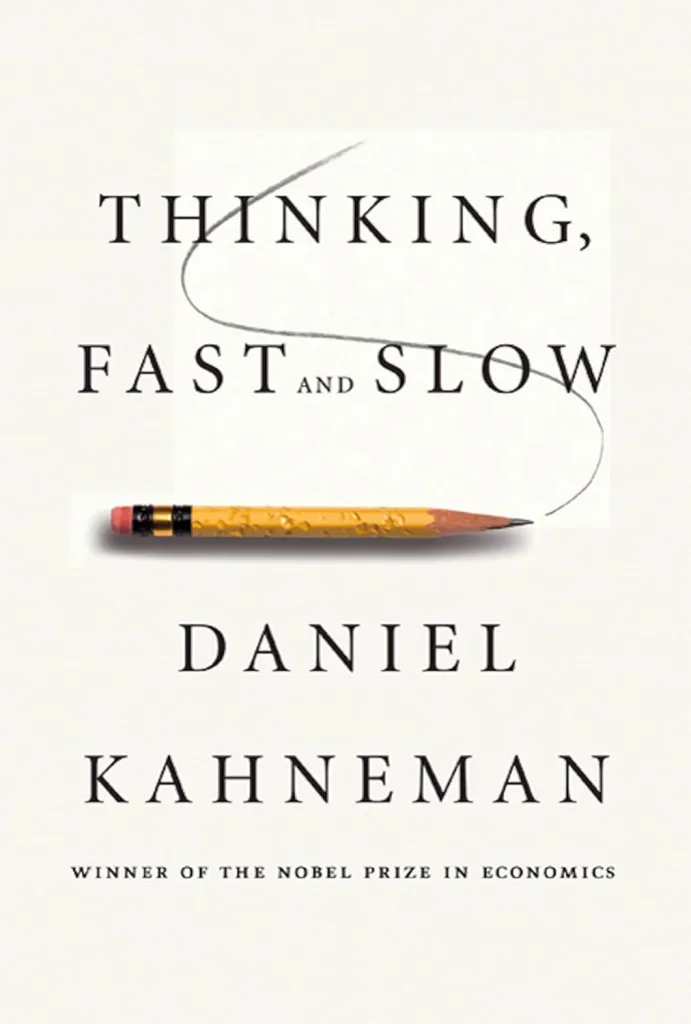
In Thinking, Fast and Slow he showed that human judgement and decision-making rest on two systems of thought.
- System 1 (fast thinking) is intuitive and emotional, and works automatically. When we judge something at a glance, it is generally System 1 at work.
- System 2 (slow thinking) is logical and deliberate, and comes in where careful thought or self-control is called for.
The purpose of the model is to make sense of the ways human judgement goes wrong — cognitive bias — and it has been taken up widely, in marketing, in economic behaviour, in cognitive science.
System 1 and System 2 compared
| Aspect | System 1 (fast) | System 2 (slow) |
|---|---|---|
| Character | Intuitive, immediate, automatic | Logical, deliberate, effortful |
| Speed | Very fast (from 0.05 sec) | Slow (0.5 sec and up) |
| Awareness | Unconscious (automatic) | Conscious (controlled) |
| Energy cost | Low | High |
| Main role | Snap judgement, pattern recognition, everyday movement, emotional response | Calculation, inference, logical judgement, self-control, selective attention |
| Strength | Acts quickly, good at intuitive response | Can think calmly, handles complex problems |
| Weakness | Prone to cognitive bias, misreading, jumping ahead | Slow, tiring, needs concentration |
| Applications | Economic behaviour, marketing, psychological testing | Education, decision theory, cognitive training |
| Example | “That face looks frightening.” “Red light — stop.” | “How should I handle this situation?” |
Daniel Siegel’s Fast Brain and Slow Brain
A model grounded in neural development, affect regulation and relationship
The second is the developmental model of a fast brain and a slow brain, proposed by Daniel J. Siegel, the psychiatrist who founded IPNB, and set out in The Developing Mind.
What is the fast brain? — The reactive circuitry
The fast brain is the older circuitry that handles detection of danger and emergency response. The amygdala and the brainstem are the main structures involved, mobilising the body immediately in the face of threat or stress.
- Amygdala: processes emotions such as fear and anger instantly. Detects threat and activates the sympathetic nervous system.
- Brainstem (medulla, pons, midbrain): governs the responses that keep us alive — heart rate, breathing, muscle tone.
- Insula: also has a part in registering visceral sensation (interoception) immediately.
Because the fast brain responds to external stimuli at once, it is the trigger for unconscious, automatic behaviour and feeling.
In NLP and in coaching, techniques are used to bring the fast brain’s responses — the tension, the anxiety, the impulse that rises in an instant — into awareness, and to shift them into a different pattern of behaviour.
NLP (Neuro-Linguistic Programming) emerged in the United States in the 1970s as an attempt to extract and reproduce the patterns of effective communication. Among its techniques are anchoring — tying a particular emotional state to a word or a gesture so that it can be brought back more easily — and submodality change, in which the brightness or distance of a remembered image is altered so as to rework the meaning attached to it. Both are attempts to reset an emotional trigger.
What is the slow brain? — The circuitry that makes meaning and regulates
The slow brain, by contrast, is the circuitry that examines experience, gives it meaning, inhibits, and arrives at social and ethical judgement.
- Middle prefrontal cortex (mPFC): integrates higher cognitive functions — self-awareness, empathy, moral judgement.
- Hippocampus: places memory in context and holds continuity across time.
- Anterior cingulate cortex (ACC): handles shifts of attention, regulation of affect, and error detection.
This slow system might be called the brain’s regulator: it holds a fast response for a moment and converts it into something socially adapted.
In IPNB, it is the slow circuitry that is held to be the key to integration. In bodywork such as Rolfing, observing sensation slowly and giving it meaning is thought to activate this slow brain.
For Siegel, what matters about how the brain works is not the speed of information processing but how it is integrated within the body, within feeling, and within relationship to others.
- The fast brain is evolutionarily old, centred on the amygdala and brainstem, handling the responses that protect life in an instant. It is closely bound up with trauma and emotional memory.
- The slow brain — prefrontal cortex, insula — carries out social and meaning-making integration, and supports safety, empathy and self-regulation.
This model bears directly on the kind of present-moment experience found in mindfulness, in therapy, and in Rolfing.
Fast brain and slow brain compared
| Aspect | Fast brain | Slow brain |
|---|---|---|
| Main structures | Amygdala, hypothalamus, brainstem, older limbic system | Prefrontal cortex, hippocampus, insula |
| Speed | Extremely fast (unconscious, affective) | Comparatively slow (conscious, meaning-making) |
| Evolutionary role | Survival, defence, fight-or-flight | Empathy, regulation, self-control, sociality |
| Form of memory | Implicit memory | Explicit memory |
| Character of response | Reflexive, conditioned, bodily tension | Deliberation, metacognition, narrative, reappraisal |
| Emotional tendency | Anger, fear, avoidance, shutdown | Curiosity, empathy, ease, connection |
| Relation to behaviour | Past trauma may be re-enacted | Trauma can be given meaning and reintegrated |
| Route to integration | Restoring safety through polyvagal work, bodily awareness, mindfulness | Rebuilding relationship, reflection, repair of attachment, meaning made from the body |
| Applications | Trauma therapy, attachment theory, Rolfing, SE, somatic psychology | Mindsight, therapy, integrative education, regulating the nervous system |
How Kahneman and Siegel differ
| Aspect | Kahneman: System 1 / 2 | Siegel: fast brain / slow brain |
|---|---|---|
| Purpose of the model | Explaining cognitive bias and irrationality in decision-making | Supporting affect regulation, relationship, and self-integration |
| Field of application | Economics, psychological experiment, cognitive science | Therapy, education, somatic psychology, attachment |
| Unit of analysis | Differences between cognitive processes (perception / inference) | Firing patterns in the nervous system, bodily response and affect |
| Key terms | Automatic vs deliberate; bias and rationality | Affect vs intention; safety, connection, reintegration |
Integrating Fast and Slow — Technique and Process
NLP attempts to reset patterns of response using techniques that reach the fast brain — anchoring, mirroring. IPNB places the weight instead on growing the slow circuitry that inhibits and integrates the fast.
In Active Inference, what is essential to learning and change is that the prediction error generated by the fast brain is interpreted and updated by the slow. Immediate response and reflective regulation act on one another, and the nervous system reorganises.
In bodywork such as Rolfing, turning attention deliberately to breath and sensation quietens the fast brain and encourages activity in the slow. This is not simply adjusting muscle; it is an integrative approach that draws on the plasticity of the nervous system.
Fast Brain, Slow Brain, and the Various Approaches
| Field | Approaches to the fast brain | Approaches to the slow brain |
|---|---|---|
| NLP (Neuro-Linguistic Programming) | Anchoring, submodality change, rapport techniques | Conscious reinterpretation and reframing |
| Coaching | Noticing emotion, questioning around triggers | Listening, reflection, redesigning behaviour |
| IPNB with Active Inference | Observing and understanding neurophysiological response | Integration and re-prediction within a safe relationship |
| Bodywork (e.g. Rolfing) | Releasing muscular tension, change in posture and movement | Internalising sensation, bringing breath and awareness into accord |
Working with Both
Change does not come from altering the fast brain alone. Behaviour and relationship shift when the reactive circuitry and the circuitry that makes meaning, inhibits and integrates are in conversation with one another. NLP, coaching, Rolfing and IPNB each engage the fast and slow circuits in their own way.
Used together rather than singly, they make for a deeper understanding of oneself and for healthier relationship with others.
Next Time
Part 3 turns to right-brain-led development in infancy and the formation of attachment. Co-regulation between infant and caregiver, the formation of emotional memory, and what might be called the first map of connection — approached through the conversation between body and brain.