
Five years have passed since I first encountered yoga at a gym in May 2007. Looking back, the encounter really did happen by chance.
I had long believed that regular exercise was important. But before eventually finding yoga, I tried several different approaches. What strikes me now is how long it took me simply to establish the habit of exercising regularly.
I first came across Stephen Covey’s The Seven Habits of Highly Effective People in 1998. The book made me realize the importance of exercise and left me with the feeling that I needed to do something about my own physical health. Even so, that realization did not immediately turn into a regular practice.
There were periods when I trained at gyms such as OASIS in Musashi-Kosugi, but the habit never really took hold.
Around 2005, I began to think differently. If I was going to take exercise seriously, I thought, I should be willing to pay for good guidance and work with a professional trainer.
So I began training at Total Workout in Shibuya two or three times a week. It was a deliberate investment in my body, based partly on the idea that if I committed money to it, I would be more likely to keep going.
I continued for nearly three years.
My relationship with food changed as well, and I began to see physical results. Most importantly, regular exercise had finally become a habit. That alone was valuable.
At the same time, however, I began to experience stiffness in my shoulders, lower-back pain, and a general sense of rigidity in my body. Something did not feel quite right.
Around that time, the gym announced that an instructor from IYC would begin teaching Ashtanga Yoga. As far as I remember, this was in April 2007.
I had already been curious about yoga and Pilates, partly because of my shoulder stiffness and back pain, but I had never found the right opportunity to try them.
At first, I knew little about the different traditions of yoga, so the particular lineage did not mean much to me. But after taking only a few classes, I was struck by something completely new: the way yoga approached posture, effort, and the release of effort.
I still remember the impact of that discovery.
One distinctive feature of Ashtanga Yoga is that the postures are physically demanding and practiced in a fixed sequence. Once the sequence is learned, it becomes possible to develop a practice that is much less dependent on following an instructor step by step.
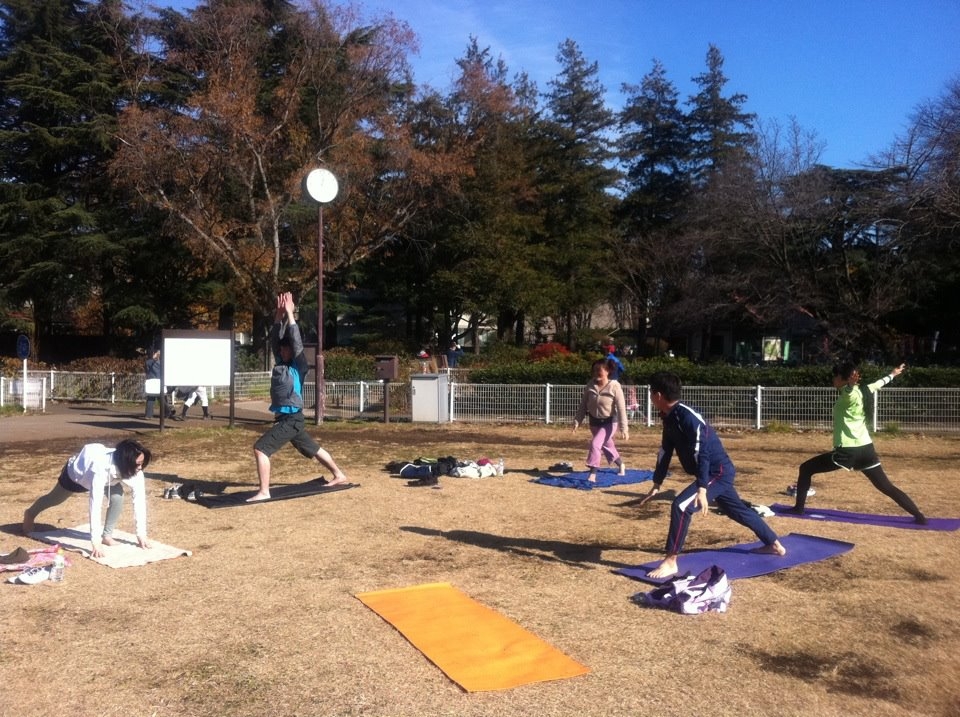
I continued practicing Ashtanga once a week until I left Total Workout toward the end of 2007. I left because my trainer had become independent and opened a private gym, and I moved my strength training there.
During 2008, I practiced Ashtanga once a week at TIPNESS ONE Hibiya, but gradually I wanted to practice more.
Around that time, I heard about the Mysore method — a form of Ashtanga practice in which students move through the sequence at their own pace while the teacher observes and offers individual guidance and adjustments when needed.
That appealed to me. Once I learned the postures and their sequence, I would be able to practice without depending on a conventional instructor-led class.
Wanting to practice at least three times a week, I searched online for “Mysore” and “Ashtanga yoga.” Mysore Tokyo appeared at the top of the search results.
I began practicing there in April 2008 and have continued ever since.
Four years have now passed, and for most of that time yoga has been an almost daily practice. At first, my exercise routine consisted of both strength training and yoga. Eventually, yoga became my primary practice.
Looking back, I find myself wondering why it took me so long to arrive there.
But perhaps trying different things was precisely what made the encounter possible.
I did not set out with a plan to find Ashtanga Yoga. A series of circumstances — including physical discomfort and a chance announcement at a gym — led me to it.
That experience taught me something else as well: the first thing we choose is not necessarily the thing that suits us best.
Sometimes we have to try something, stay with it long enough to learn from it, and then recognize when it no longer fits. Being willing to let go of our own assumptions may be just as important as having the discipline to continue.
Exercise matters.
And this is one habit I intend to keep.