On October 6, 2020, the first day of Module 3 in the Source Point Therapy (SPT) training arrived.

I wrote separately about how I came to SPT and where that has led (see “From Meeting Source Point to What I Have Learned Since“).
The SPT training has three stages, twelve days in all. The first stage, Module 1, and the second, Module 2, can be taken with Hiroki Sato (hereafter Hiro), the Rolfer who runs TEN — the space for your Life & Body.

I took Module 1 over three days, October 10 to 12, 2015 (see “Learning the Blueprint: The Information Needed for a Human Being to Take Human Form,” “On Choosing a Teacher, and What to Look For in Feedback,” and “Using Sensation Rather Than Knowledge: Accessing the Blueprint“), and Module 2 over three days, November 21 to 23, 2015 (see “Concrete Ways of Accessing the Blueprint, and How a Body Changes,” “How the Training Runs, and What Techniques There Are,” and “What Is Healthy Information for the Body?“).

The third stage, Module 3, is taken with the two founders: Bob Schrei, an Advanced Rolfer, and Donna Thomson, a meditation teacher. Hiro interprets.

Because of the pandemic, the two could not travel to Japan. So a first was attempted: an online link between Kitahama in Osaka, where Hiro’s studio is, and Santa Fe, where the founders are based.


Given the time difference, the schedule runs with the two of them online in the morning, and the afternoon spent learning the finer points of Module 3 from Hiro.
The class runs six days in all, October 6 to 12, with the 9th off, from nine to five. There are twelve participants.

The first day proceeded with slides, the two of them speaking in turn.
Donna Thomson, the meditation teacher, guided a meditation, which was a comfortable way to begin. From there we moved into what meditation and SPT share, and how to refine what was learned in Modules 1 and 2.
In meditation, you attend not only to the breath but simultaneously to surrounding sounds, sensations, thoughts in the mind, and the field around you.

In SPT as well, you bring focused awareness to designated points for the Blueprint — the information needed for a human being to take human form — while at the same time keeping an eye on changes in the room as a whole.
Because of this shared ground, we were told again that meditation matters, and that SPT helps deepen meditation. That made sense to me.
Beyond this, how does one deepen that awareness? In Module 3 we also learn to refine intent as we turn toward the Blueprint.
And since you leave things to the Blueprint, I learned how much it matters not to intervene.
Bob Schrei and Donna Thomson have practiced Zen for many years, and between a quotation from Ryōkan and a photograph of Ryōan-ji, I could see how deep SPT’s connection to Japan runs.
What I found most interesting, though, was when they took up the relation to shamanism.
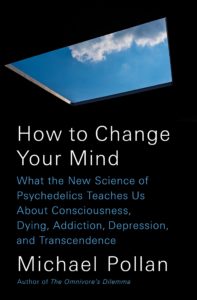
Before this Module 3 class, I had read Michael Pollan’s How to Change Your Mind: What the New Science of Psychedelics Teaches Us About Consciousness, Dying, Addiction, Depression, and Transcendence.
It gives a clear and interesting account of how, long before drugs were isolated, naturally occurring psychedelics were used in religious ritual by indigenous peoples and shamans around the world, and of the history that brought psychedelics to where they are now.
In medieval Europe, rye bread contaminated with ergot fungus caused frequent outbreaks of ergotism. Albert Hofmann, a researcher at a pharmaceutical company who took an interest in this, discovered LSD. Psilocybin was then isolated from magic mushrooms.

And so a category called psychedelics was born within the pharmaceutical industry.
Through the 1950s and 60s, as many as two million people in the United States used psychedelics at one point, and they had a large influence on American counterculture, the hippies included. They were used in psychotherapy as well, and reportedly showed efficacy for alcoholism and for psychiatric conditions including depression.
But LSD has powerful effects, and as it spread among the general public, accidents during use multiplied. With use rising among young people, hippies, and antiwar activists, illegal sales were eventually prohibited. Today its use is illegal worldwide, apart from specific medical purposes.
The Czech psychiatrist Stanislav Grof had used LSD in three thousand cases of psychiatric illness when the United States banned it in the 1960s. He changed direction and developed Holotropic Breathwork, a breathing method producing effects similar to LSD. For reference, I have written before about Grof having taught for a time at the Esalen Institute.

Pollan’s book shows, through recent neuroscience, that meditation and psychedelics produce similar effects. Ordinarily the Default Mode Network, said to reflect the workings of the ego, keeps the regions of the brain in order. With psychedelics or meditation, the DMN is suppressed and the neural systems of the brain reorganize. And this reorganization closely resembles the state of a four-year-old’s brain: plasticity increases.
Remarkably, from 2016 the U.S. Food and Drug Administration began permitting clinical trials of psilocybin for treatment-resistant depression and smoking cessation, and cases of psychiatric and medical use are likely to increase.
Understanding the science and history of psychedelics deepens one’s understanding of shamanism, I think.
Donna Thomson and Bob Schrei made no mention at all of psychedelics, but they did share something interesting about shamanism and its relation to illness.

How does a shaman see illness? Illness and injury are believed to arise from a breakdown in the relationship with the supernatural. Negative energy from outside also plays a part. Repairing these broken relationships is what shamanic practice does. What a shaman does is connect the human world with the spiritual world so that the proper relationship is restored. Negative energy and harmful outside influences are what is being handled.
Shamans do this through ritual and imagery, taking on something like the role of a healer.
What Bob Schrei and Donna Thomson said is that SPT and shamanism have something in common.

Both remove what obstructs the flow with energy from outside. And on top of that, they said, with SPT you need only access the Blueprint, so the method is extremely simple.
This was my first chance to hear the two of them, online, and their explanations were very clear — full of useful material on where SPT sits, its relation to Zen, and how it connects to shamanism.
The afternoon of the first day was given to reviewing the techniques of Modules 1 and 2, with exchange sessions among the participants.
From tomorrow we are due to learn new techniques.
Note, August 2026
Two things sit side by side in this piece: what I received on the first day of Module 3, and what I had been reading on my own beforehand.
What I had been reading was Michael Pollan. That psychedelics had been used in ritual since antiquity. That Albert Hofmann, a pharmaceutical researcher who took an interest in ergotism, discovered LSD. That Stanislav Grof used LSD in three thousand cases and, after the ban, turned to Holotropic Breathwork. That the Default Mode Network is suppressed by psychedelics and by meditation, and that plasticity increases. And that from 2016 the FDA began permitting clinical trials of psilocybin.
I had brought neuroscience and pharmaceutical history into the final module of an energy work training.
That book became a series
By 2026 this interest has become a field of its own. I have organized psychoactive substances into three categories — depressants, stimulants, and psychedelics — and written twelve pieces on psychedelics alone. Hofmann’s discovery of LSD, the psilocybin research, Grof’s three thousand cases, the 1994 gathering at the Esalen Institute: all of it is there.
What I noted down in this piece has become, more or less, the table of contents.
And meditation connected to neuroscience
The subject of this piece was what meditation and SPT share, received on the first day. In meditation you attend not only to the breath but simultaneously to surrounding sounds, sensations, thoughts, and the field. In SPT you bring focused awareness to designated points while keeping an eye on changes in the room as a whole. Because of that shared ground, meditation matters, and SPT helps deepen meditation.
I can now say the same thing in different words.
The Default Mode Network is the brain’s self-generating circuit; when it is overactive, rumination about the past and anxiety about the future become fixed. What psychedelic research showed is that psilocybin temporarily dissolves that activity. And what is interesting is that the brain activity shown by long-term meditators in deep states has a neurologically similar structure.
The unexpected gift of psychedelic research, I think, is that drug experience brought into view the scientific grounding for methods that use no drugs: meditation, breathing, bodywork.
What I set side by side in this piece was the history of psychedelics, the account of shamanism, and what meditation and SPT share. I wrote them as though they simply happened to fall on the same day.
Read now, they point at the same place.
The founders said nothing about psychedelics
The piece states it plainly: Donna Thomson and Bob Schrei made no mention at all of psychedelics.
What they talked about was shamanism and its relation to illness. Illness arises from a breakdown in the relationship with the supernatural. Negative energy from outside plays a part. A shaman repairs that through ritual and imagery. And SPT and shamanism share the removal of what obstructs the flow with energy from outside.
Onto that, I was reading the science and history of psychedelics. I was filling in, from my own side, something the two of them had not said.
That in itself is not a bad thing, I think. But in reading this piece, one has to keep separate what came from the two of them and what came from me.