In carrying out the Rolfing ten-series, I always bring a head massage in at the end. What is interesting is that, with a head massage placed at the close, people who are short on sleep report falling into a deep sleep that same night.
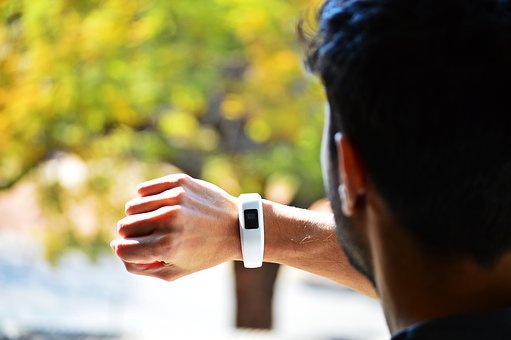
A client I worked with last weekend shared this: measuring sleep with a Fitbit showed that sleep deepened on every night following a Rolfing session, which made each session something to look forward to.
Before the round-the-world trip, I had no experience of bodywork at all. Wanting to learn something of hands-on work, I went to the school of ITM, one of the certifying bodies for Thai massage courses (at the time, within walking distance of Mizonokuchi Station). I wrote about it in “Completing ITM Thai Massage Course Level 1” and “Completing ITM Thai Massage Course Level 2.”

During the years at the pharmaceutical company, there were many occasions to receive Thai massage at the DHC Akazawa hot spring resort in Izu Kogen. For a body running on sympathetic dominance, the effect was immediate.
Since I had long wanted to learn the technique at least once, I obtained the qualification through Level 2 on July 13, 2014, before taking the Rolfing training.
That was where I learned how to carry out a head massage. In the end, that technique has served the sessions, and it has been better received than expected.
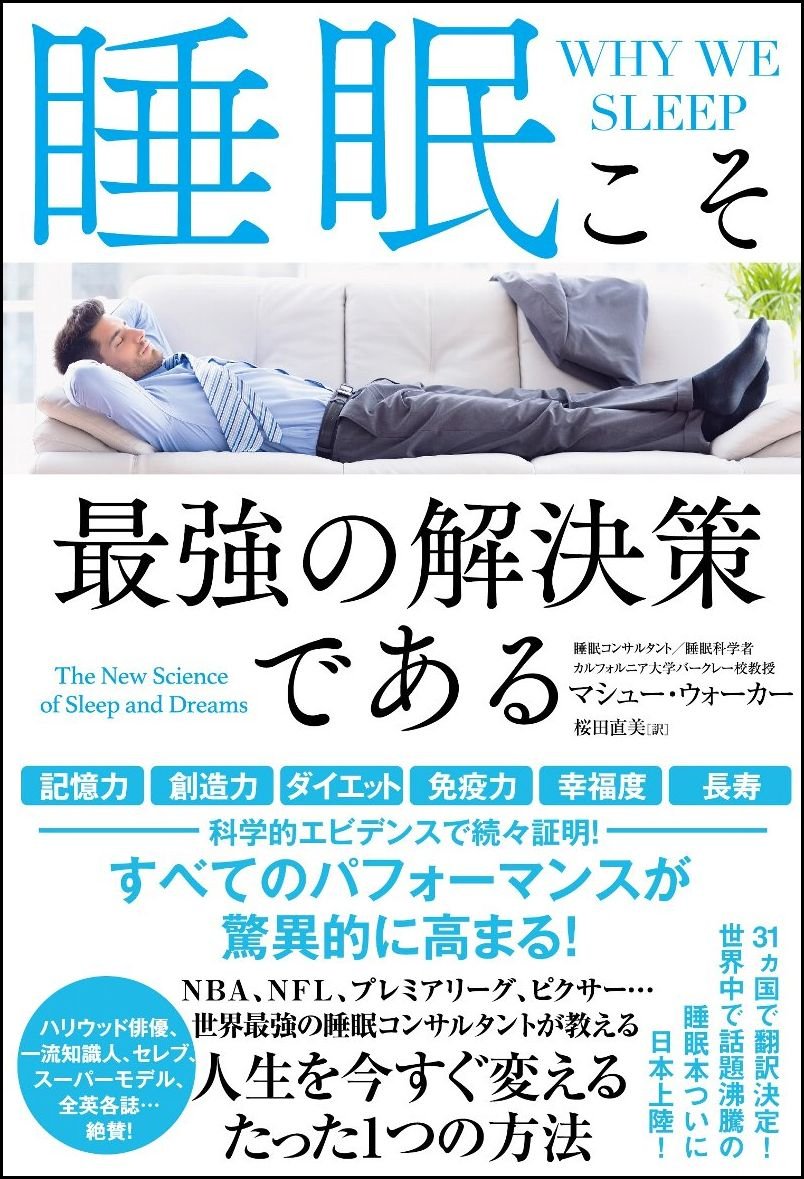
Many books have been published on sleep. The one I would recommend is Matthew Walker’s Why We Sleep.<!– image –>
Whether the brain is asleep or not comes down, as above, to three closely related things: brain waves, eye movement, and muscular activity.
Brain waves are the electrical activity arising from the brain of a human being or an animal, recorded through electrodes placed on the scalp, the sphenoid base, the eardrum, the surface of the brain, or deep within it. Some appear in relaxation and others in wakefulness, which makes them reasonably easy to picture.<!– image –>
That eye movement occurs during sleep was first noticed through observing infants. During sleep the eyes move vigorously, and in that state the brain waves become markedly active as well — in fact, the same waves appear as in waking. Sleep with active eye movement is called RAPID EYE MOVEMENT, or REM sleep. The long stretches before and after, in which the eyes do not move and brain activity is slow, are distinguished as NON-REM sleep.
REM and non-REM sleep run in the rhythm described above, and remarkably, the two work to resolve the shortage of storage space in the human brain. In specific terms, non-REM sleep organizes information by strengthening the connections between nerve cells, and REM sleep integrates it by pruning those connections.
In the fetal period there is more REM sleep — a ratio of 1 to 1 — and from the newborn stage non-REM sleep gradually increases, reaching roughly 3 to 7 by the age of five. What is striking is that REM sleep is indispensable to early human development. And when REM sleep is disturbed in the newborn period — when a pregnant woman drinks alcohol, for instance, affecting the fetus — abnormalities in sociality are said to appear in adulthood.
Of interest, too, is that the decline in non-REM sleep begins in the late twenties to early thirties. By the end of the forties, deep sleep has decreased by 60 to 70 percent compared with the teenage years, and by around seventy, by 80 to 90 percent.
Much has come to be understood about sleep. And eye movement is one form of muscular movement.
One hypothesis of mine is this: that by organizing the fascia and muscles of the upper and lower body through Rolfing work, and by releasing the muscles of the neck, the head, and around the eyes, there may be a favorable effect on sleep.
As for improving sleep, Dr. Walker sets out the following adjustments to daily life. I hope they are of use.<!– image –>
Note, September 2026
This piece opens by saying that a head massage is always brought in at the end of the ten-series. In 2021, that was the case.
It is not brought in every time now.
Learned Outside the Certification
The head massage technique was learned before taking the Rolfing training. ITM Thai Massage Level 2 was completed on July 13, 2014 — the month before leaving for Munich. Before the round-the-world trip, with no experience of bodywork at all, I wanted to learn something of hands-on work once. It was not taken as preparation for learning Rolfing.
The technique is still in use. It is no longer something brought in without fail.
An Exercise for the Eyes
In November of the same year, in the mentoring received between Phase II and Phase III, Keith Graham introduced a movement from the Feldenkrais Method (see “ERA Mentoring Session (1) — An Experience in the UK (1): Keith Graham“).
Turn the face to the right and look right; then turn the face alone toward the left. The eyes keep looking right. Head and eyes move separately. Repeat two or three times, and stiffness in the shoulders and neck eases.
This movement, too, gets used from time to time.
What I have written about Keith until now came from tai chi: the feet and the ground. The touching hand as the plug, the ground as the earth. That belongs to the practitioner’s side, and it runs on into Neutral in the 2025 Advanced Training.
The eye movement went the other way, staying as something to hand to the client. Two separate lines came out of a single day.
The Year 2014
Thai massage in July, the start of the training in Munich in August, the mentoring in November.
Before the Rolfing curriculum began and partway through it, two things came in from outside that curriculum. Both are in use where sleep is concerned.
Set down as a record of learning, the certification lineage takes the center. What the hands have actually learned runs past its edges.
From Always, to Sometimes
The 2021 piece says always. That is no longer so.
It is less that the techniques have been reduced than that what goes into a session is now decided each time. What the 2025 Advanced Training took up was the question of what to build a session from, once the fixed order is set aside.
Bringing a head massage in at the end turns out to have become part of that question.