Introduction
Recently, the annual general meeting of the Japan Rolfing Association (JRA) was held, followed by the Himotore Workshop. In this post, I’d like to share my impressions and insights from attending this workshop.
Annual Meeting of the Japan Rolfing Association
On Sunday, March 23, 2025, I attended the annual meeting of the Japan Rolfing Association (JRA) from 10:00 AM to 12:30 PM. As a non-profit organization, the JRA holds this meeting once a year to report on business activities, financial statements, plans, and budgets.
After obtaining Rolfing certification, practitioners pay an annual fee to the JRA. This fee not only covers the use of the Rolfing name but also supports promotional activities and ongoing training.
The general meeting provides transparency on how these funds are utilized. While the content is important, it’s also a valuable opportunity to connect with fellow certified Rolfers, which is why I make it a point to attend whenever possible.
What Is Himotore?
I had come across Himotore once before, in 2016, when we hosted Atsushi Tsuji of Kyoto for a workshop at ZERO (see “A Workshop on Himotore“). Nine years on, this time it was the man who devised it, teaching directly.
Following the JRA general meeting, a workshop featuring a leading figure in bodywork is typically held. This time, we welcomed balance trainer Isao Koseki as a guest for the Himotore Workshop, which took place from 2:00 PM to 6:00 PM, followed by a social gathering.
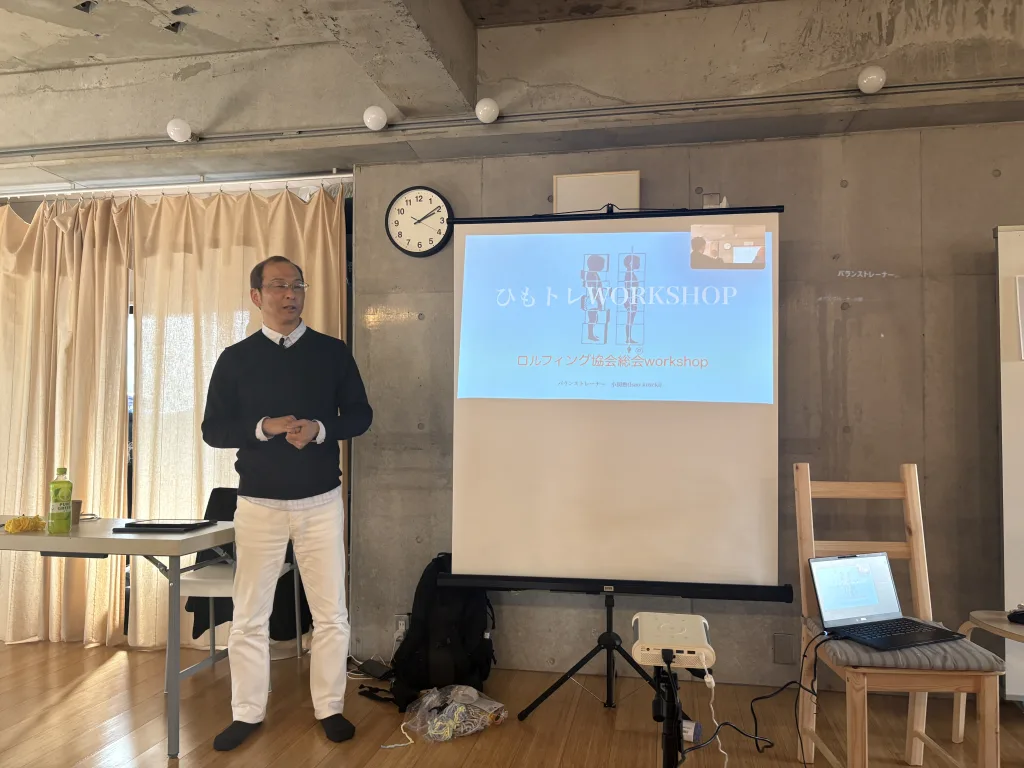
According to Koseki, the human body naturally maintains balance, but daily life can disrupt this equilibrium. The workshop introduced Himotore as a method to restore bodily balance.
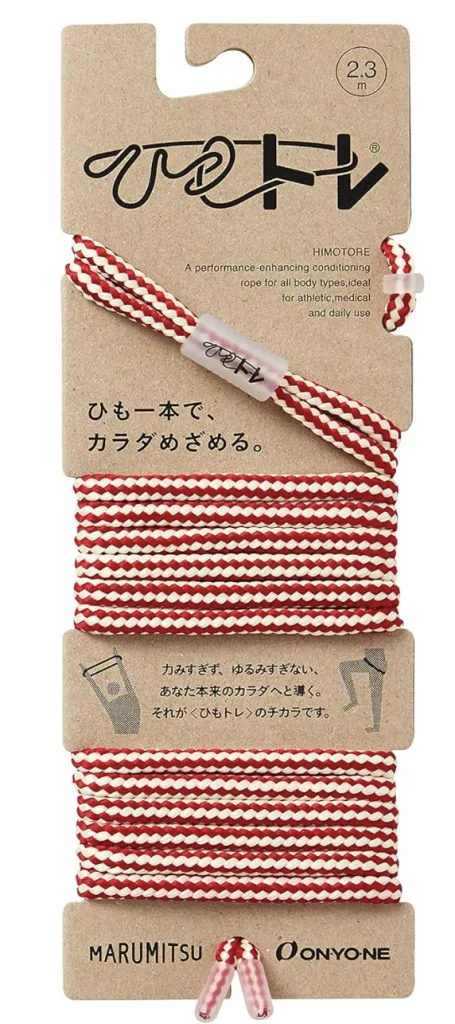
Himotore involves lightly wrapping a cord around the body to release muscle tension and regain natural balance. The concept is quite intriguing.
The key point is that the human body inherently possesses the balance necessary for proper function. Conversely, unnatural postures and movements can disturb this balance.
Interestingly, by gently wrapping a cord around specific body parts, one’s bodily awareness becomes more acute, leading to improved balance and promoting natural movement without exerting force.
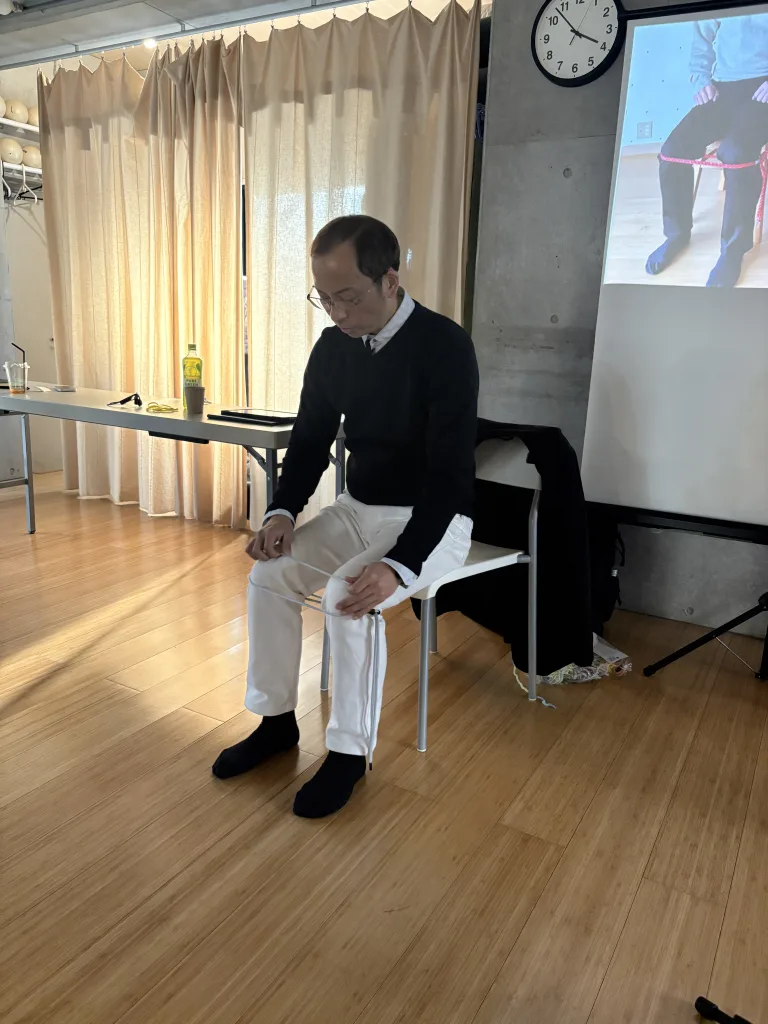
Koseki shared various applications based on his experiences, and I was amazed at how light my body felt. Here are some examples:
Wrapping around the waist (tanden area)
- Enhances pelvic stability and organizes posture
- Effective in alleviating lower back pain and improving walking balance
Wrapping around the shoulders (diagonally across the chest)
- Relieves shoulder tension, allowing natural arm movement
- Can help improve shoulder stiffness and hunched posture
Wrapping around wrists and fingers
- Reduces excessive grip tension, promoting fluid movements
- May enhance performance in sports and musical instrument playing
Wrapping around ankles and knees
- Increases walking stability and eases calf tension
- Facilitates smoother movements in activities like running and dancing
Conclusion
After the JRA general meeting, we had the opportunity to participate in the Himotore Workshop led by balance trainer Isao Koseki. I’ve shared some of the insights I gained from this experience.