Introduction
Hello, everyone! I’m Hidefumi Otsuka, offering Rolfing sessions in Shibuya, Tokyo.
What It Means to Organize the Central Axis — Cultivating the Power to Judge by a Personal Axis
Since June 2015, I have offered Rolfing sessions in Shibuya, Ebisu, and Daikanyama.
Rolfing is one method in which, once every one to two weeks, using manual technique, treatment is carried out each time along a theme. Because it polishes “bodily sensation” while organizing the body, the body’s troubles (stiff shoulders, low-back pain) improve as well!
It consists of ten sessions. Sessions 1–3 treat the superficial muscles: the first session, organizing the breath; the second, organizing the soles of the feet; the third, organizing the front-back balance — all of these awaken bodily sensation and gradually shift the way of seeing the mind and the world.
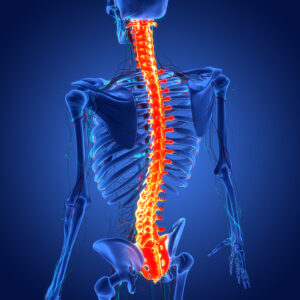
Sessions 4–7 treat the deep muscles. This is because they approach the central axis (on the inside of the body).
The procedure is as follows:
- Session 4: organizing the lower body (the adductors to around the pelvic floor)
- Session 5: organizing the front side of the spine in the upper body (the iliopsoas, the viscera, the diaphragm)
- Session 6: organizing the back side of the spine in the upper body (the shins, the gluteal muscles, the sacrum, the spine)
- Session 7: organizing the shoulders and the whole neck in the upper body

What Is Done in the Integration Sessions? ① — From Dependence to Independence
So — “what kind of sessions are sessions 8–10?”
The awareness cultivated through the sessions up to session 7 is applied, and integrated as the body.
In the sessions called integration sessions, what has been learned through the ten sessions is incorporated into daily life; the point lies in encouraging the client’s independence — not in creating dependence, but in encouraging independence.
The questions become:
In what direction should the way forward proceed?
What should be done toward independence?
What has been learned so far?

What Is Done in the Integration Sessions? ② — Using the Spine
What becomes the point in the integration sessions is that “when the spine is lengthened and moved while twisting, walking becomes possible with the minimum necessary force against gravity.”
Put into words, this is very hard to grasp, so it is better felt directly… It may be interpreted as the meaning of using the skeleton (the spine) when organizing posture.
Once this can be sensed, yoga and Pilates poses become possible to take with ease and to develop further. In walking and in sitting too, a comfortable posture becomes something the body can find for itself.
What matters here is the body awareness cultivated through sessions 1–7. Without awareness of front-back, left-right, up-down, and the central axis, lengthening the spine and moving it while twisting is not possible.
What Is Done in the Integration Sessions? ③ — Connecting the Movement of the Shoulders and the Pelvis
For the spine to lengthen and twist, how to give connection between the shoulder girdle (Shoulder girdle — around the scapulae, clavicles, and sternum) and the pelvic girdle (Pelvic girdle — the ilium, pubis, and ischium), and bring them into smooth movement — this becomes the point of session 8.
Session 9 proceeds by connecting the linkage acquired in session 8 out to the toes of the feet and the movement of the arms and hands.
And finally, session 10 brings things to integration. Drawn as a figure, it looks like this.

Sessions 1–7 Seen from the Integration Sessions
Now, with a fuller understanding of the integration sessions, I’d like to summarize sessions 1–7 again.
In sessions 1–3, awareness such as the following is organized from the superficial part of the body (the fascia): that the body has an upper and a lower half, each able to move in linkage (sessions 1, 2); that the body has a left and a right (session 2); and that the body has a front and a back (session 3).
Sessions 4–6 move further inward, to the deep layer. Through the area above the pelvis (the psoas major, the sacrum, and the spine) and below it (the pelvic floor and the adductors) — session 4 being the adductors to around the pelvic floor, session 5 the psoas major and the diaphragm, and session 6 the spine and the sacrum — the central axis is organized.
Session 7 brings awareness of the face and head onto the body organized up through session 6, and the central axis is completed.
Rolfing’s originator, Ida Rolf, at first offered sessions tailored to the needs of each individual client. Later, in the course of teaching, she created a single framework.
First, the six sessions of sessions 2–7 were assembled; feeling the necessity of placing a session to organize the breath before organizing the feet in session 2, she added session 1. With that, the seven-session series was completed. Later, she is said to have added the integration sessions, sessions 8–10.
Conclusion
This time, I summarized the integration sessions carried out in sessions 8–10 of Rolfing. In a sense, they are sessions that move from a relationship in which the client had been dependent toward independence.
Having explained the overview, next I’ll summarize what is concretely done in session 8.