
Introduction
Since June 2015, I have offered Rolfing sessions. Approaching the fascia brings the posture into order, and the movement of the body improves along with it.
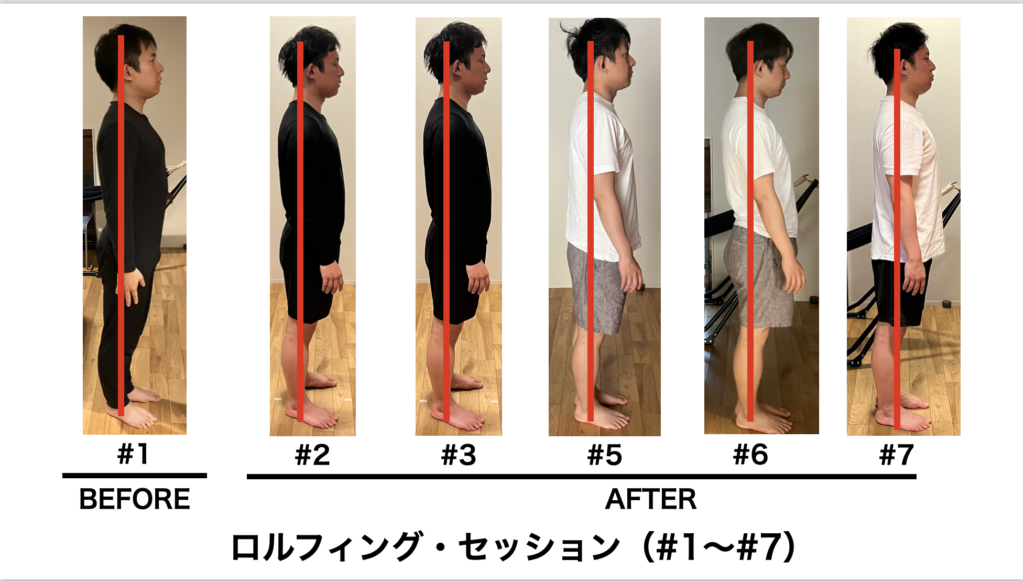
From the first session to the seventh, Rolfing follows the order that its founder, Ida Rolf, put together. From the eighth on, the sessions are called the integration sessions, and they take up whatever has come out over the first seven. In the end, the aim is to move the body toward integration and to build a body that no longer needs the work.
What Are the Integration Sessions?
What the integration sessions turn on is taking what has been learned over the ten sessions into your own life — that is, encouraging the client’s independence. Not making them dependent on sessions, but supporting them in standing on their own.
The key point is this: when the spine lengthens and moves with a twist through it, walking takes the least force it can against gravity. Read it as using the skeleton — the spine — to reach the whole body when bringing the posture into order.
For the spine to lengthen and to twist, I am also watching how the shoulder girdle (the scapulae, the collarbones, and around the sternum) and the pelvic girdle (the ilium, the pubis, the ischium) can be connected to each other so that the movement runs smoothly.
Session 8 — BEFORE and AFTER
Tasuku Suzuki, a pharmacist, works in sales and travels all over the country. He walks a great deal, and the outside of his foot had been gradually becoming painful. In fact, without knowing it, he had been walking with force in it, in a way that loads the body, and he had raised this from the fifth session on. How do you bring a walk that has become an unconscious habit into awareness, and move it toward one with the effort out of it? I ran the session by offering options.
Walking is the act of putting one foot in front of the other, step by step. To put a foot forward is to lose your balance and move ahead by it, one step at a time. A new option feels odd at first, but a posture that puts less load on the body is better for it, so in time the change can be expected to take.
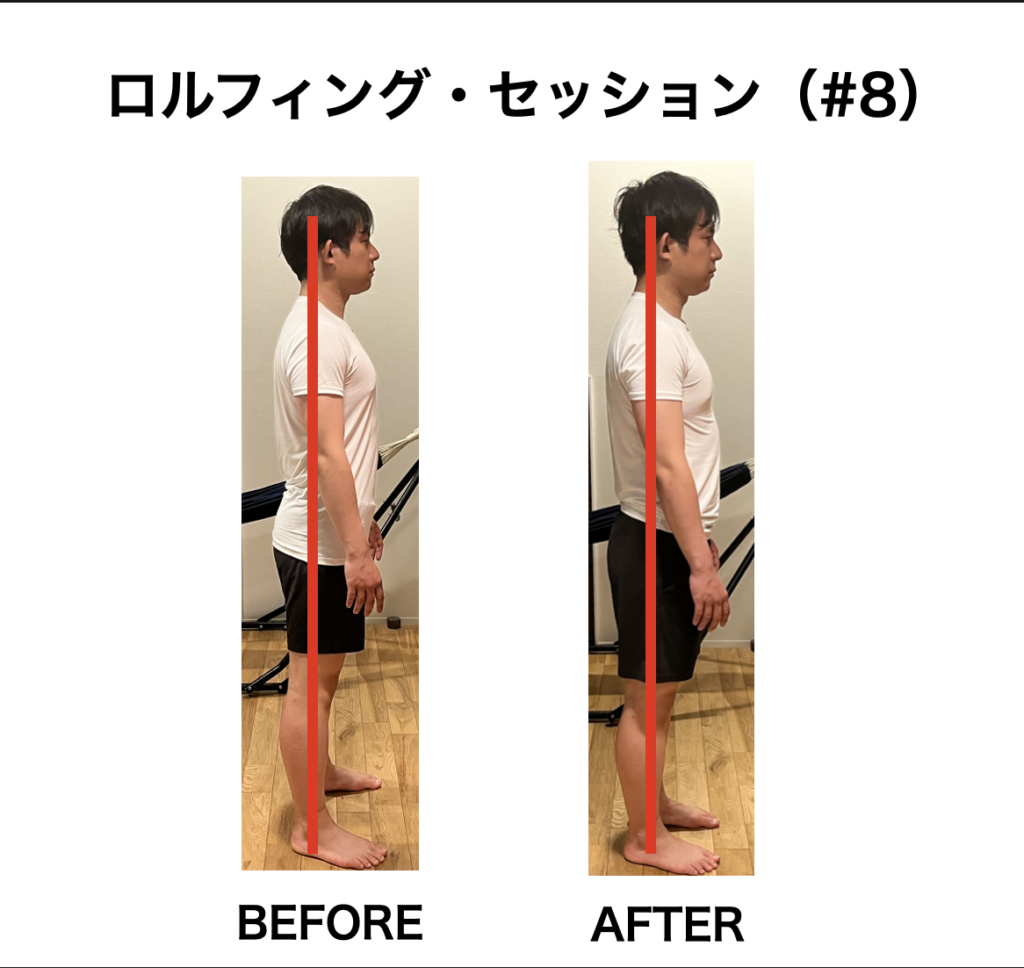
Between before the session (BEFORE) and after it (AFTER), not much change is visible this time; but the effort is gradually coming out of the soles of his feet, so there is something to look for from the ninth session on.
Conclusion
This time I have shared the experience of an eighth Rolfing session.