Introduction
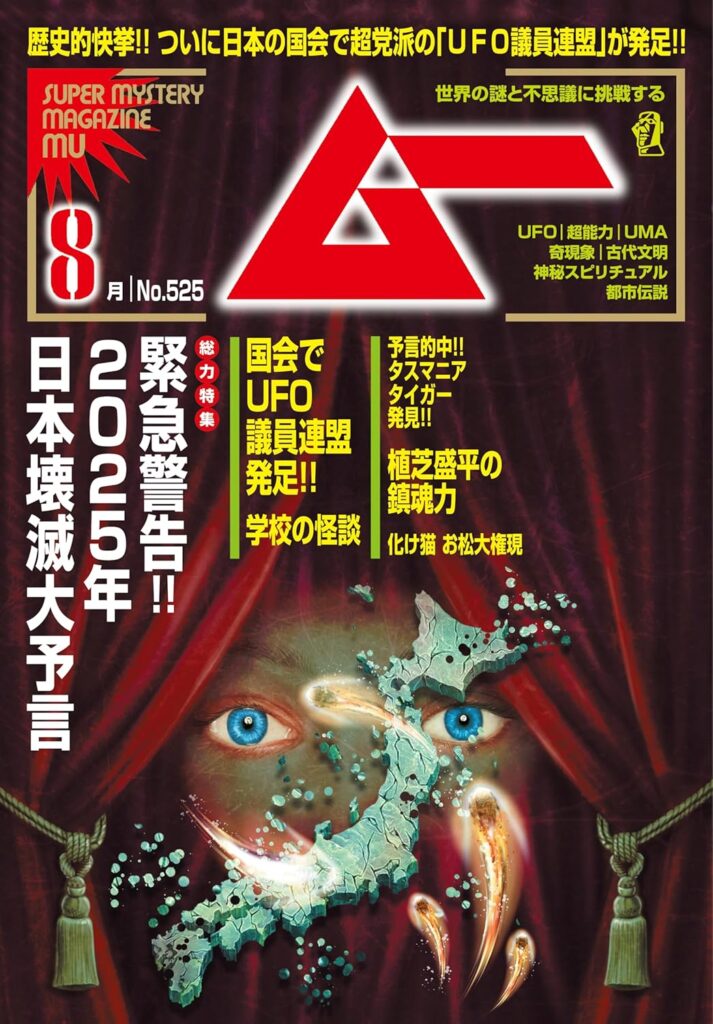
On 29 March 2024 I was interviewed for an hour and a half by Nameko Shinsan, and the piece appeared in the August issue of Mu (in Japanese). I want to report on how that came about.
Mu is a Japanese monthly that has been running since 1979, covering the paranormal, ancient mysteries and spiritual practice. Nameko Shinsan is a columnist and manga artist who writes about spiritual and subcultural life in Japan.
The same interview was later published on the magazine’s website, and I have added that part here so the two read as one.
Meeting Yuko Hosoe and Nameko Shinsan
Early in 2024, a friend, Ryūya Saitō, told me that Mitsurudō (in Japanese), a shop in Sangenjaya in Tokyo, would be hosting a talk by Fumito Takekura on his book Dogū o Yomu (in Japanese). The reading group I run had taken up the book (in Japanese) before, and I had become curious about his work, so I signed up at once.
Dogū are the clay figures made in Japan during the Jōmon period, some of them more than ten thousand years old. What they represent has never been settled. Takekura’s argument is that they are modelled on plants and shellfish — the foods people of that period depended on. The book was widely read and widely argued over.
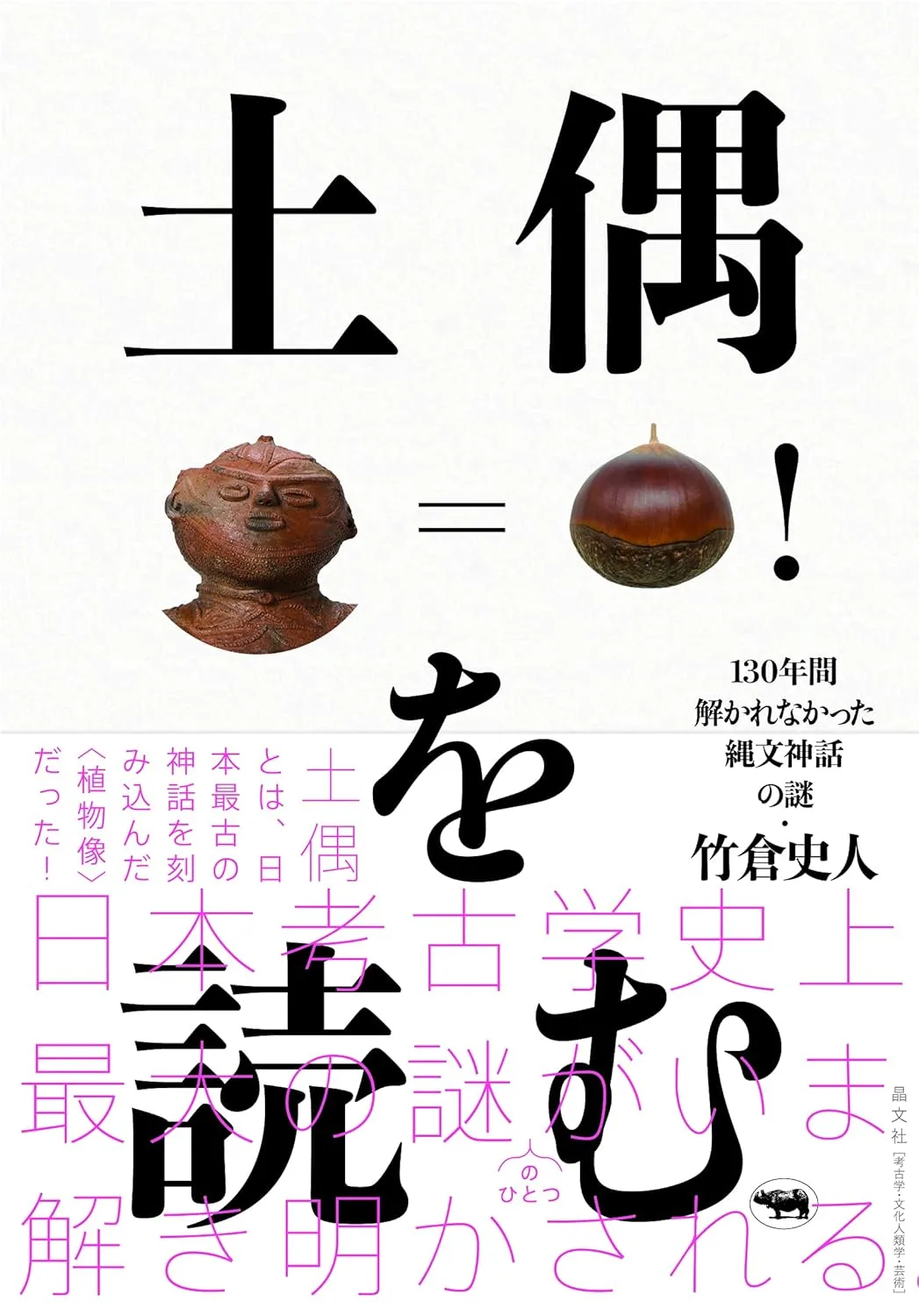
The talk was held on 11 February 2024, a public holiday, and I was finally able to meet him.
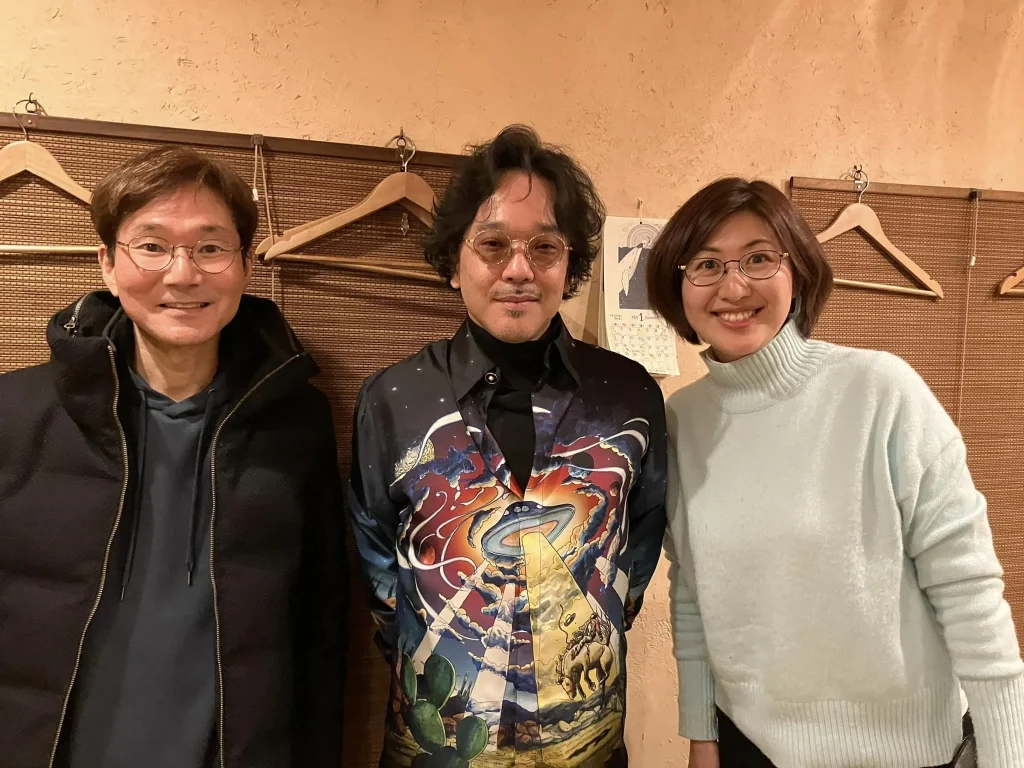
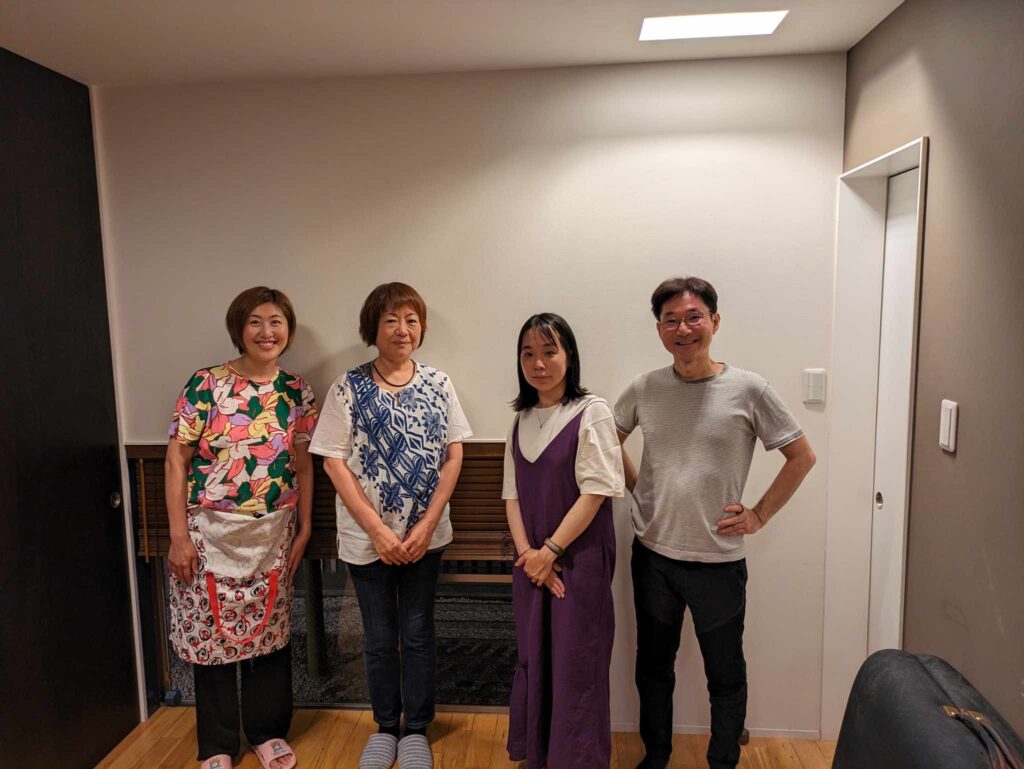
A number of editors from publishing houses were there. Among them were Yuko Hosoe, who edited Mu for many years and now works freelance, and Nameko Shinsan (in Japanese). As Takekura mentions in his book, he has received Rolfing from Yasushi Fujimoto — a Rolfer, and the author of the book through which I first learned of Rolfing myself. He knows the work well, and over dinner the conversation turned to it and stayed there.
After the event, to my good fortune, Ms Hosoe asked whether she might do a piece on Rolfing. The form it took was that Ms Shinsan would receive an introductory session at my room in Shibuya on 29 March 2024, and conduct the interview as she went.
The Interview — Nameko Shinsan’s Column
Ms Shinsan writes a column in Mu called Tamashii-katsu Jungyō, a touring column in which she visits spiritual practices and tries them out. Takekura himself had been interviewed for it at the February talk. That I might be interviewed for the same column felt like a dream, and I was delighted. Mu is a magazine I had read since I was at school. I told Ms Hosoe that this pleased me a hundred times more than being on television.
What struck me on the day was how well she listened. The questions that came back were sharper than what I had explained. The hour and a half went quickly, and I looked forward to seeing how the piece would come out.
I was fortunate too that when the reading group took up one of her books, she came to the event herself. I was able to ask her about a great many things, and came away with the impression of someone level-headed and clear-eyed.
The draft came through on 7 June 2024. Reading the PDF, I was moved. There was not a single correction to make. And then the August issue of Mu (in Japanese) came out, on 9 July 2024.
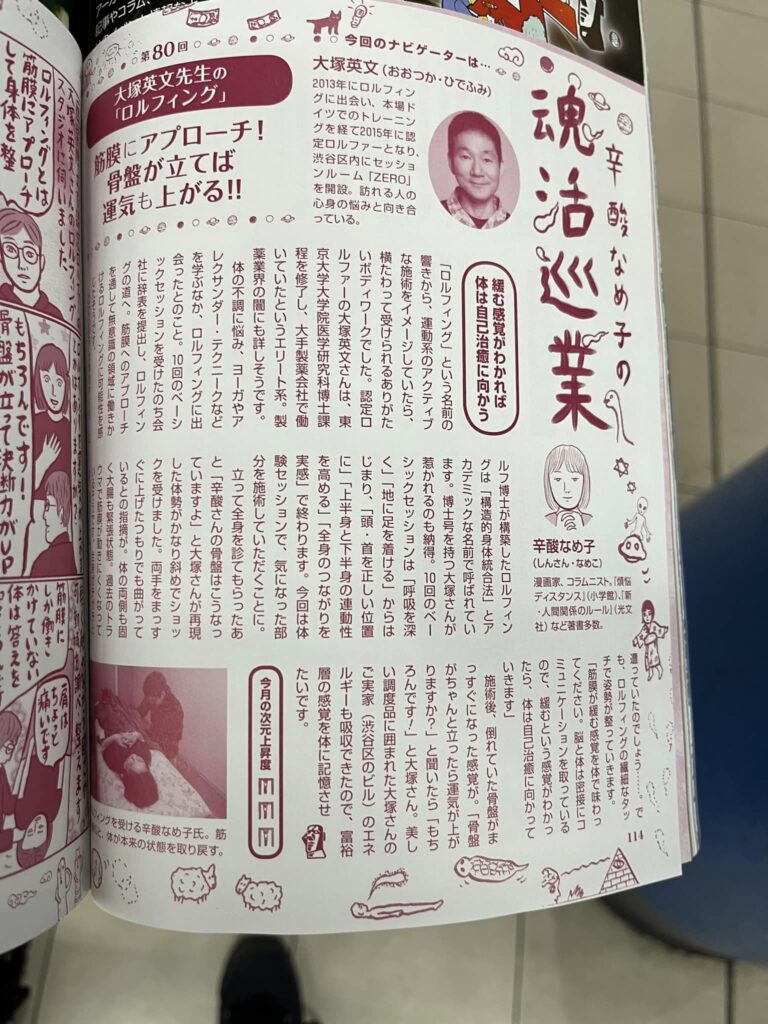
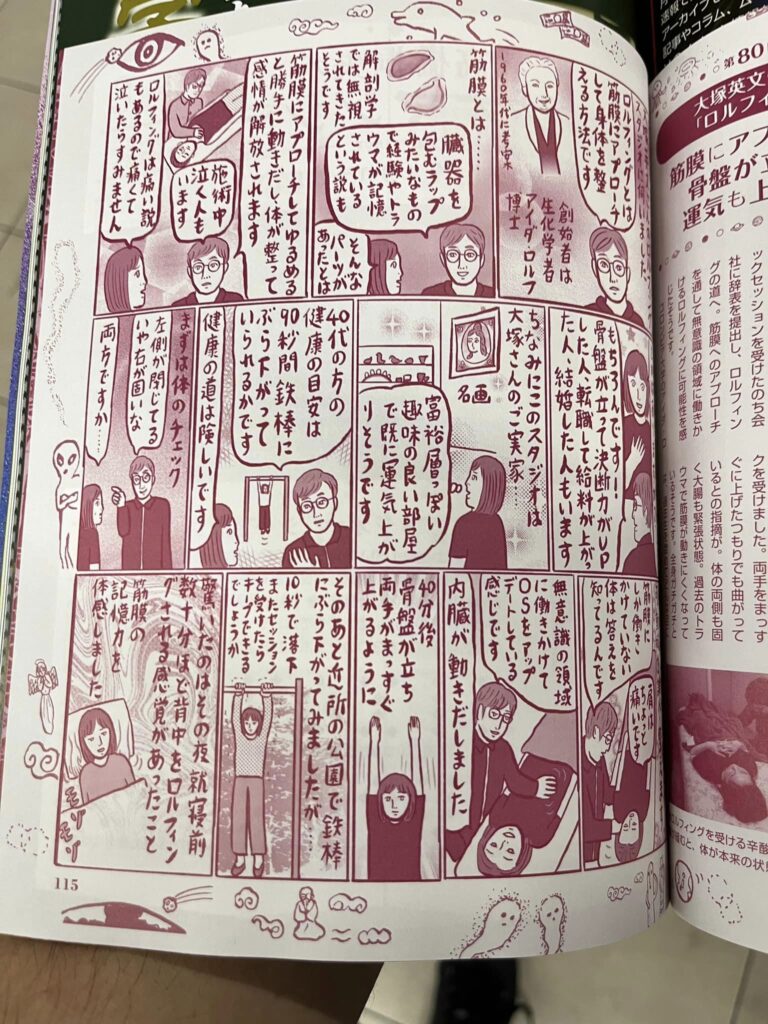
After it appeared, a number of people wrote to say they had seen it, and some got in touch and came for a session having read the piece. My thanks to everyone who looked.
On the Mu Website — 29 July 2024
On 29 July 2024 the same piece went up on the Mu website (in Japanese). There the panels are easier to read on a phone or a computer, which makes the Rolfing side of it clearer.
Here is part of it.
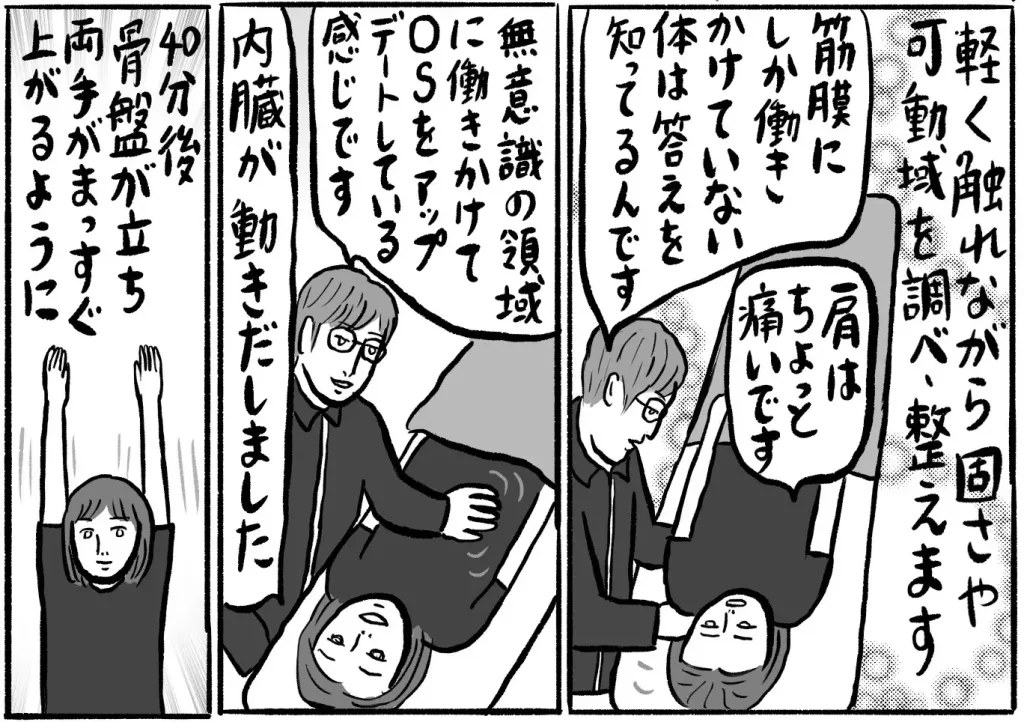
If you would like to read the rest, it is in bookshops, on Amazon, and on the website.
Note, September 2026
This interview came down a single line. Ryūya Saitō told me about the talk; I went to meet Fumito Takekura; Yuko Hosoe and Nameko Shinsan were in the room; and the invitation followed.
Over dinner, I wrote, the conversation turned to Rolfing and stayed there — because Takekura had received Rolfing from Yasushi Fujimoto.
Looking back, it is that name coming up that carries the weight.
I first learned of Rolfing by reading a book of Fujimoto’s, Karada no Home Position. In July 2014, just after leaving the pharmaceutical company, I received two movement sessions from him — from the author himself. To apply for the training in Germany, one had to have received five movement sessions, and those two counted toward it. The remaining three I received in Munich, from Kaori Nakamura.
I read the book, received sessions from the person who wrote it, and that met the requirement for applying. From there the training began.
Ten years later, by an entirely separate route, I found myself at the same table as someone who had received Rolfing from that same person. And it was that connection that led to the interview.
The name at the entrance had come round again.