Introduction
Saturday, December 11, 2021. Out of Haneda at 6:20 and into Itami at 8:00, to Osaka for the first time in a year.
The purpose was to take continuing training in IMAC (Integrative Movement Assessment & Conditioning), one of the methods developed by Hiroki Sato — everyone calls him Hiro — the Rolfer who runs TEN ~the space for your Life & Body~.
Meeting Hiro — What IMAC Is
I received the Rolfing Ten Series between December 2013 and March 2014.
The Rolfer was Akinori Ito. Hiro, Ito’s teacher, has a background as an athletic trainer and a wide store of knowledge about the body, and I met him in Osaka for the first time in May 2015, after finishing the basic Rolfing training.
I received a Source Point Therapy session at TEN, Hiro’s session room, and had the good fortune of lunch with him afterward.
Since 2015 I have gone to Osaka every year without fail to learn various things from Hiro, whose grasp of anatomy is thoroughly left-brained.
What is interesting about the IMAC Hiro offers is that it looks at East Asian Medicine from Western anatomy and physiology, and it is interesting that the wisdom of East Asia — the chakras, the eight extraordinary vessels, the twelve primary meridians — is spoken about in the shared language of science.
He is also, among the senses, oriented toward the visual and the kinesthetic, as I am, which makes it go in more easily.
IMAC consists of Basic Courses and Advanced Courses.
In the Basic Courses — overall assessment (EROM) and the fundamentals centered on the limbs and the musculoskeletal system (upper limb, lower limb) — you learn how to assess the range of motion of the human musculoskeletal system from the wisdom of East Asia. What is remarkable is that the state of the meridians and the organs can be grasped from the perspective of Western anatomy, through range of motion.
Since studying IMAC, I have been able to assess reliably whether a Rolfing session is working.
The premise of IMAC is a particular way of thinking about health.
Western medicine generally approaches things by treating an illness once there is one — symptomatic treatment. What is interesting about Hiro is that rather than health or illness as a single state, he thinks in terms of whether the system as a whole is tending in a healthier direction.
The closer to healthy, the higher the capacity to adapt, and the better the performance. In IMAC’s terms: the fewer the restrictions in range of motion, the healthier the state.
Restrictions in range of motion coming off means the body arriving at a neutral state. That is what is taken as healthy.
IMAC exists in order to learn the sense of being neutral, one might say.
In the Advanced Courses — assessment of range of motion seen from the body as a whole (spine and viscera, head and neck) — the manual work becomes finer.
Complete the three Basic courses (EROM, upper limb, lower limb) and the two Advanced ones (spine and viscera, head and neck), and you can at last join the final integration class.
I took the integration class in December of last year (2020). This time I was able to join a three-day class for those who had completed it.
Into the Layers of the Body — Ayurveda and Yoga
With sixteen participants, the workshop focused on parts that the usual IMAC classes cannot give time to. Its title: a seminar for those who have completed IMAC integration, to turn information into knowledge and grow together.
Even when restrictions in range of motion come off, some people are not well; others get caught in thinking, lose track of what they should be doing, and fall into depression. How do you meet that?
What was interesting this time was that it handled territory outside the body.
For that, an account of a philosophy of the body was introduced.
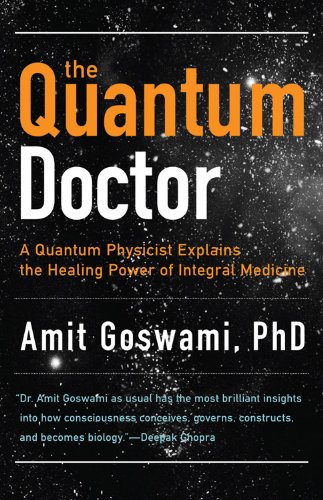
According to the theoretical physicist Amit Goswami (see “The Quantum Doctor – Amit Goswami PhD”), the body has five bodies:
Bliss (consciousness, wholeness) Supramental (the template, intuition) Mental (thought) Vital (the energy body) Physical (the flesh)
Thinking in terms of these five layers, I was told, makes it much easier to see what it means for a system as a whole to tend in a healthier direction.
Of these, the ones the ego cannot be conscious of are Bliss and Supramental.
Meditation and hypnotherapy reach the Mental; acupuncture, Source Point, Jikiden Reiki, and yoga reach the Vital; exercise, supplements, and diet reach the Physical.
Bliss and Supramental did not quite land with me, but a training I had taken nine years earlier came back.
In 2012, studying on a yoga teacher training (Under the Light Yoga School, Yoyogi; I qualified as RYT200 in 2013), I remembered the five koshas (sheaths) — pancha kosha — presented as yoga’s view of the human being.
Annamaya kosha (the food sheath, the flesh) — Gross Body Pranamaya kosha (the vital sheath, the energy body, prana) — Subtle Body Manomaya kosha (the mental sheath, thought) — Subtle Body Vijnanamaya kosha (the wisdom sheath, intuition, the template) — Subtle Body Anandamaya kosha (the bliss sheath, consciousness, wholeness) — Causal Body
The annamaya kosha is the layer made by food, affected by digestion and absorption.
The pranamaya kosha takes the life energy (prana) inside and outside the body into the body and circulates it. It corresponds to the organs that put it out again — respiration, digestion, circulation, elimination, reproduction.
The manomaya kosha receives information from outside through the five senses; it is how that information is taken in — the layer of moving thought and feeling.
The vijnanamaya kosha is the layer of intelligence. Not swept along by feeling, it judges rightly, through sound intelligence, the information gathered by the senses.
The anandamaya kosha is what is wrapped in the essence (atman) — not actually visible.
In yoga, one peels the layers like an onion, one at a time, from the outer annamaya kosha to the innermost anandamaya kosha, through practice. In doing so, one can know the truth within.
I had never dreamed a chance to hear this kind of philosophy of the body would come around in IMAC — but the reason, apparently, is that in offering hands-on work, understanding this way of thinking makes the results come out more clearly.
IMAC and the Five Bodies — Doing Nothing
What we learned this time was how to reflect the five bodies in the manual work of bodywork. And it came to this:
Look on at the body as a whole; observe where your own attention goes; do not chase the changes in the system.
Until now I think I had been working with the intention of doing something.
This time, through experience, I learned that by holding the intention of doing nothing, the other person’s body finds a healthy state of its own accord.
In fact, practicing over three days, I was startled by how dramatically range of motion in muscles and joints changed between before and after the work.
Conclusion
Hiro said it can be acquired through practice, so we shall see.
Back in Ebisu, I have been trying it with clients, and the effect is unmistakable.
If something comes into view over six months of practice, there will have been a point to taking part.
My thanks to Hiro and to the other participants for providing such a valuable setting.
I plan to spend six months refining what I learned through practice.
Related Articles
- IMAC (1) — The Introductory Course: Assessing the Body Through Range of Motion and Anatomy
- IMAC (2) — The Upper Limb: In What Order Do You Take Range of Motion, Test, and Work with Fascia?
- IMAC (3) — The Lower Limb: Not Loosening What Is Tight, but Finding Where Information Is Not Reaching
- IMAC (4) — The Viscera and the Muscles: How Does Muscular Function Affect the Organs?
- IMAC (5) — EROM: Learning How to Assess Range of Motion from the Ground Up
- IMAC (6) — The Lower Limb: Where Anatomy Meets the Meridians, and What Range of Motion Reveals
- IMAC (7) — The Upper Limb: Range of Motion and the Meridians — Reading the Organs and the Autonomic Nervous System
- IMAC (8) — The Spine and the Viscera: Learning to See Them Through Embryology
- IMAC (9) — The Head and Neck: Working with the Body Through the Meridians of the Head and Neck
- IMAC (10) — The Integration Class: Seeing Twenty Meridians Through a Western Index, Range of Motion
Note, September 2026
What I learned in this course is set down in a single line. Look on at the body as a whole; observe where your own attention goes; do not chase the changes in the system.
And it goes on: until now I had been working with the intention of doing something. Hold the intention of doing nothing, and the other person’s body finds a healthy state of its own accord.
After three days of practice, I was startled by how dramatically range of motion changed before and after the work. Without doing anything.
The other subject of this course points the same way. The second of the discoveries I listed reads: learning technique and theory leaves you at the mercy of that knowledge; what matters is being neutral. How do I become neutral, and give the other person an opening to resolve things themselves?
I have the teaching materials for that class. Hiro made them, dated December 8, 2021 — three days before the course.
In them there is a section headed practical: neutral. It stands on its own, and three practical exercises follow.
Three years and four months later, in April 2025, I took the Advanced Training. What was placed at the center of it was neutral. Ray McCall and Hiroyoshi Tahata handed it over across twenty-four days.
The same thing, it turns out, had reached me over three days in Osaka in December 2021.
I do not think that is coincidence. The word neutral sits at the center of biodynamic craniosacral work. Ray McCall holds an instructor qualification in biodynamic craniosacral therapy and has taught Source Point Therapy jointly with its founder, Bob Schrei, since 2007. Hiro is a certified Source Point Therapy instructor and took Module 3 from Bob in 2020. His biodynamic osteopathy comes from Jim Jealous.
Both of them stand on the same line.
The same shape of thing had happened before. In the 2025 Advanced Training I heard the history of how, from the 1980s, biodynamic craniosacral work passed beyond osteopaths and came to influence Rolfing. I had heard the same account eight years earlier, in Osaka, from Hiro.
One lineage, received twice from two people, with an interval in between.
And the neutral received in this course has something before it. In December 2015, on the very first day of IMAC, I heard this: palpate while holding tension and you are putting tension into your own body, which makes it harder for information to come in from the other person; which is why energy work — work that does not touch the body — lets information in more easily.
It was one sentence. Six years later it had become three days of practical work.
A word set down first, its content arriving afterward. What happened again and again across this series happened between its first course and its last.
At the end of this article I wrote that I planned to spend six months refining what I had learned through practice.
I did not write down how those six months went. But four years later, when I met the same subject in the Advanced Training, it was not something I was hearing for the first time.