
Introduction
In another post I looked at fascia as a sensing organ — its face as a tissue that answers to being pushed, pressed, and sheared, and that holds a dialogue with the nervous system.
Fascia has another face.
It is the changeable side: that it springs back, and that it can be reproduced. I wrote about this in “Fascia Is Resilient — Movement Is What Keeps It Flexible.” In this post I want to go one step further into it. Between someone who has practiced yoga or run for years and someone who barely moves, fascia itself comes to differ. “Fascial Fitness,” proposed by Robert Schleip and colleagues, gathers a good deal that is suggestive from the standpoint of fascia.
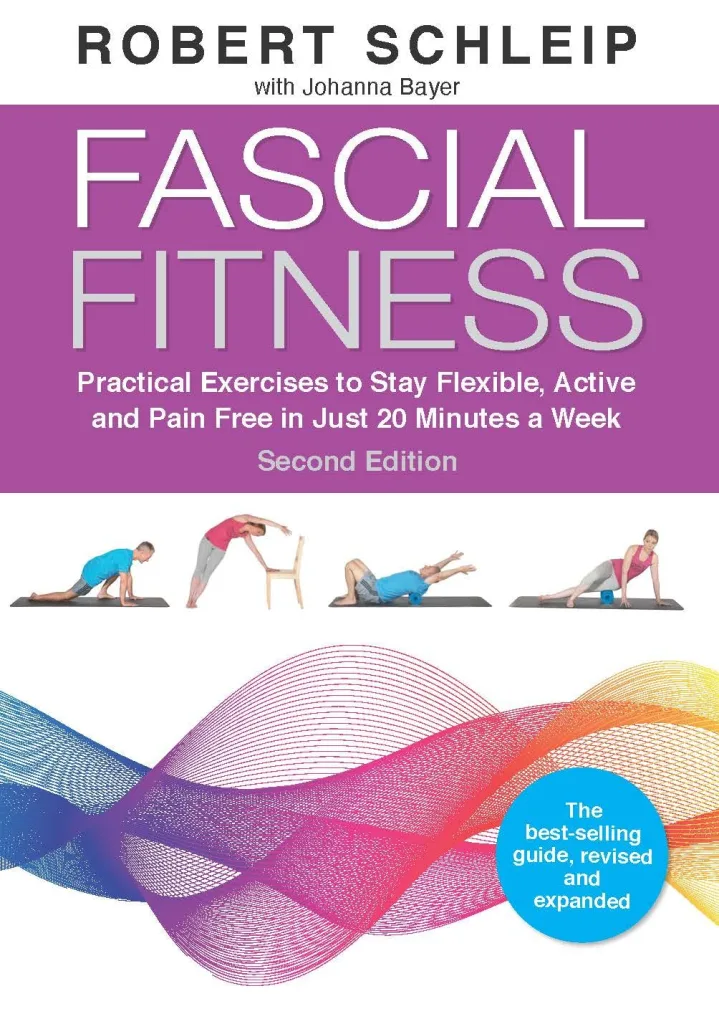
This post sorts out the differences and roles of muscle and fascia when the body is trained through exercise, and explores the mechanisms behind how fascia changes between those who move and those who do not. At the same time, it should be noted in advance that this field still owes much to animal studies.
What Distinguishes Muscle from Fascia — Training, and Time
When we speak of training the body, what most of us picture is muscle. Muscle is contractile tissue that shortens by itself to produce force. Train it under load and it grows thicker and stronger (this is called hypertrophy). What ordinary strength training mainly engages is muscle and its layer. What is characteristic is that muscular adaptation is relatively fast: change appears on the order of weeks.
Fascia is not a tissue that produces force by contracting as muscle does. It is a connective-tissue network, continuous throughout the body, made of collagen and elastin fibers, the cells that weave them (fibroblasts), and the water-holding, gel-like substance that fills the space between fiber and cell (the ground substance, or extracellular matrix, ECM).
Its character lies not in generating force but in storing and returning it, transmitting it, and letting things glide. The elasticity described below — crimp, and the catapult mechanism — is likewise supported by fascia and this layer. And its remaking (called remodeling) is far slower than muscle’s, requiring anywhere from several months to two years.
Even so, the two do not work separately.
Force generated by muscle is not only transmitted end to end through tendon; it is also transmitted laterally by way of the connective tissue that wraps and links muscle — from endomysium, perimysium, and epimysium onward into fascia. This is the mechanism known as myofascial force transmission.
It is supported by animal studies and by research using human cadavers, and any exercise that contracts muscle can be considered to load fascia as well. Functionally, muscle and fascia may be said to work as a single unit — a myofascial unit. That said, how large a share that transmission accounts for in the living human body, and how aging and exercise habits affect it, remains under discussion.
Here a difference in training comes into view. Muscle and fascia have different targets. Where conventional training mainly develops the contractile force of muscle, the spring and flexibility that fascia carries call for a different kind of engagement — a point I want to explore next.
Young, Well-Moved Fascia — an Ordered Weave, and the Wave of a Spring
Fascia in a young, well-moved body has two structural characteristics. Both are sources of flexibility and elasticity.
The first is that collagen fibers are woven into a mesh with aligned directions. Picture a net with even openings where threads cross regularly, or a carefully woven cloth. Rather than facing every which way, the fibers cross and align in two clear directions. This ordered weave — a lattice — is the foundation that keeps force from concentrating in one direction and lets the whole receive it flexibly.
The second is that each individual fiber has a fine wave to it. Rather than running straight, it carries an undulation, like a coiled telephone cord or a spring. This waviness — called crimp — is the key to elasticity. When tissue is lengthened, this wave straightens first, and only then does tension come on. It resembles pulling a coiled cord: at first it simply uncoils, and then the resistance returns to the hand.
That margin of give is what creates room to take up force and send it back like a spring. The more distinct the wave, the greater the spring that can be stored.
Left Unused, It Tangles
With aging and lack of movement, on the other hand, this order is lost.
The alignment of collagen becomes multidirectional and irregular, and crimp decreases. Left unmoved, new cross-links form between fibers, and the fibers no longer glide against one another. In time they adhere, and in the worst case the tissue becomes tangled and felted. Animal studies have shown that immobilization brings about such changes relatively quickly.
Flexibility and spring in movement are lost in this way, little by little. The suggestion here is that stiffness is not necessarily a consequence of aging as such, but also a consequence of not moving.
The Catapult Mechanism — the Secret of a Springing Body
Animal models teach us well what elastic fascia makes possible.
A kangaroo jumps farther and faster than the contractile force of its leg muscles could account for. The secret lies in the catapult mechanism — elastic recoil — in which tendon and fascia store tension like an elastic band and release it all at once. The same mechanism can be seen in the graceful leap of a gazelle, which is anything but heavily muscled.
The lightness of jumping, springing, and running owes more to this fascial elasticity than to muscular force as such. And the better trained the tissue, the more efficiently it returns the elastic energy it has stored. Here lies the difference between a body that recovers energy without waste with each jump and one that loses it each time.
Elastic recoil takes the leading role in running and jumping.
In slow walking, what leads in saving energy is rather the inverted pendulum — the mechanism in which the center of mass vaults over a relatively stiff leg, with potential and kinetic energy exchanging out of phase, sparing the work of muscle.
That said, tendon elasticity is not absent from walking either: at push-off, the Achilles tendon and the arch of the foot are thought to carry elasticity and reduce muscular work. As speed increases and walking gives way to running, the leading role shifts from pendulum to spring, or catapult. Seeing it this way avoids confusion.
Fascia Can Be Remade — the Hope in Remodeling
What matters is that this structure is not fixed.
The cells that build fascia (fibroblasts) remake the alignment of fibers and their crimp according to the load placed on them. Animal studies have shown that appropriate exercise induces a more youthful, crimp-rich structure. Lost elasticity can, to some degree and regardless of age, be regained.
This remodeling proceeds slowly, however. Structure changes only over something like several months to two years. It does not change with a single session of exercise; it is rewoven gradually through continuation.
“Fascial Fitness,” as proposed by Schleip and colleagues, is an approach to exercise that makes use of this property. Alongside strength, endurance, and neural coordination, it sets the elasticity of fascia itself as an object of training. Yoga, Pilates, dance, and the martial arts are cited as fields of application. How to move specifically is something I will come back to later in this post. The proposal has been updated as subsequent research findings have been incorporated, and the most current view is set out in the revised second edition (2021).
So What Is Different About Those Who Do Yoga or Exercise?
With all of this laid out, the question in the title of this post — how fascia differs between those who move and those who do not — can be answered. In people who move the body daily, in varied directions and through varied ranges, fascia tends to keep its ordered weave and crimp, and to be rich in elasticity. In a life with almost no movement, by contrast, that order is slowly lost. The flexibility of posture and movement rests not only on will and muscular strength, but also on the state of fascia.
And this resonates with hands-on bodywork. Rolfing values not only touch but also the re-education of movement (Rolf Movement) because fascia is a tissue that changes through both being touched and moving. Hands-on work opens the door, and daily movement cultivates what is opened — with these two together, fascia is rewoven little by little.
Why Strength Training Alone Is Not Enough
On this basis, the question “isn’t strength training enough on its own?” can also be answered.
What conventional strength training aims at is mainly contractile force, endurance, and neural coordination. All are indispensable as a foundation of the body. But what is being trained there is the contractile force of muscle, not the elasticity of fascia. Moreover, exercise repeated slowly and carefully in a fixed direction through a set range, effective as it is for thickening muscle, is unlikely to supply the multidirectional load needed to maintain a two-directional lattice and its crimp.
The catapult mechanism is what comes into play. As seen above, elastic recoil works powerfully when the tissue is lengthened rapidly and then shortens all at once — a pattern known as the stretch-shortening cycle. In slow, controlled repetition, this springing circuit is little used. It is in movements that call for elasticity — jumping, springing, changing direction — that the springs of tendon and fascia are cultivated.
So strength training is not a mistake. It is a sound foundation. It is only that, on its own, the fascial qualities of spring and resilience do not follow automatically. Schleip and Müller likewise state that fascial fitness is not a replacement for conventional training but a complement to it.
That many sports injuries are said to occur in connective tissue — tendon, ligament, fascia — rather than in muscle itself is cited as one further reason to tend to this layer.
Tending to Fascia — Self-Care Built Around the Catapult
How, then, might this knowledge be used in daily self-care? Here are several starting points, drawn from the principles of fascial fitness as set out by Schleip and Müller, organized around the catapult mechanism.
At the center is elastic recoil. Light bouncing, skipping, jumping rope — such small rebounding movements use the springs of tendon and fascia directly.
There is one knack for drawing out the catapult: just before moving, add a small preparatory movement slightly counter to the intended direction (a preparatory counter-movement). Like drawing a bow before releasing it, lengthening the tissue lightly in advance increases the elastic energy stored and makes the rebound larger. It is a sense of borrowing the kangaroo’s catapult, in miniature, within everyday movement.
Next, dynamic, multidirectional stretching. Rather than only holding still and lengthening, interweave slow, melting static stretches with dynamic stretches that include small bounces, varying the angle and direction little by little. Rather than targeting a single muscle, it is recommended to work with awareness of the long fascial chains, moving through spirals and arcs. The flowing sequences of yoga, and the continuous movement of the martial arts and dance, are good examples.
Then, cultivating the capacity to sense (proprioceptive refinement). Balancing on unstable surfaces, slow shifts of weight, movement carried out while feeling into the details — such work is said to help keep fascial sensation, which tends to dull, fresh.
Easily overlooked are hydration and recovery. Fascia is also a tissue that holds water like a sponge. Under load, water is pushed out of the loaded area; as the force releases, fresh water fills in from around it. This is why moving the body regularly, taking in fluids, and time spent resting all support flexibility. And as already seen, the remaking of fascia is slow. In exchange for having no immediate effect, sustained change lasts a long time. Continuing lightly but steadily, once or twice a week, is what matters.
Finally, self-myofascial release using tools. This means rolling slowly over the calves, the soles of the feet, the chest and so on with a foam roller or ball. As for how well it works, however, there are points to understand with care, as described below.
Where to place the emphasis also varies with constitution.
In the revised second edition, Schleip broadly divides connective-tissue types into the sturdy, stiffer “Viking” and the naturally flexible, hypermobile “Contortionist.” For a stiffer type, the emphasis falls on elasticity and hydration; for a hypermobile type, it shifts rather toward stability and proprioception. It is a rough guide at best, but it is worth holding the sense that the same exercise does not work the same way for everyone.
Being Honest About the Limits
It is an appealing account, but a line is worth drawing so as not to overreach.
First, the core of the direct evidence in humans is the observation that fascia in younger people is lattice-like and rich in crimp; the parts about exercise remaking structure and inactivity damaging it owe much to that correlation and to animal studies. Conclusive evidence from long-term comparison of exercising and non-exercising groups in humans is still limited.
Second, there are inborn individual differences in the stiffness and elasticity of fascia. As with the broad division into “Viking” and “Contortionist” types mentioned above, constitution changes which approaches take hold and what quality of load is needed. Not everyone changes in the same way.
Third, remodeling is slow and promises no particular outcome. “Fascial Fitness” is positioned as a complement to conventional exercise rather than a replacement for it. The same second edition also adds the cautious proviso that not all widely recommended stretching is beneficial, and that depending on how it is done it can do harm.
Fourth, expectations about the self-care described here are worth keeping moderate. While individual principles — elastic recoil or proprioceptive training, for instance — have a degree of scientific grounding, it is hard to say that sufficient evidence has yet accumulated for the efficacy of “fascial fitness” as a whole program.
Self-myofascial release with a foam roller has been observed to ease delayed-onset muscle soreness (DOMS) without impairing performance, but its action is more likely a change mediated by nerves and sensation than a physical loosening of fascia. Claims of specific outcomes such as injury prevention also remain a work in progress.
Even so, the fact that fascia is remade in response to movement offers real guidance for a long relationship with the body.
Conclusion
Fascia has at least two faces. One is the sensing organ seen in another post. The other is the weave seen here — springing, and able to be remade.
Moving — and above all moving in varied ways, with spring — may be the work of tending, without fanfare, to this elastic weave. Today’s single step or single breath is preparing, little by little, the spring the body will have some months from now.
References
- Müller DG, Schleip R. Fascial Fitness: Fascia-oriented training for bodywork and movement therapies. (Terra Rosa e-magazine, No.7 / in Fascia: The Tensional Network of the Human Body, Elsevier)
- Schleip R, Bayer J. Fascial Fitness: Practical Exercises to Stay Flexible, Active and Pain Free in Just 20 Minutes a Week. 2nd ed. Berkeley, CA: North Atlantic Books; 2021. (ISBN 978-1-62317-674-7)
- Schleip R, Müller DG. Training principles for fascial connective tissues: Scientific foundation and suggested practical applications. J Bodyw Mov Ther. 2013;17(1):103–115. doi:10.1016/j.jbmt.2012.06.007
- Staubesand J, Li Y. Zum Feinbau der Fascia cruris mit besonderer Berücksichtigung epi- und intrafaszialer Nerven. Manuelle Medizin. 1996;34:196–200.
- Järvinen TAH, Józsa L, Kannus P, Järvinen TLN, Järvinen M. Organization and distribution of intramuscular connective tissue in normal and immobilized skeletal muscles. J Muscle Res Cell Motil. 2002;23(3):245–254. doi:10.1023/A:1020904518336
- Huijing PA. Muscle as a collagen fiber reinforced composite material: force transmission in muscle and whole limbs. J Biomech. 1999;32(4):329–345.
- Wilke J, Schleip R, Yucesoy CA, Banzer W. Not merely a protective packing organ? A review of fascia and its force transmission capacity. J Appl Physiol (1985). 2018;124(1):234–244. doi:10.1152/japplphysiol.00565.2017
- Cavagna GA, Heglund NC, Taylor CR. Mechanical work in terrestrial locomotion: two basic mechanisms for minimizing energy expenditure. Am J Physiol. 1977;233(5):R243–R261. doi:10.1152/ajpregu.1977.233.5.R243
- European Rolfing Association: Fascia Expertise & Scientific Research
- Fascia Research Society
Related Articles
- The Four Sensory Receptors in Fascia — How Touch Changes the Way the Body Answers
- Why Good Posture Is Not a Matter of Muscle Strength — Tonic Function and Its Relationship to Gravity
- Rolfing Is Studied in University Laboratories──Doctoral Research on Fascia at the Technical University of Munich
- Is Rolfing Pseudoscience? — Understanding Rolfing Through the Science of the Body
- Fascia Is Resilient — Movement Is What Keeps It Flexible
Hidefumi Otsuka, Ph.D. | Certified Advanced Rolfer™ / Rolf Movement Practitioner
Completed his doctorate at the University of Tokyo Graduate School of Medicine. After working in medical marketing at an international pharmaceutical company, he has offered Rolfing® sessions in Shibuya since 2015. His work centers on the integration of science and practice.