How Rolfing Came to Interest Me
Since June 2015, I have offered Rolfing sessions in Shibuya, Ebisu, and Daikanyama.
Rolfing is a method in which hands-on work is carried out once every one to two weeks, each session following its own theme. Because it refines bodily sensation while bringing the body into order, physical complaints such as stiff shoulders and lower-back pain improve as well.
What was it, then, that drew me to Rolfing in the first place? It came out of the yoga practice.
Practicing Yoga — Flexibility Increased
My interest went to Ashtanga Vinyasa Yoga (hereafter Ashtanga), one of the schools of Hatha Yoga, and I gave myself over to practice in the Mysore format at Mysore Tokyo.
マThe Mysore method places its weight on students practicing on their own. What distinguishes it is that the teacher steps in with an adjustment or a word of instruction as needed.
In Ashtanga, the order of the poses is fixed from beginning to end. Once it is learned, it can be practiced anywhere — which makes it a fine thing to carry. Indeed, during the round-the-world trip from 2014 into 2015, I took a mat abroad and kept up the practice.

What makes attending a Mysore class rewarding is coming to be able to take the more difficult poses. At the start there was no flexibility at all, and the thought was: this is simply impossible.
Yet, receiving adjustments from the teacher, the body opened little by little, and in time the poses became available.
Where does awareness need to go for a pose to deepen?
Because the practice values self-direction, nothing was taught in specific terms. One thing at a time, through trial and error and by studying anatomy, the hip joints and the shoulder joints gradually came to move.
A Drifting Axis, and the Encounter with Rolfing
On the other hand, in the daily Mysore practice, there was a sense that the body’s axis was drifting.
Chronic neck pain and stiff shoulders, for instance, did not improve. And the flexibility of the poses went back and forth without settling — a wall past which the practice would not go.
What was more surprising was how many yoga instructors were carrying injuries.
It brought me to feel that, for the sake of preventing injury, it would be better to work out how the body is used.
Through Toshihiro Aramaki, one of the practice companions at Mysore Tokyo, I encountered the Alexander Technique. Receiving sessions several times improved the neck pain dramatically, and from there an interest in bodywork took hold.

As part of that, Rolfing came into view as well.

From December 2013, I began receiving Rolfing sessions. The flexibility of the yoga poses improved dramatically, and the stiffness in the neck became something I hardly noticed.
I wanted to learn this method. In March 2015 I was certified in Munich, and that is where things stand today.
Since 2019, I have also offered yoga lessons that combine what is good in Rolfing (and Rolf Movement) with what is good in yoga. Putting the two together, it turns out, deepens the yoga practice and makes it easier to enter meditation.
So then: when practicing yoga, what can be worked out so that a pose can be held with more concentration?
As a yoga instructor, there is a warm-up I always do when teaching the poses.
It is a warm-up called Sukshma Vyayama, in which the joints — the hands and the feet included — are moved slowly, one at a time.
The joints of the hands and feet are moved in time with the breath, slowly, carefully, and with the body being felt — opening and closing the hands, moving the heels and each of the toes one by one.
In Rolfing, when the hands and feet can be used fully, the muscle groups in the deep layers of the spine stabilize. When the whole palm rests on the mat as though suctioned there, without force applied, the serratus anterior, the rhomboids, and the deep muscles linking the spine come into use.
As a result, Downward-Facing Dog, the inversions, and the backbending poses become easier to take.
The point is this: not putting force into the hands and feet, but moving them with awareness.
This is likely a remnant, I suspect, of the era when human beings lived in the trees. The hands and feet were used to climb and to travel. And to travel, the spine has to be stable, or the movement is not efficient.
After the warm-up, the sense of using the feet and hands becomes easier to grasp, and the poses settle. Further, when sitting, the body becomes one that meditation enters more readily.
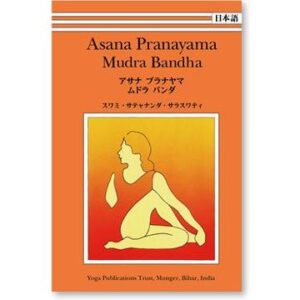
For details, see “Asana Pranayama Mudra Bandha.”
For reference, in Rolfing the soles of the feet are released in Sessions 2 and 6, and the whole of the palm in Sessions 5 and 7.
Conclusion
This piece has centered on the yoga poses, and on what can be worked out from the standpoint of Rolfing.
For anyone who can take the poses and yet finds that the muscular tension does not release, or that injuries keep coming, trial sessions are available as well. Anyone interested is welcome to come.
Note, September 2026
This piece opens with the question of what can be worked out in taking a yoga pose, and gives as its answer a warm-up called Sukshma Vyayama.
The yoga lessons that combine Rolfing and yoga began in 2019, toward the closing stretch of the Rolf Movement training (2017–2019). Bringing this warm-up into those lessons, however, started with the writing of this piece, in November 2022.
Which makes this a record of the point at which what goes into a lesson was decided.
Entering from the Hands and Feet
The order this piece sets out runs like this. The warm-up moves the joints of the hands and feet. The sense of using the hands and feet becomes easier to grasp. The deep layers of the spine stabilize. The poses settle. And sitting, the body becomes one that meditation enters more readily.
In from the hands and feet, and on toward the depths.
At the close of the piece sits a single line. In Rolfing, the soles of the feet are released in Sessions 2 and 6, and the whole of the palm in Sessions 5 and 7.
The ten-series holds four sessions that work with the hands and feet. They are placed separately along the descent from the superficial toward the deep.
The order a warm-up travels in a few minutes and the order the ten-series travels over several months face the same direction. In from the extremities, and through to the deep layers of the spine. The scale of time differs; the structure overlaps.
This piece gives that correspondence a single line.
Not Force, but Awareness
What this piece emphasizes is not putting force into the hands and feet, but moving them with awareness. The whole palm rests on the mat as though suctioned there, without force. From there, the serratus anterior, the rhomboids, and the deep muscles linking the spine come into use.
The deep layers are not trained by applying force. Awareness arrives, and they begin to work of their own accord.
Carrying out the warm-up in time with the breath, slowly and carefully, is how that difference is taught to the body.
Since Then
This warm-up is still part of the yoga lessons.