On 3 November 2026 I spent a day at a workshop in Tokyo called Yoga Philosophy Felt in the Body — How Does Philosophy Change Bodily Experience? The teacher was Toshiro Miura, known to everyone as Toshi-san, one of the senior Kripalu Yoga teachers in Japan. It was hosted by Teachers (Teachers Inc. Japanese page only).

The workshop covered a wide range of yoga philosophies, including Vedānta, Sāṅkhya, the Yoga Sūtras, Tantra, and Haṭha Yoga.
What made the workshop unique was how we combined theory with practice. We began by learning about one philosophical tradition through a lecture. Then, we explored its ideas through yoga postures (āsana), breathing exercises, and meditation.
After each practice, we reflected on what we had experienced in our bodies and shared our observations with a partner. We then moved on to the next philosophical tradition and repeated the process.
Throughout the day, we explored different yoga philosophies not only by studying them intellectually, but also by experiencing them through our bodies.
Two Workshops in a Row, After Fifteen Years
Before this workshop, I had last studied with Toshi-san on 16 August 2026. Before that, it was 7 May 2011. After such a long gap, I found myself attending two of his workshops in the same year.
What struck me was how little Toshi-san had changed over the past fifteen years — and I mean that in the best possible way. There was something reassuring about it.
One of the things I appreciate most about his teaching is the way he uses words to guide students through yoga postures (āsana) and meditation. Every instruction seems carefully chosen, helping students turn their attention inward and explore their own experience.
I was curious about this, so I asked him about it over dinner after the workshop.
He explained that he makes a conscious effort to teach only what he has experienced himself. He is also honest about what he does not know, rather than trying to provide an answer to everything. Because his words come from direct experience, they carry a sense of authenticity and conviction.
My own background is in Ashtanga Vinyasa Yoga, which is a different tradition. But as a yoga teacher myself, I found there was much to learn from his approach — especially how he chooses his words, guides students, and creates an environment where they can explore their own experience.
Yoga as a Wisdom Tradition — It Begins with Darśana
The first concept we explored that day was darśana. Darśana is a Sanskrit word meaning “a way of seeing” or “a perspective.” In Indian philosophy, it refers to different ways of understanding reality, including traditions such as Vedānta and Sāṅkhya. Toshi-san also shared an interesting observation. He suggested that yoga originally did not have a concept of “philosophy” in the Western sense, and that the Western understanding of philosophy was later applied to yoga. I found his perspective convincing.
What stayed with me most was his approach to these different traditions. Rather than asking which one is right or wrong, he encouraged us to consider why we might choose a particular perspective. We adopt a way of seeing because it serves a particular purpose. In this sense, darśana is not a fixed doctrine or a set of beliefs we must accept, but a framework that helps guide our actions.
This led to what I consider the most important insight of the entire workshop: When our way of seeing changes, the way we act changes too. Different perspectives lead to different practices, methods, and disciplines.
In yoga, we often focus on the practices themselves: āsana (postures), prāṇāyāma (breathing techniques), meditation, mantra, and the ethical principles of yama and niyama. But when we concentrate too much on how to practise, we can easily forget to ask a more fundamental question: Why are we practising in the first place? Darśana provides a way to explore that question. It gives meaning and direction to our practice. These philosophical perspectives developed over time through reflection, experience, and practice.
The relationship can be illustrated in the following diagram.
Is Modern Yoga Weighted Too Far Toward Practice?
Let’s return to the four elements introduced earlier:
Of these four, the third — direct experience — gave me the most to think about. Modern yoga may place too much emphasis on practice itself, while overlooking what comes next: direct experience. We learn postures and breathing techniques, but often pay less attention to what we actually experience through them. Without reflecting on those experiences, practice may remain simply practice, rather than developing into wisdom.
I believe this issue extends beyond yoga. For some time, I have been interested in the limitations of scientific approaches that focus primarily on what can be objectively measured, reproduced, and described from a third-person perspective. Such methods have produced enormous advances in our understanding of the world, but they do not always capture what a person actually experiences from within. The first-person perspective — what it feels like to have an experience — can easily be overlooked.
This question is explored in The Blind Spot: Why Science Cannot Ignore Human Experience (MIT Press, 2024), written by astrophysicist Adam Frank, theoretical physicist Marcelo Gleiser, and philosopher Evan Thompson. The authors examine how science depends on human experience while often leaving that experience out of its account of reality.
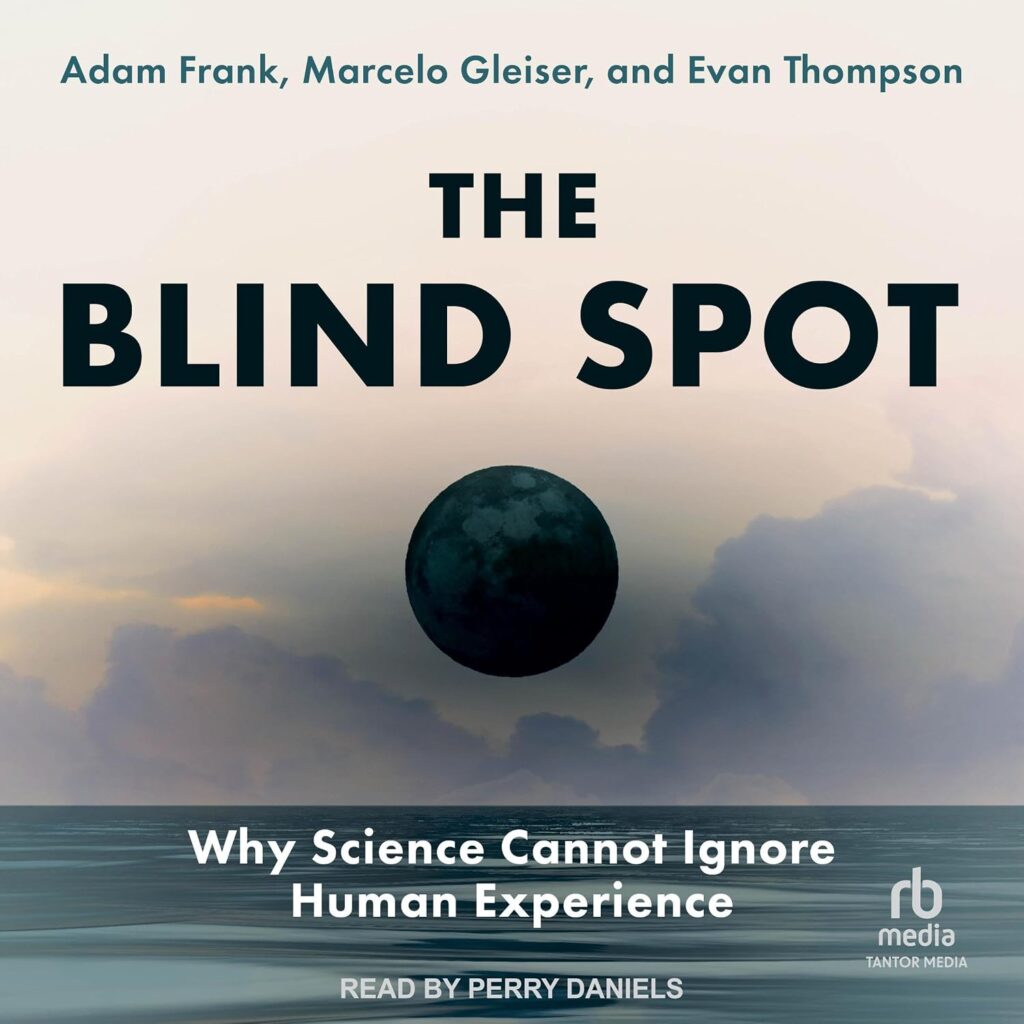
The title The Blind Spot refers to the blind spot in the human eye. In the retina, where the optic nerve exits the eye, there is an area that cannot detect light. In other words, the very structure that makes vision possible also creates a blind spot.
The three authors argue that science has a similar blind spot: our own direct experience. Although all scientific observations begin with human experience, science often overlooks the very experience that makes those observations possible.
Direct experience is bodily experience. “The body is the vehicle of being in the world,” says French philosopher Maurice Merleau-Ponty, but as we will see, firsthand bodily experience lies hidden in the Blind Spot.
Adam Frank, Marcelo Gleiser & Evan Thompson, The Blind Spot
The book uses temperature as an example. Our understanding of temperature began with the bodily experience of feeling hot and cold. As thermodynamics and statistical mechanics developed, temperature came to be described with increasing precision. We began to treat the number on a thermometer as objective reality, while regarding our bodily sensations as merely subjective. Yet the very reason we began measuring temperature was that we could feel heat and cold through our bodies.
The more precise our scientific explanations become, the easier it is to lose sight of the bodily experience from which they originated. This is the blind spot the authors are pointing to. They are not questioning the value of scientific measurement. Rather, they remind us that scientific knowledge is created and understood by human beings who experience the world through their bodies.
Reading this, I began to wonder whether something similar happens in yoga. We learn the correct alignment of postures, breathing techniques, and philosophical concepts. These are all valuable, but they are also ways of exploring and deepening our direct experience. When the methods or systems themselves become the goal, however, we may lose sight of what is actually happening in our bodies and minds during practice.
Of course, turning direct experience into wisdom is not straightforward. Simply feeling something does not mean we have understood it correctly. How can we share our experiences with others, examine them, and distinguish meaningful insights from mistaken interpretations? If we accept every subjective experience as knowledge without questioning it, almost anything could be claimed.
Wisdom, then, does not come from studying philosophy alone or from repeatedly practising postures. It develops when we pay attention to what we experience in our bodies and minds, reflect on those experiences, and examine them in relation to our philosophical understanding. Wisdom becomes possible through the relationship between philosophical perspective, bodily practice, and direct experience.
This, I believe, was the significance of Toshi-san’s workshop. By moving back and forth between lectures and practical exercises for each philosophical tradition, he created opportunities to connect intellectual understanding with bodily experience. Rather than allowing philosophy and practice to become separate activities, the workshop encouraged us to explore what emerges through their relationship.
Related
Vedānta — “This Is Not Me”
The workshop explored the historical development of Indian philosophical traditions that have influenced yoga. We began with the Vedas (around 1500 BCE), followed by the Upaniṣads and Vedānta. We then moved through Sāṅkhya and the Yoga Sūtras, before exploring Tantra (which developed in important forms from around 500–800 CE) and Haṭha Yoga (which emerged in the medieval period and continued to develop over the following centuries).
We started with Vedānta, focusing particularly on Advaita Vedānta, the non-dualistic tradition. According to this philosophy, Brahman is the ultimate reality, while Ātman is our true Self. Advaita teaches that Ātman and Brahman are ultimately one. However, because of avidyā (ignorance), we fail to recognise this unity and mistakenly identify ourselves with the changing world of appearances, often described through the concept of māyā. This misunderstanding is understood as a source of suffering.
The practices associated with this tradition include viveka (discernment between what is real and what is not), vairāgya(non-attachment), and chanting Om. These practices encourage us to look beyond our habitual identification with thoughts, emotions, and external circumstances, and to explore the nature of our true Self.
Non-dualism (Advaita) — Ātman and Brahman were never two
They only look separate.
Toshi-san explained Vedānta using the image of the ocean and the water that splashes from it. The vast ocean represents Brahman, while each drop of water represents Ātman. Although a drop may appear separate from the ocean, it is still made of the same water. In the same way, our true Self is not separate from Brahman.
We then explored this idea through āsana practice. As we moved through different postures under his guidance, he encouraged us to notice whatever thoughts, sensations, or emotions arose and remind ourselves: “This is not me.”
For example, while holding a posture, I might notice my body stretching, feel that the position was difficult, or experience discomfort. Rather than identifying with these sensations, I could simply observe them and say, “This is not me.”Interestingly, this made it easier to let go of unnecessary effort.
Toshi-san then invited us to explore another question: Where is the centre? Where is the single point? As I continued practising with this question in mind, I gradually felt my body settle into a natural sense of alignment, as though my central axis had found its place.
Sāṅkhya — From Twenty-Five Principles to Five Sheaths
Next, we explored Sāṅkhya, a dualistic philosophical tradition that distinguishes between Puruṣa (pure consciousness) and Prakṛti (primordial nature or matter). According to Sāṅkhya, the world of experience unfolds from Prakṛti through different levels, including Buddhi (intellect), Ahaṃkāra (ego), Manas (mind), the five organs of action, the five sense organs, the five subtle elements, and the five gross elements.
Together with Puruṣa and Prakṛti, these form the twenty-five tattvas, usually translated as fundamental principles or constituents of reality. The diagram below illustrates how these twenty-five principles are organised.
+ 5 + 5 + 5 + 5 = 25 tattvas
Two things stood out to me. First, Toshi-san described Puruṣa as Pure Awareness and Prakṛti as Creative Energy. Second, he presented Sāṅkhya as a way of exploring what lies within māyā, the world of appearances introduced in Vedānta. By examining this world in greater detail, Sāṅkhya offers a systematic framework of twenty-five tattvas.
What I found particularly interesting was the distinction between Pure Awareness and Creative Energy. In Sāṅkhya, consciousness and the source of all mental and physical activity are understood as two fundamentally different realities. Puruṣa is pure awareness, while Prakṛti is the creative principle from which the world of experience unfolds. This distinction is why Sāṅkhya is described as a dualistic philosophy.
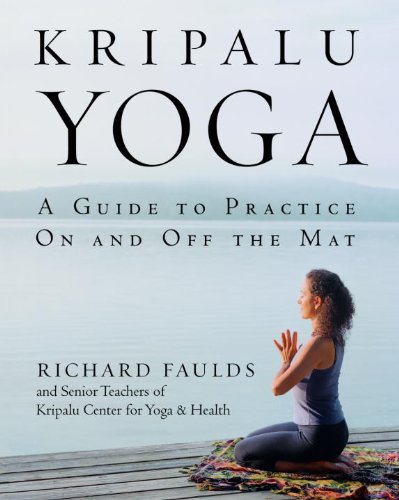
How, then, does Kripalu Yoga understand the relationship between Puruṣa and Prakṛti? Richard Faulds explores these two concepts in his book Kripalu Yoga: A Guide to Practice On and Off the Mat.
Spirit prana is the subtle energy that emanates from the soul to quicken the body and illumine the mind. Similar to the sun radiating light and heat, the indwelling spirit radiates spirit prana, which has the dual qualities of energy and awareness.
Richard Faulds, Kripalu Yoga: A Guide to Practice On and Off the Mat
What caught my attention was that energy and awareness were described as two qualities of the same underlying reality. While Sāṅkhya treats consciousness and Prakṛti as two fundamentally distinct principles, Kripalu Yoga presents energy and awareness as two inseparable aspects of a single reality. This perspective also connects with the non-dualistic understanding found in certain Tantric traditions, which we explored later in the workshop.
I will return to the concept of prāṇa and its relationship to energy in the second half of this article.
Another interesting point was how to make sense of Sāṅkhya’s twenty-five tattvas. Since twenty-five principles can be difficult to work with in practice, Toshi-san introduced three simpler ways of understanding the body and mind:
- The five sheaths (pañca kośa): Annamaya (physical or food sheath), Prāṇamaya (vital energy sheath), Manomaya (mental sheath), Vijñānamaya (wisdom or discernment sheath), and Ānandamaya (bliss sheath).
- The three bodies (śarīra): Sthūla (gross body), Sūkṣma (subtle body), and Kāraṇa (causal body).
- The three guṇas: Sattva (clarity and balance), Rajas (activity and movement), and Tamas (inertia and stability).
These frameworks offer different ways of looking at human experience, making it easier to connect philosophical ideas with what we actually observe in our bodies and minds during practice.
The guṇas are not layers; they were presented as a separate classification.
Of these three frameworks, the guṇas are particularly important in Sāṅkhya because they describe the three fundamental qualities of Prakṛti. Sattva represents clarity, lightness, and balance; Rajas represents activity, movement, and energy; and Tamas represents heaviness, inertia, and stability.
In the workshop, Toshi-san explained yoga practice as a process of moving from Tamas to Rajas, and then from Rajas to Sattva. The aim is to cultivate Sattva because its clarity makes it easier to recognise Puruṣa, or pure awareness. This provided a natural connection to the next philosophical tradition, the Yoga Sūtras of Patañjali.
Another aspect that felt particularly characteristic of Kripalu Yoga was its approach to Ahaṃkāra, the sense of “I” or ego. Rather than trying to transcend the ego immediately, the practice begins by recognising the small self, observing its reactions, and gradually bringing awareness to it. Instead of attempting to reach ultimate reality in a single step, the emphasis is on developing awareness through direct experience.
The Yoga Sūtras — From Rajas to Sattva
The Yoga Sūtras, traditionally attributed to Patañjali, were compiled around the early centuries BCE or CE, although their exact date remains debated. They form the foundation of the classical Yoga school, one of the six orthodox philosophical systems of India. Drawing particularly on Sāṅkhya, while also reflecting the broader intellectual and spiritual traditions of ancient India, the text defines yoga as the stilling of the fluctuations of the mind (yogaś citta-vṛtti-nirodhaḥ).
We did not spend much time studying the text itself during the workshop. Instead, Toshi-san focused on a practical question: How do we move from Rajas to Sattva? The mind is constantly active, moving from one thought to another. In this sense, Rajas represents its restless quality. If yoga is about stilling the fluctuations of the mind, the question becomes how we can gradually settle this activity and cultivate greater clarity.
Patañjali describes eight limbs of yoga, known as aṣṭāṅga yoga: Yama (ethical restraints), Niyama (personal observances), Āsana (posture), Prāṇāyāma (regulation of breath), Pratyāhāra (withdrawal of the senses), Dhāraṇā (concentration), Dhyāna (meditation), and Samādhi (absorption). These eight limbs provide a framework for developing awareness and deepening meditation.
Alongside this framework, we can consider the movement through the three guṇas: Tamas → Rajas → Sattva. This offers another way to understand yoga practice — as a gradual shift from inertia through activity toward greater clarity and stillness.
The eight limbs can also be understood as a gradual movement through the guṇas, from Tamas and Rajas toward Sattva. In this interpretation, yoga practice moves from greater involvement with the physical world toward increasing clarity and awareness. Meditation begins with Dhāraṇā, the practice of concentrating the mind on a single point. What I found interesting was that concentration is not about adding something, but about letting everything else go. By releasing distractions, the mind gradually becomes more focused and still.
Tantra — Embracing Both Light and Shadow
Next, we explored Tantra. During the workshop, Toshi-san explained its distinctive perspective by comparing it with Vedānta. In Advaita Vedānta, the phenomenal world is not considered ultimately real in the same sense as Brahman, the unchanging reality. In non-dualistic Tantra, however, the phenomenal world is understood as an expression of sacred consciousness. Śiva (consciousness) and Śakti (energy) are not separate realities but two inseparable aspects of one reality. From this perspective, emotions and desires are not necessarily obstacles to spiritual growth; they can also become opportunities for transformation.
Over dinner, we discussed two additional ways of understanding these differences: Georg Feuerstein’s distinction between vertical and horizontal spiritual orientations, and Swami Kripalu’s distinction between the path of citta (mind) and the path of prāṇa (life energy). The vertical approach emphasises moving beyond the phenomenal world toward transcendence, while the horizontal approach focuses on recognising the sacred within ordinary experience. Similarly, the path of citta works primarily with the activity of the mind, while the path of prāṇa approaches transformation through life energy and bodily experience.
What struck me most about Tantra was its willingness to embrace both light and shadow. Joy, love, and compassion are part of human experience, but so are anger, fear, grief, and desire. Rather than rejecting these difficult emotions, Tantra invites us to recognise them as part of our experience. However, accepting an emotion does not mean being overwhelmed by it or acting on it. This distinction becomes especially important when working with trauma, where approaching difficult bodily sensations requires care, appropriate pacing, and a sense of safety.
This led to another important discussion about how the mind works. We do not simply perceive reality as it is; we interpret our experiences and construct stories about them. These stories are shaped by language, memory, and past experiences, which is why the same event can mean different things to different people. But beneath these stories, we can also notice bodily sensations and changes in energy. Rather than becoming caught up in the story itself, Toshi-san encouraged us to turn our attention toward what we were actually experiencing in the body.
In this process, restless or agitated energy, associated with Rajas, may gradually settle into greater clarity, associated with Sattva. This was described as a form of transformation. Buddhi, the capacity for discernment, and the ability to observe our own experience both play important roles. By noticing what is happening within us without immediately reacting or trying to change it, we create space for a different response. In this sense, transformation begins not by rejecting our experience, but by becoming more aware of it.
This also helped me understand the Tantric view of prāṇa. Life energy itself is not considered bad, even when it appears through uncomfortable emotions, desires, or confusion. Rather than trying to eliminate these experiences, we can approach them with awareness and recognise their potential for transformation. To me, this is one of the most meaningful aspects of Tantra’s affirmation of human experience.
Over dinner, we also discussed the similarities between this approach and Somatic Experiencing (SE), a body-oriented approach to working with trauma. In SE, the emphasis is not only on the story of what happened, but also on the sensations and physiological responses that arise in the body. Rather than becoming overwhelmed by traumatic memories or sensations, the process involves approaching them gradually, while drawing on resources that support safety and stability. This helps people notice and work with bodily responses without becoming consumed by them.
Tantra and SE come from very different theoretical backgrounds, but both recognise the importance of direct bodily experience. In both approaches, change may emerge not simply by analysing the story, but by paying attention to what is happening in the body. This connection became particularly clear to me during our conversation.
Another expression that stayed with me from the workshop was the importance of approaching this process “with resolve.” Embracing everything does not mean passively accepting whatever happens. It requires the willingness to face both the light and shadow within ourselves, while remaining aware of how we respond. To acknowledge both the possibilities and difficulties of our experience, without turning away from either, is what I understand as the deeper meaning of Tantra’s affirmation of life.
This perspective also resonates with my own work in Rolfing, a form of bodywork that explores how changes in bodily structure, movement, and awareness can influence our experience of ourselves. Although Rolfing and Tantra have different foundations, both offer ways of considering how transformation can emerge through the body. I have explored this process in more detail elsewhere, particularly how transformation unfolds over a series of Rolfing sessions.
Related
The Strength of One Becomes Its Limitation from the Other Perspective
When we compare Vedānta and Tantra, something interesting emerges: what appears to be a strength from one perspective can also be seen as a limitation from the other.
In the Vedāntic approach to meditation presented during the workshop, the emphasis was on letting go of thoughts and sensations to recognise the pure awareness that lies beyond them. The instruction “This is not me,” given during āsana practice, reflected this approach. Rather than identifying with physical discomfort or mental activity, we were encouraged to observe them without attachment.
From a Tantric perspective, however, this approach may also mean moving past bodily sensations without fully exploring them. Recognising discomfort or pain as “not me” can help us let go of identification with those experiences, but it may also lead us to overlook important signals from the body. As someone who practises bodywork, I find this tension particularly interesting.
In non-dualistic Tantra, the emphasis is different. Rather than moving beyond sensations and energy, the practice invites us to recognise consciousness within them. The body is not something to leave behind, but a place where awareness can deepen. From a Vedāntic perspective, however, this approach carries the risk of becoming attached to the very experiences we are trying to understand. When difficult emotions or traumatic memories arise, engaging with them without sufficient care can also become overwhelming. This was one of the concerns raised during the workshop.
Each approach has its strengths and limitations, depending on the person and the situation. This brings us back to Toshi-san’s earlier point about darśana: the question is not which philosophy is right or wrong, but why we choose a particular way of seeing. A perspective becomes useful because it helps us understand or respond to a particular experience.
Ultimately, the difference between these two approaches becomes especially clear in how they relate to direct experience. Do we observe sensations and let them pass without identifying with them, or do we remain with those sensations and explore what they reveal? Both approaches offer possibilities, but they lead us toward different ways of practising and understanding ourselves.
Holding Setu Bandhāsana for Ten Minutes — How the Edge Softens Over Time
In Kripalu Yoga, Haṭha Yoga is understood through a Tantric perspective, sometimes referred to as Tantra Haṭha Yoga. The emphasis is on working with prāṇa (life energy) and exploring how energy can be transformed through practice.
Tantra also has historical connections with the traditions that influenced esoteric Buddhism in Japan. According to the workshop handout, its characteristics include rituals that support inner transformation, the integration of energy and awareness, returning to primordial energy, and the awakening of consciousness. The basic idea presented during the workshop was to first activate energy and then allow it to transform.
To explore this in practice, we held Setu Bandhāsana (bridge pose) for ten minutes, incorporating kapālabhāti breathing partway through. Toshi-san explained that the restless energy associated with Rajas could gradually shift toward the clarity and balance of Sattva. This was presented as an example of transformation. Interestingly, he also suggested that when energy is strong, it can sometimes be easier to work with its momentum rather than trying to suppress it.
What mattered most was establishing a stable foundation before approaching what he called the edge — the point where we begin to encounter our limits. The instruction was to touch the edge, not to push beyond it. Going too far or forcing the body could actually work against the process. Instead, we were encouraged to remain attentive, allowing sensations and our relationship to them to change over time.
What I discovered was that the edge itself could soften as time passed. The concept of the edge had also come up during the August workshop, but this time, through ten minutes of sustained practice, I began to understand it not simply as an idea, but as something I could experience directly in my body.
Yoga Philosophy as Entertainment — A New Map for Observation
Makiko Nakaba, who organised the workshop, described it as “entertainment through yoga philosophy.” I found this an interesting way of putting it, because the workshop was not simply about learning different philosophical systems, but about experiencing how each one changes the way we see ourselves and the world.
By the end of the day, I felt that I had gained another perspective — a new framework for observing my own experience. It is not always easy to accept every perspective or to see value in every approach. But perhaps we do not need to agree with everything. We can simply allow another way of seeing to exist alongside our own. Each philosophy offers a different map, and we can use that map to observe what happens in our bodies and minds. That was what I appreciated most about the workshop.
Another important reminder was that even the same practice can feel different depending on our physical and mental condition on a particular day. Our experience is never entirely fixed. What we notice, how we respond, and what we learn can change from one day to another. This makes the process of observation itself an ongoing part of yoga practice.
What I Learned at UTL Began with “Who Am I?”
The approach to yoga philosophy in this workshop felt quite different from what I had learned at Under The Light Yoga School (UTL) in Tokyo. It also renewed my interest in studying yoga philosophy. Curious about what exactly was different, I went back to my notebooks from 2012 and 2013, when I was completing my 200-hour yoga teacher training (RYT200).
At UTL, yoga philosophy was taught by Kiyoshi Naruse and Munindra K. Panda. The notes I found were from Panda’s lectures. He studied Indian philosophy at Berhampur University in India and has worked in the fields of Sanskrit, Indian philosophy, and Vedic literature.
His lectures began with a fundamental question: Who am I?
Problems ── Sufferings / Sorrow / Fear
[problems that arise from not understanding oneself]Who am I? Where I came from? Why I came here?
→ questions asked in order to understand oneself = India Meditation
A good Question makes for a good Meditation…— From my notebook, 2012
The central idea was that suffering, sorrow, and fear arise from not understanding who we really are. Meditation therefore begins by asking fundamental questions about our own existence. The quality of the question matters because it shapes the depth of our inquiry. From there, the lectures explored the idea of the soul, with the body understood as its home and vehicle. The body was then explained in terms of the gross and subtle bodies, followed by the five elements: earth, water, fire, air, and space.
Reading these notes again, I began to understand what made the two approaches different. At UTL, I had learned yoga philosophy as a connected system that unfolded from a single question: “Who am I?” From that question, the teaching moved through the soul, the body, and the five elements. In contrast, Toshi-san’s workshop introduced several philosophical perspectives side by side, allowing us to explore how each one influenced our bodily experience through practice.
Neither approach is necessarily better than the other. What surprised me was discovering that the five elements recorded in my notebook fourteen years ago corresponded to the five gross elements described in Sāṅkhya. I had encountered these ideas long ago, but it was only through this workshop that I began to see the connection. Sometimes, knowledge acquired many years earlier takes on new meaning when viewed from a different perspective.
I have explored the contents of my old notebook in a separate article, tracing how the yoga philosophy I learned at UTL developed from the question “Who am I?” through the concepts of the soul, the body, and the five elements: It Began with “Who Am I?” — The Yoga Philosophy I Learned at Under The Light Yoga School.
Prāṇa — Exploring the Concept Through Kripalu Yoga
In my old UTL notebook, I found the words “breath / PRANA / POWER” written under AIR, one of the five elements. Just below them was another note: “PRANAYAMA is the entrance to yoga.” Interestingly, in the comparison table from Toshi-san’s workshop, Tantra was described as the path of prāṇa.
Seeing the same concept appear in both places made me curious about what prāṇa actually means and how it relates to breath and energy. To explore this further, I turned to Richard Faulds’ Kripalu Yoga: A Guide to Practice On and Off the Mat.
Let us begin with the meaning of the word prāṇa.
The Sanskrit word prana means primary energy even though it is most often translated as life force or simply breath. Although intimately tied to the flow of breath, prana is not air or oxygen. Prana is the source energy that fuels the biological, emotional, and mental faculties. Just as electricity can be used to generate heat, light, and sound, prana enables you to see, hear, feel, taste, and think.
— Richard Faulds, Kripalu Yoga
What struck me was the clear distinction: prāṇa is neither air nor oxygen. In my old UTL notebook, the air element, breath, and prāṇa appeared together on a single line, almost as though they were the same thing. Faulds, however, explains that although prāṇa is closely connected with breathing, it is not identical to the air we breathe.
Interestingly, the relationship between prāṇa and energy had also come up during the workshop. Faulds makes another important distinction:
We are used to thinking of energy as an inanimate and neutral force, but prana is intelligent and evolutionary.
— Richard Faulds, Kripalu Yoga
In physics, energy is a measurable property of physical systems, without any inherent intention or purpose. Prāṇa, by contrast, is described in Kripalu Yoga as intelligent and evolutionary, suggesting a life energy that supports growth and transformation. This is a philosophical and experiential understanding of energy, rather than a concept established by modern physics.
The book also includes a section titled “Does Prana Exist?” This raises an important question: although scientists have investigated various ideas about life force, there is no established scientific evidence for prāṇa as a distinct form of energy. The effects of practices such as yoga and acupuncture have been studied, but demonstrating that a practice has an effect is not the same as proving the existence of the traditional energy concepts used to explain it.
To explore this question, Faulds introduces two contrasting perspectives. The first comes from Victor J. Stenger, a physicist and emeritus professor at the University of Hawaii, who strongly criticised the idea of a special life force.
Belief in the existence of a living force is primeval.… Despite complete scientific rejection, the concept of a special biological field within living things remains deeply engraved in human thinking.… This delusion has become so ubiquitous that it is appearing in books and journals that claim to practice scientific standards.
— Victor J. Stenger, quoted in Kripalu Yoga
The second perspective comes from physician Andrew Weil, who describes the sensations people may experience through breathing practices.
The energy that you feel in your body after [breathing exercises] is the energy that Chinese doctors call chi, their term for universal life energy. Most people experience it as warmth or tingling or subtle vibration.
— Andrew Weil, Spontaneous Healing, quoted in Kripalu Yoga
These two perspectives raise a question that has interested me throughout this article: How should we understand direct experience? People may feel warmth, tingling, or subtle vibrations during breathing exercises. These sensations are real experiences, but their existence does not necessarily establish the presence of a separate life force. They may also be investigated through physiology and neuroscience. The challenge is to take subjective experience seriously without assuming that a particular explanation of it must be correct.
This brought me back to The Blind Spot, which I discussed earlier. Scientific explanations are essential, but they do not always capture the full character of what a person experiences from within. At the same time, direct experience alone cannot tell us everything about its underlying causes. The question is not whether to choose science or experience, but how to bring the two into a meaningful relationship.
Faulds also distinguishes between two aspects of prāṇa: spirit prana, described as radiating from the soul and awakening the body, and biological prana, associated with the energy received through breathing, food, water, and sunlight. These distinctions belong to the philosophical framework of Kripalu Yoga and offer a way of understanding how life energy is believed to operate at different levels.
Another point caught my attention. In the book’s explanation, prāṇa is also closely connected with citta, the activity of the mind. This reminded me of the workshop handout, which distinguished Vedānta as the path of citta and Tantra as the path of prāṇa. I began to wonder whether these two paths might represent different ways of working with related aspects of human experience: one emphasising the mind, the other emphasising bodily energy. This is my own interpretation, but it helped me make sense of the distinction.
In traditional yoga, prāṇa is also said to move through channels in the subtle body called nāḍīs. Two important channels are piṅgalā, associated with solar energy, and iḍā, associated with lunar energy. These are sometimes compared with the sympathetic and parasympathetic branches of the autonomic nervous system. From this perspective, nāḍī śodhana, or alternate nostril breathing, can be understood as a practice that seeks to balance these two qualities. However, these correspondences are traditional or modern interpretive models, not established anatomical equivalents. The physiological effects of alternate nostril breathing can be studied independently of the nāḍī system.
Finally, I discovered something that made the connection even more interesting. The Japanese edition of Kripalu Yogawas published in 2011, with Toshi-san serving as its editorial supervisor.
Only afterwards did I realise that the book I had been reading was connected to the very teacher whose explanations I had been listening to throughout the workshop.
Conversations Over Vegetarian Curry
After the workshop, we gathered for dinner and enjoyed the vegetarian curry prepared by the hosts. It was a wonderful opportunity to continue discussing the day’s ideas with Toshi-san and the other participants. These conversations helped deepen my understanding of what we had explored during the workshop.
In Closing — When Our Perspective Changes, Our Experience Changes
Darśana means a way of seeing. When our perspective changes, the way we act changes. And when our actions change, so does our experience.
What matters is not to overlook the third element — direct experience. We can study philosophy and practise yoga, but unless we pay attention to what we actually experience, something essential may be missing. I believe this was the most important lesson of the day.
My sincere thanks to Toshi-san for making complex philosophical ideas accessible, and to Makiko Nakaba, Nao Yamada, and everyone who participated for making this workshop such a meaningful experience.
Related
- It Began with “Who Am I?” — The Yoga Philosophy I Learned at Under The Light Yoga School
- Beyond the Practice of Yoga — The Process of “Awareness” Deepened by Two Approaches|Part 1: Meeting Toshiro Miura, Kripalu Yoga Teacher
- Beyond the Practice of Yoga — The Process of “Awareness” Deepened by Two Approaches|Part 2: How Is the “Field” Created?