Yoga × Rolfing Five-Part Series | Part 1 | First draft: May 2025. Updated 2026.
Introduction
Why does ‘the same sensation’ keep repeating, even after years of yoga practice?”
On the right side everything flows, but the left side feels stuck. In a forward bend, “intending to be lengthening,” yet in a photo the back is rounded. The breath stops around the chest and simply will not deepen. The instructor’s words can be understood, yet the body does not respond — these are not problems of muscular strength or flexibility alone. They are signs of a gap in the “map of the body.”
In Part 1, I unravel where that “layer that cannot be reached” lies, from three viewpoints: body schema, body image, and phenomenology.
→ Gateway: Yoga × Rolfing — 20 Years of Ashtanga, and the Encounter with Rolfing

Body Schema and Body Image — Understanding the “Map” of the Body
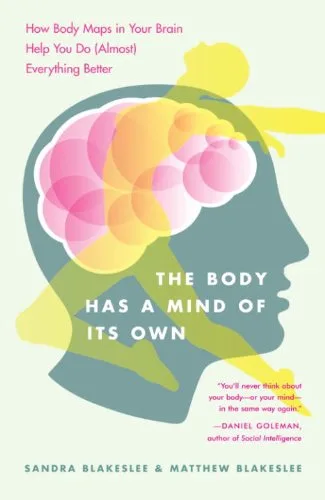
There is a difference between moving the body and feeling it — the two work at separate levels. Sandra and Matthew Blakeslee’s The Body Has a Mind of Its Own helps clarify this distinction.
Body Schema — the Body’s OS Working Unconsciously
The body schema is a ‘unconscious’ neural map for moving the body through space. Knowing the position of the feet even with the eyes closed, being able to scratch the head even in the dark — such actions are because the body schema is working.
To give an example from yoga, being able to transition from Chaturanga Pose to Up Dog Pose on the mat with the eyes closed is proof that the schema is working. Conversely, wobbling in a balance pose, a large left-right difference in a twisting pose, the axis not settling in a standing pose — these are highly likely to be influenced by a gap in the body schema.
When this map is off, even “intending to be standing straight,” in reality the body is tilted, or unevenness appears in movement. Rolfing is bodywork that re-educates this invisible map from the structural level. And after the structure is organized, Rolf Movement — which learns while putting into words “how it is felt within movement” — fixes the rewriting of the body schema.
→ The Brain’s Navigation System for Posture — How the Body Map Shapes the Contours of “the Self”
→ What Is Rolf Movement — Bodywork That Explores the Quality of Movement
Body Image — How the Body Is Felt
The body image is the ‘subjective’ sensation of “how the body is felt.” Realizations from within, such as “my legs are heavy today” and “my chest is congested,” are based on the body image.
In yoga, cultivating this body image is emphasized. Through poses, breathing, and meditation, “the power to look inward” and “the power to listen closely to the body” are cultivated. That said, the body image is subjective and imprecise by nature, so preconceptions and misperceptions easily creep in.
Yoga and Rolfing — Rewriting the Map of the Body from Both Sides
Yoga polishes the body image (the ability to feel), and Rolfing organizes the body schema (the structure for moving).
Take the case where the twist of Marichyasana C Pose does not deepen. When the range of motion hardly widens even with awareness of the breath, the problem may lie not in “awareness” but in “structure.” If the alignment of the spine, the position of the ribs, or the gliding of the fascia is restricted, the body hardens defensively.
When the structure is organized through Rolfing, movement changes naturally without effort — this is the result of the body schema being updated. And the breath widens, sensation becomes clear, and the impression of the pose also changes — the quality of the body image, too, changes.
The Body Is a “Medium for Connecting with the World” — From the Viewpoint of Merleau-Ponty
The philosopher Maurice Merleau-Ponty grasped the body as a “medium of the relationship with the world.”
“The body is our general medium for having a world.” — from Phenomenology of Perception
The body is not a mere material (object), but the very “place” through which we relate to the world, meet others, and mingle with the environment. This way of thinking is important in deepening the understanding of both body schema and body image.
Merleau-Ponty’s viewpoint that “the body is a subject open to the world” explains why yoga poses do not change by “awareness alone.” Unless the body’s schema (the unconscious map) changes, no matter how much a person tries to “move correctly” with awareness, the same pattern is repeated. Rolfing works on this schema from the structure, and yoga and Rolf Movement work on it from movement and awareness.
Why “the Sensation Does Not Change” — Summary
When the body’s sensations don’t change despite continued yoga practice, three layers are intertwined behind it.
The fixing of the body schema
Past habits, injuries, and emotional patterns are inscribed in the fascia, and “the map that already exists” hinders change. Yoga is a practice of “moving within the present map,” and to rewrite the map itself, an approach to the structure is needed.
The preconception of the body image
The self-recognition “I am stiff,” “there is a left-right difference” limits the possibility of movement. In reality, if the structure changes, the image changes too.
The limit of the body shown by Merleau-Ponty
There is a layer of the body that awareness alone cannot reach. “Not moving even though the head understands” is because the schema has not been updated at the level of the nervous system.
When all three of these layers are worked on, the practice of yoga enters a new dimension. Organizing the structure with Rolfing, fixing it within movement with Rolf Movement, and deepening that sensation with the practice of yoga — when these three circulate, the body schema is rewritten with certainty.
→ What Is Rolf Movement — Bodywork That Explores the Quality of Movement
Yoga × Rolfing (Five-Part Series)
→ Gateway: Yoga × Rolfing — 20 Years of Ashtanga, and the Encounter with Rolfing (Gateway Article)
Part 1: Why Does “the Sensation of the Body” Not Change Even After Continuing Yoga — Reading It Through Body Schema, Body Image, and Phenomenology (this article)
Part 2: Why Does Ujjayi Breathing Reach “the Depths of the Body” — the Dynamics of Structure Seen from Tonic Function and Breathing Methods
→ Read Part 2
Part 3: Why Does Feeling “Space” Change the Way of Sitting — Rediscovering the Bodily Sense Toward Meditation
→ Read Part 3
Part 4: Why “Tailor to Each Person” — The Principle of Individualization of Ayurveda and Rolfing, Experienced in Sri Lanka
→ Read Part 4
Part 5: Why Do Breathing Methods Change “the State of the Body” — Pranayama and Modern Respiratory Physiology
→ Read Part 5
The sensation of the body and the transformation of the body schema are deeply connected to the process of updating the “Recognition OS.” What handles more deeply the theme of the integration of thought, emotion, and body is Mind and Bodywork Lab.
→ Recognition OS and Meditation Gateway (MBL) (in Japanese)
→ Mind and Bodywork Lab: How to Navigate This Site (in Japanese)
It is possible to begin by confirming, in a trial session, what is happening in the body map.
→ Applying for a Trial Session
Hidefumi Otsuka (Ph.D.) | Certified Advanced Rolfer™ / Rolf Movement Practitioner / Yoga Alliance certified instructor (RYT200)
Completed a doctoral program at the Graduate School of Medicine, the University of Tokyo. After a career in the pharmaceutical industry, has offered Rolfing® sessions in Shibuya since 2015. Has practiced Ashtanga Vinyasa Yoga since 2006. Works under the theme of “the integration of thought, emotion, and body.”