I have set down eighteen pieces on Source Point Therapy (SPT) — an account of receiving it, and records of each module. Each of those is a record of what a training was like, or an attempt to put into words what receiving SPT was like. Here I want to stop for a moment and gather into one piece what SPT actually is, and where, from whom, and how I came to study it.
In my sessions, SPT stands alongside Rolfing as a second pillar. I write this as an account for anyone who wants to know what lies behind that.
On the territory of energy work itself, I have written separately (see “What Energy Work Is — Where the Word Points, and How It Entered Rolfing“). How this territory has been handled within Rolfing, and how it differs from Jikiden Reiki, the other form I studied, are set out there.
Meeting Source Point Therapy
I first met SPT on May 26, 2015, in Osaka.
At the time I had just finished my Rolfing training in Munich and was on the verge of beginning practice. I met Hiroki Sato (hereafter Hiro), the Rolfer who runs TEN — the space for your Life & Body, a studio in Osaka, for the first time. We had lunch and exchanged information, and then I received a session from him on the spot. It was SPT (see “Receiving Source Point Therapy at TEN in Osaka”).
Strictly speaking, this was not the first time I had received SPT. Akinori Ito, the Rolfer who gave me the impetus to study Rolfing, had given me a session once before. What stayed with me then was only the sense that something had changed although the body was barely touched, and I had no idea how to put it into words.
The session I received from Hiro left a different impression from Ito’s. The hands barely touch, and the practitioner is not applying force to make anything better. And still the body comes into order of its own accord. Finding that interesting was the door I went in through.
SPT is structured to be learned in stages, like Rolfing, and in Japan it can be taken with Hiro at TEN. I judged that it would also mean something for deepening my Rolfing, and signed up without hesitation. I have written about the basic training in Munich separately (see “Becoming a Certified Rolfer in Europe — The Certification Training of the European Rolfing Association“).
What Source Point Therapy Is
SPT is an energy work created in the United States by Bob Schrei and Donna Thomson.
Bob is a Certified Advanced Rolfer, a biodynamic craniosacral therapist, and a long-standing practitioner of Zen. From 1970 to 1985 he studied and taught at the Zen Center in Rochester. Having studied architecture as an undergraduate and fine art as a graduate student, he is at home with structure and pattern. Donna is an intuitive and a teacher of meditation. Both have practiced Zen for many years, and the simplicity of that runs strongly through SPT.
The system has a clearly marked point of origin. Over many years of Zen meditation, Donna came to be able to answer a range of questions from a state she enters through meditation with her eyes closed. This is called an awareness session. She describes it not as something she does because she wants to, but as something she came to be able to do of necessity.
In 1986, Bob, then working as a Rolfer, had a client he was finding hard to help. He asked Donna what would help. The answer that came was to work on the right side, outward along a line from the navel. Bob approached that single spot for about two years. It worked for some people; for others, balance was hard to come by. When he asked again two years on, one point after another began to appear. This is how SPT came to be built into a system.
In fact, the order in which the points appeared is the order in which the curriculum is arranged. The Source Point, the first thing learned in Module 1, is the single spot found first, in 1986. The order of teaching preserves the order of discovery.
Roughly ten years of development and testing followed, and since 2005 it has been taught in various parts of the world.
At the center of SPT is the idea of the Blueprint.
The fundamental order-information a human being needs in order to be well as a human being: that is the Blueprint, and it is understood to be inherent both in the energy field of the universe and within our own bodies and minds. Its workings are named with four words: Order, Balance, Harmony, and Flow.
Through the stresses, emotions, and tensions of daily life, our connection to this Blueprint weakens. In SPT the practitioner accesses the Blueprint and works in the direction of restoring a connection that has become obstructed. What is distinctive is that the practitioner is not sending energy one way. Through the points, what is already within the person receiving is helped to begin working of its own accord.
The Blueprint has a further function: it serves as a measure. By giving a standard for what counts as healthy information for the body, it makes it possible to return when things have moved the wrong way. You know what you are heading toward.
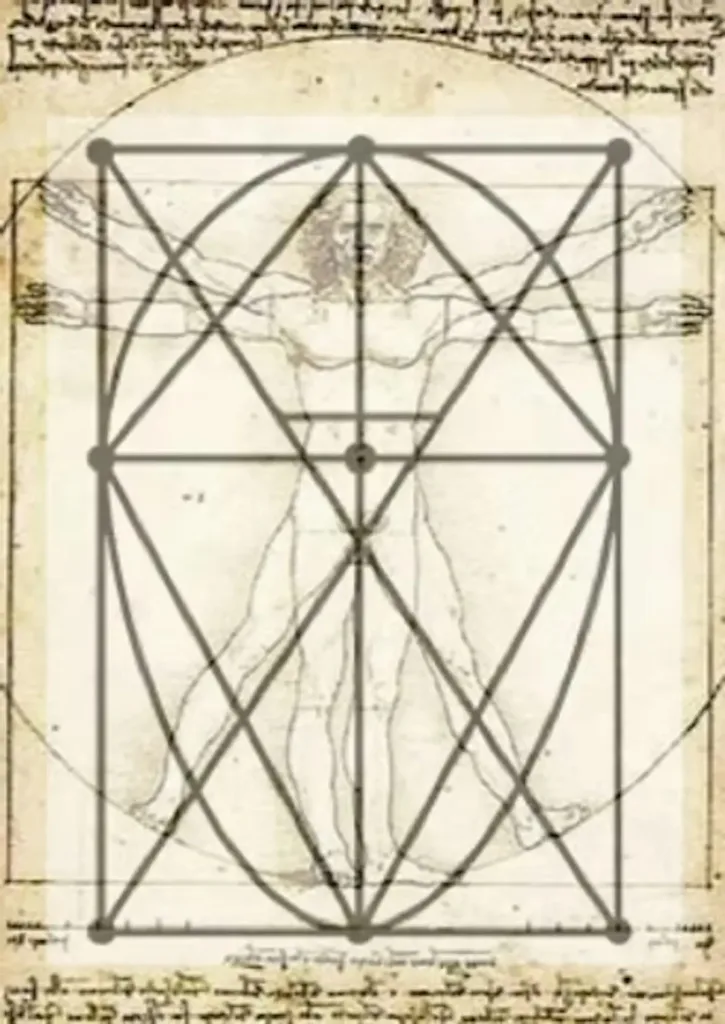
Concretely, the work uses a number of points within and around the body. Among the principal ones are the Diamond Points (four points: Source, Grounding, Activation, and Transformation), the Golden Rectangle Points, the Navel Point, and the Sacral Points, all grounded in the thinking of sacred geometry. Using a method called scanning, the practitioner looks for where the connection to the Blueprint has weakened, and works so that healthy information flows there again.
SPT is not designed as a treatment complete in itself, but as a container that supports any other method. It can be laid over Rolfing, massage, acupuncture, craniosacral work, and much else. Because Bob, one of its founders, is a Rolfer, and because the idea of geometric balance was already shared with Rolfing, SPT spread first among Rolfers. That is why it is spoken of as a work that came out of Rolfing.
In Japan, the first class was held in 2013. It was Hiro who invited Donna and Bob, and at the outset his involvement with SPT was as their interpreter.
The Training I Took
SPT training is made up of three stages: Modules 1, 2, and 3. I began in October 2015 and completed the whole course with Module 3 in October 2020. Including the supplemental course, it was a road of about five years and fourteen days in total.
| Course | Dates | Days | Taught by | Venue |
|---|---|---|---|---|
| Module 1 | October 10–12, 2015 | 3 | Hiroki Sato | TEN, Osaka |
| Module 2 | November 21–23, 2015 | 3 | Hiroki Sato | TEN, Osaka |
| Supplemental Course | December 2–3, 2017 | 2 | Hiroki Sato | TEN, Osaka |
| Module 3 | October 6–12, 2020 | 6 | Hiroki Sato (in the room) / Bob Schrei and Donna Thomson (online) | TEN, Osaka |
What follows is a look back at what each stage covered.
Modules 1 and 2 (October–November 2015) — Acquiring the Basics
In the autumn of 2015, at TEN in Osaka, I learned the basics of SPT. The Module 1 I took was the first class Hiro taught on his own. There were fifteen participants, mostly bodyworkers: acupuncturists, yoga instructors, Rolfers, Pilates instructors, judo therapists.
In Module 1, along with the ground of the Blueprint as an idea, we learned the basic points beginning with the Diamond Points, and the method of scanning that reads the energy field around the body. You hold a point without touching, or touching very lightly. Rather than the practitioner trying to do something, you yield to what the point itself does. Getting hold of that sense of yielding was the large lesson of the early stage.
In Module 2, working from the connection to the Blueprint, we learned techniques that bring the body into order more concretely: the Sacral Diamond Point, taking four points around the sacrum; the Sacral Hold, which integrates the work; the Stick Figure, which takes the body as a figure of lines and traces them; the Guardian Point, touching eight points with two fingers; the Crescent Moon, which orders the rhythms of the body; and the Midline and Chakra Points, which trace the median line.
Three things I received in this period stand out now, looking back.
The first is the relation between knowledge and yielding. Hiro said that the deeper your understanding of the word healthy goes, the better your sessions become. So knowledge is needed. And yet the deeper the knowledge, the more one wants to intervene — that is human nature. How do you gain knowledge and still yield to the process? That, he said, is where SPT succeeds.
The second is the handling of intuition. When Hiro learned SPT eight years earlier, there was an element of deciding intuitively while scanning. Later it became clear that yielding to intuition lets bias in, that the practitioner’s intent enters and things stop working, and that thinking was dropped. Rather than intuition, you put the question of what is obstructing to the body as a system. Energy work is often assumed to rest on the practitioner’s hunches; SPT has taken that out from the side of the system.
The third is distance from the symptom. When you are receiving a session, the client cannot help minding the symptom. That is where they look for the problem to be solved. Hiro described this as being pulled by the symptom. Because the thinking of what to do about it is at work, energy is poured there. And then, before the body has brought its healing capacity into play, the room for change in the body itself is narrowed.
The more you try to change things by force, the more the flow stops. Letting go of tension and being present in the place. This simplicity, which runs close to Zen, would come to resonate deeply later on, when thinking about Neutral in a Rolfing session.
- Module 1: “Learning the Blueprint: The Information Needed for a Human Being to Take Human Form,” “On Choosing a Teacher, and What to Look For in Feedback,” “Using Sensation Rather Than Knowledge: Accessing the Blueprint,” “The Final Day.”
- Module 2: “Concrete Ways of Accessing the Blueprint, and How a Body Changes,” “How the Training Runs, and What Techniques There Are,” “What Is Healthy Information for the Body?“
- Records from practice: “Source Point and Jikiden Reiki: How I Differentiate the Two,” “What the Sessions Have Taught Me.”
The Supplemental Course (December 2017) — Returning to the Basics
Two years after learning the basics, having spent that time bringing SPT into actual sessions, I took the supplemental course in December 2017. There were eighteen participants; it was open to those who had completed Module 2.
The first day began with checking whether our basic technique had drifted into idiosyncrasy. In groups of three — practitioner, observer, and subject — we did exchange sessions.
From the afternoon, in order to deepen our understanding of the Sacral Hold and the Guardian Point, we were given the history of cranial work beginning with William Sutherland, along with the anatomy that underlies it. How techniques that began in osteopathy spread beyond osteopathy. The three levels cranial work calls for — biomechanical, functional, and biodynamic. The relation to energy work. And the difference between the Guardian Point and cranial work.
Come to think of it, Bob Schrei, one of the founders, is a Certified Advanced Rolfer and at the same time a biodynamic craniosacral therapist. A system made by someone carrying two lineages will have both in it.
With that knowledge in hand, we took up the eight Guardian Points: three points on the pelvis, bearing on pelvic alignment, the rhythm of the innominate bones, and the balance of the lower limbs; the point below the clavicle, governing the balance of the sternoclavicular joint and the movement of the first rib; and the four points on the cranium. Each was learned in relation to breathing and to anatomy.
When I learned this technique in Modules 1 and 2, I had simply memorized how to touch eight points; I knew neither their locations nor the reasons for them. Two years later I found out what I had been touching.
What I felt there was that SPT can be done without knowing anatomy, once you learn the technique — but that knowing anatomy deepens your understanding and awareness in a session. Unnecessary as technique; necessary as understanding.
Relearning a foundation you had already acquired, after experience. The material was the same, and what could be received from it was entirely different. This was the period in which the precision of my scanning, the inner settledness of holding a point, and my understanding of yielding all became solid through accumulated practice.
Module 3 (October 2020) — The Final Course, with the Founders
For six days, October 6 to 12, 2020, I took Module 3, the final course of SPT, at TEN in Osaka. There were twelve participants.
The course took a different shape from the one originally planned. The pandemic made it impossible for the founders to travel to Japan, so Kitahama in Osaka, where Hiro’s studio is, was linked online to Santa Fe, where the two of them are based. For them, too, it was the first time teaching this way.
Because of the time difference, the result was a structure in which the mornings were spent online with the founders and the afternoons learning the finer points from Hiro. Receiving it directly from Bob and Donna, and in both Japanese and English through an interpreter, advanced my understanding of the thinking at the root of the system.
A day began with a check-in: an hour and a half of impressions from the previous day’s exchange sessions and questions and answers. After a break came a meditation led by Donna, then the briefing on the day’s material and a demonstration. In the afternoon, after Hiro’s commentary, we paired up and practiced. The day ended with a meditation guided by Hiro. It was designed so that only one flow of work was covered per day.
At the center of Module 3 is the idea of LEVEL. A LEVEL is one of the various elements that contribute to a symptom appearing on the outside of the body. To approach such an element, you access the frequency it holds.
There are five LEVELs — trauma, karma, emotion, ancestors, and belief systems — and Module 3 took up three: trauma, karma, and emotion. The place you tune from is the Navel Point, at the navel.
The way they are handled shows the character of this system clearly. You tune by intent, without hearing the account of someone carrying trauma. There is no confronting it head-on, and no re-experiencing. By bringing in the information of the Blueprint, what needs to be sorted out is sorted out of its own accord.
Karma is handled the same way. In SPT, karma is used to mean volitional action. It is set down not as something already settled, not as something that cannot be changed, but as something that can be chosen. Asking what karma is, on this view, is also asking what the choices in my life are.
For emotion, the definition of a healthy state was clear: being able to move smoothly from one emotion to another without effort. Whether an emotion is good or bad has nothing to do with it, and you can work with it without understanding its content. What is interesting is that when the practitioner can move smoothly between emotions, working with a client’s emotions becomes easier. The healthy state asked of the client turns out to be the state asked of the practitioner.
Beyond this, we learned Drawing Out — removing energy that has entered from outside and is obstructing the flow — and how to work at a distance. For distance work, SPT needs only the name and the place. This stood in contrast to distance work in Jikiden Reiki, which I had learned in the same year, 2015, and which requires a ritual element and the date of birth. Energy work tends to be spoken of as one thing; each system has settled on what it requires and what it does not.
On the final day I had the chance to receive an awareness session from Donna. The day before, gathered around Hiro, we had drawn up questions and sent them in advance. For about an hour we heard how SPT came into being and with what feeling the founders had built it. What I wrote in the earlier chapter about 1986 is what was told, on that day, in her own words.
What I received was a consistent message: more than words like trauma, karma, and emotion, what matters in life is choice, and one’s fate is not decided in advance but can be changed as you go.
Because of the time difference, certification came after that hour. Certificates were handed out, photographs were taken through the screen, and we said goodbye to the two of them there.
To have received, from the founders’ words and hands, what safety means and what yielding means, was a fitting close to five years of study.
- Module 3: “From Meeting Source Point to What I Have Learned Since,” The First Day: Not Intervening, What Meditation and SPT Share, and the Relation to Shamanism,” “After Three Days: How Trauma Is Handled Within Energy Work, and Why Intent Matters,” “The Fourth Day: How the Class Proceeds, and Karma as Volitional Action,” “The Fifth Day: Approaching the Emotional Level, and Working at a Distance,” “The Final Day: The Awareness Session, Practitioner Certification, and Knowing That the Choices in Life Lie Within You.”
Where It Can Be Studied Now
What I have described is the course I took between 2015 and 2020. SPT has changed shape since then, so for anyone thinking of studying it, I want to set down how things stand at present.
In the United States, certified teachers hold Modules 1 and 2 in Santa Fe, Colorado, New York, and Nashville; in Germany, in Munich and Hamburg. Module 3 and above, and the advanced courses, continue to be taught by the founders, Bob Schrei and Donna Thomson.
In Japan, Hiro continues to teach Modules 1 and 2. He was certified as a teacher in March 2015, and certified to teach Module 3 in 2023.
The structure of the course has also changed since I took it. Modules 1, 2, and 3 are now the basic training; Modules 4 and 5 are advanced; and a Module 6 has been added. The levels of trauma, karma, and emotion that I learned in Module 3 are now handled in the advanced Modules 4 and 5. Online courses and individual mentoring with the founders are also available.
For current dates and content, please see the SourcePoint Therapy website.
The Relation to Rolfing — Working with Two Pillars
I have gone on studying SPT because I have found, in practice, that laying it over Rolfing makes a session richer.
Rolfing is bodywork that addresses the fascia, the connective tissue, and reorganizes the relationship between the body’s structure and gravity. You touch with the hands and work on structure. SPT, on the other hand, barely touches at all, and restores the connection to the Blueprint by way of points in the energy field. The directions differ, but on one point they run deeply together: both are about recovering a wellness that is already there.
In practice, I work through the Diamond Points and the primary blockage at the beginning of a Rolfing session, then proceed with the work of that session while holding an awareness of the Stick Figure and the Midline, and close with the Diamond Points. Checking the breath takes less time, and there is less hesitation about where to place my hands. When the person stands up afterward and meets gravity, integration happens more efficiently.
What is interesting is that it also works as a means of checking. If the Rolfing work has gone well, the Diamond Points at the end take little time. If it has not, they take longer. The judgment rests not on what the practitioner did but on what happened on the side of the body.
SPT functions as a container in itself. It becomes the ground on which the structural work of Rolfing can be done within a field that is safer and has more flow.
Between limitation and possibility, respecting the body’s present state not as a problem but as that person’s best available choice, supporting change with the least intervention. This attitude is shared by SPT, craniosacral work, and others of that kind. When I try to be neutral in a Rolfing session, the sense of yielding that SPT cultivated is at work.
Not correcting, but transforming. SPT supports the thinking at the root of that, from a different angle.
Conclusion
From meeting it in May 2015 to completing Module 3 in October 2020. Over about five years and fourteen days in total, I studied SPT from the basics through the final course. My thanks again to Hiro, who taught me, and to the founders, Bob and Donna.
What is set down here is the overall picture; what I received on each of those days remains in detail in the linked pieces. If any of it interests you, I hope you will look at those as well.
SPT will go on working within my sessions, as a second pillar alongside Rolfing.